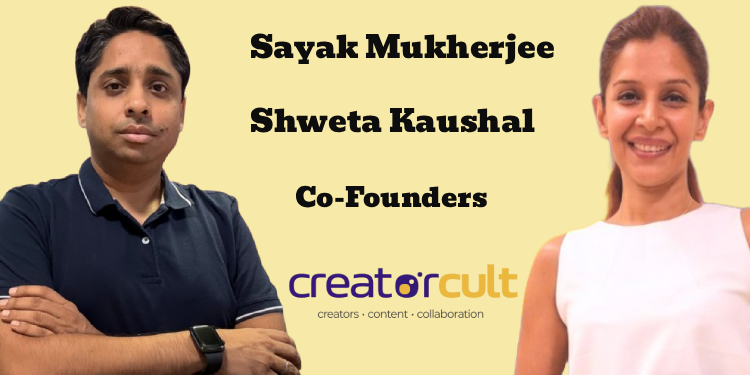
In a crowded digital world where influencer marketing often feels transactional, Creatorcult is looking to rewrite the script. Founded in 2024 by Shweta Kaushal and Sayak Mukherjee, marketers with over two decades of combined experience, Creatorcult has become one of India’s fastest-growing agencies for influencer marketing and UGC content. In a year, they’ve worked with over 65 brands including Emami, Myntra, Snitch, Vivo, Pilgrim, Plum, and Neutrogena, executing 150+ campaigns powered by a network of 1.1 lakh creators.
But Creatorcult isn’t just about scale, it’s about substance. The agency was built to bridge the growing gap between strategy, storytelling, and creator-first thinking. From micro and macro influencers to high-performing UGC creators, their work spans categories like D2C, beauty, wellness, fashion, and FMCG, blending performance with authenticity.
Medianews4u.com caught up with Sayak Mukherjee and Shweta Kaushal – Co-founders Creatorcult. They bring a mix of creative intuition and structured execution. Their vision? To build an agency that creators trust, brands rely on, and audiences engage with
Q. Creatorcult Media aims to bridge the gap between traditional and modern brands and creators. What tactics are being adopted to accomplish this goal?
Sayak Mukherjee: At Creatorcult, we recognise that traditional brands often require a different lens to approach the creator economy. Our strategy is built around education, customisation, and empathy.
We spend time helping legacy brands understand the nuances of influencer-led content, how it differs from mainstream advertising, and how creators can become authentic ambassadors.
We also work closely with creators to help them align their content more effectively with brand narratives, ensuring that storytelling remains uncompromised. The key is to create shared value between brands rooted in traditional marketing and the agility of new-age creators.
Q. The aim is to build an agency that creators trust, brands rely on, and audiences engage with. What are the various legs of getting there?
Sayak Mukherjee: This vision rests on three pillars: transparency, respect, and results. For creators, we offer a process that respects their voice, timelines, and effort, treating them as partners, not just inventory. For brands, our data-driven planning and structured execution provide them with confidence and clarity.
And for the audience, we focus on real, relatable storytelling that doesn’t feel forced or salesy. These three pillars of trust ensure long-term equity in our ecosystem.
Q. Today companies expect influencer marketing to drive actual ROI. Is that adding a layer of complexity for creators and agencies?
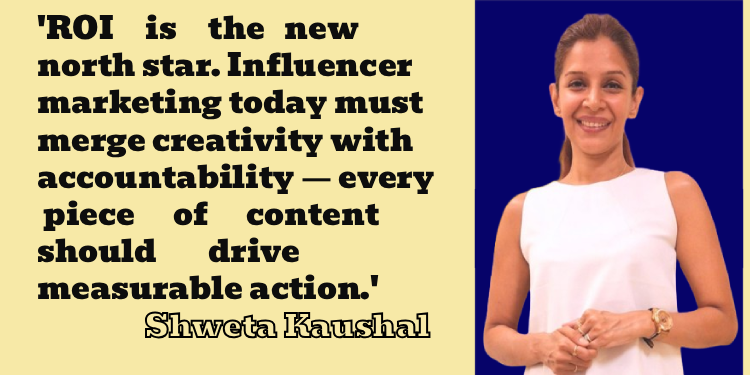
Shweta Kaushal: Yes, ROI expectations have certainly raised the bar. Brands are no longer just looking at visibility; they want action: be it installs, purchases, or engagement lifts.
This means creators must now balance storytelling with performance, and agencies like ours must align every creative output to measurable KPIs.
Q. Do clients often share specific goals, budgets and messaging requirements? Are they also sometimes in favour of a pre-paid model?
Shweta Kaushal: Absolutely. Most clients today come with clear expectations—whether it’s positioning, performance targets, or creative tone. Budget clarity is often provided upfront, and increasingly, brands prefer prepaid or milestone-linked models, especially for large-scale campaigns.
As an agency, our job is to match these requirements with the right execution roadmap, ensuring clarity from brief to delivery.
Q. The company has a network of 3 lakh+ creators. Does the agency look at brand fit, geography and engagement metrics before choosing an influencer for a brand? Are the number of comments on a post and content sharing more important than the number of followers that an influencer has?
Shweta Kaushal: Always. For us, follower count is just one of many factors. We prioritise brand fit, past content quality, audience relevance, and geographic alignment — especially for regional or localised campaigns.
Comments, shares, and even save metrics often tell us more about real influence than likes or followers. A nano creator with 5,000 followers but deep trust in a niche audience can outperform a macro with diluted engagement.
Q. For a regional brand does it often make more sense to use a nano or a micro influencer rather than a macro influencer?
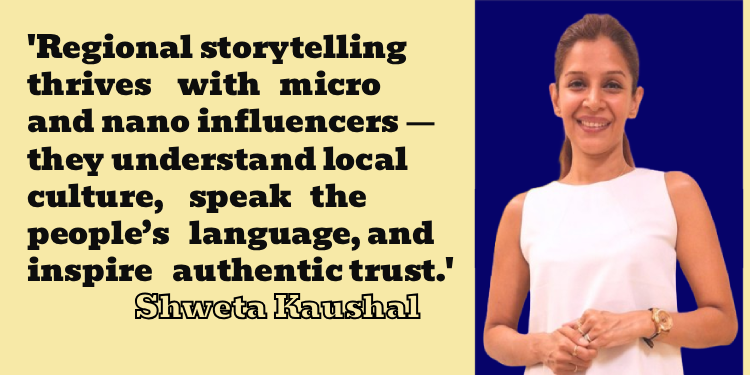
Shweta Kaushal: Yes, particularly in regional markets, nano and micro influencers offer much better relatability. They speak the local language, understand cultural nuances, and command higher trust in tight-knit communities.
For categories like food, wellness, or daily-use consumer goods, this resonance often drives stronger results than a one-size-fits-all macro campaign.
Q. In a crowded digital world influencer marketing often feels transactional. How important is it for there to be structure?
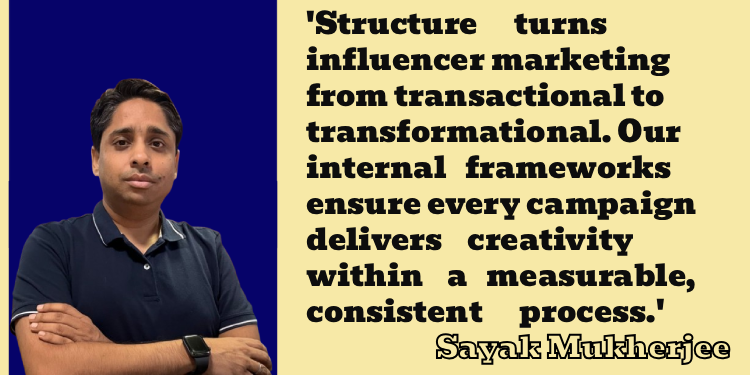
Sayak Mukherjee: Structure is everything. Without it, influencer marketing becomes a hit-or-miss activity. We have built internal SOPs around briefing, vetting, content approvals, and reporting that ensure every campaign has a framework, but still enough flexibility for creativity.
A structured yet creator-friendly process is what elevates campaigns from transactional to transformational.
Q. Does the work focus on performance marketing or is it about brand building for the long term? What are clients’ usual objectives in this regard when they use influencer marketing and UGC?
Shweta Kaushal: We balance both. For startups or D2C brands, performance is key: clicks, conversions, ROAS. For legacy or large brands, it’s often about awareness, brand recall, and narrative shaping.
UGC plays a dual role, it builds credibility and feeds performance creatives. The smart use of UGC in paid ads can exponentially boost campaign efficiency.
Q. Could you talk about work done for brands like Emami, Snitch, Tira Beauty, mCaffeine, Hyphen and Renee that stand out? Did the agency follow a data-led planning approach?
Shweta Kaushal: Yes, we always follow a data-led approach. For Emami, we used nano creators in a way that mirrored mystery shopping, driving both retail FOMO and awareness.
For Snitch, we have been helping them with both Fashion Influencers who drive eCommerce sales, as well as Store visit campaigns that drive sales and awareness of offline stores. For mCaffeine, Hyphen, and Renee, we regularly engage with UGC content that helps promote their new products, as well as influencer reels that help in ecommerce sales.
When Tira Beauty launched a leading US-based scrub brand, Tree Hut, we helped them with social media content, macro and micro campaigns that enabled online sales.
Q. How has AI been integrated into Creatorcult Media?
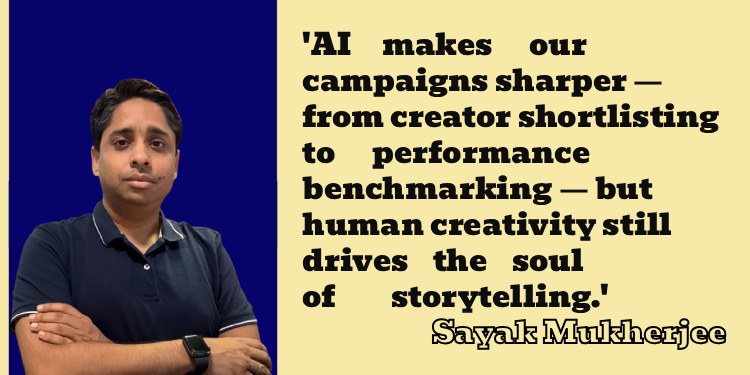
Sayak Mukherjee: AI is helping us in creator shortlisting, performance benchmarking, and content trend analysis. We’re also experimenting with AI-assisted copy and thumbnails, especially for UGC videos.
Internally, AI tools help us speed up reporting and feedback loops. While AI won’t replace human creativity, it’s making our operations sharper and faster.
Q. How important is it to strike a balance between scale and substance?
Sayak Mukherjee: It’s crucial. Campaigns that only chase volume often dilute brand value. At the same time, too much focus on polish without reach reduces visibility.
We aim for a sweet spot, where substance meets scale. Whether it’s 500 nano creators or 5 macro ones, the content must drive relevance and results both.
Q. In digital the only constant is change like platforms changing and evolving their algorithm. How challenging is it to stay updated on these trends?
Sayak Mukherjee: Very challenging, but non-negotiable. Platforms like Instagram or YouTube tweak their algorithms often.
Our team is trained to track updates, test formats, and study shifts in content discovery. It’s part of our DNA now. We also learn from our creators, they’re often the first to sense algorithm shifts.
Q. What role does the partnership with ASCI play in building trust?
Sayak Mukherjee: As an ASCI-member agency, we take compliance seriously. Our partnership ensures we’re aligned with evolving guidelines around disclosure, fairness, and ethical communication.
This builds long-term trust, not just with brands, but with consumers too. We believe responsible influencer marketing is the only way forward.
Q. Finally, how is measurement evolving in the influence marketing arena? Has it gone beyond vanity metrics?
Shweta Kaushal: Yes, definitely. Measurement today is far deeper. We track save rates, audience sentiment, clicks, conversions, and even lift in branded search queries.
Brands are asking for more: attribution mapping, creator performance scorecards, and ROI reports. Vanity metrics still have a role, but they’re no longer the only story being told.