Studio Blo is a content studio that aims to redefine AI-driven filmmaking. Earlier this year it had released a 100% AI-generated film for the Almost Gods × FILA collection.
This partnership merges FILA’s sport-luxury heritage with Almost Gods’ cinematic brutalism, historical symbolism, and philosophical storytelling, challenging conventional ideas of collaboration. Drawing from FILA’s clay-court tennis legacy, the collection reinterprets classic silhouettes through a lens of mysticism and elemental power.
It is live on YouTube and Instagram and unfolds during a rare celestial event, where three enigmatic figures summon a sweeping sandstorm. Each figure is dressed in the new collection, which blends Almost Gods’ exploration of mystic power with FILA’s timeless sportswear heritage.
Real fashion models were digitally cloned, with apparel and accessories rendered entirely through AI, no physical shoot and every frame carries the depth and drama of traditional production.
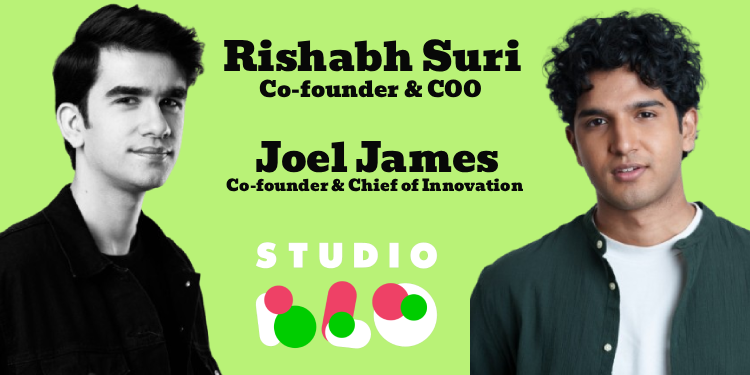
Medianewsu.com caught up with Rishabh Suri, Co-founder & COO, Studio Blo and Joel James, Co-founder & Chief of Innovation, Studio Blo
Q. An AI actress Tilly Norwood is causing unrest in Hollywood. Is this a sign of things to come?
Joel: Tilly Norwood is what happens when technology forgets why art exists.
Aishan, our AI human, was never meant to replace anyone. He was trained by me to explore what a new kind of artist could sound like. Tilly is built to erase people. We are building tools that help more people create. Our synthetic humans operate with consent, licensing, and fair pay. That is how the future should sound. We call it humachine made, humans and machines created together.
Q. What was the market gap that led to Studio BLO’s creation?
Rishabh: Every big AI company was building for social media. Nobody was building for cinema. We did not want quick outputs. We wanted frames that could live on an IMAX screen and in people’s hearts for years. Studio BLO was built to make timeless stories using new age technology.
Joel: For me, it started as a remix of music, cinema, and design colliding with AI. It opened a strange, beautiful space where anything felt possible again. That became Studio BLO’s foundation, turning personal chaos into creative order.
Q. What disruption is Studio BLO creating in film and advertising?
Rishabh: A hundred years from now, no one will talk about Warner or Universal, they will talk about Studio BLO. We are two guys in our twenties leading a team of other twenty-somethings, producing at the level of studios that took decades to build. That is the real disruption, proof that imagination scales faster than infrastructure.
Q. What is your business model and long-term vision?
Joel: We build products that break systems. Synthetic doubles are our next big one, digital versions of athletes, artists, and actors that let them multiply their presence without losing control. It is going to redefine how celebrity management works.
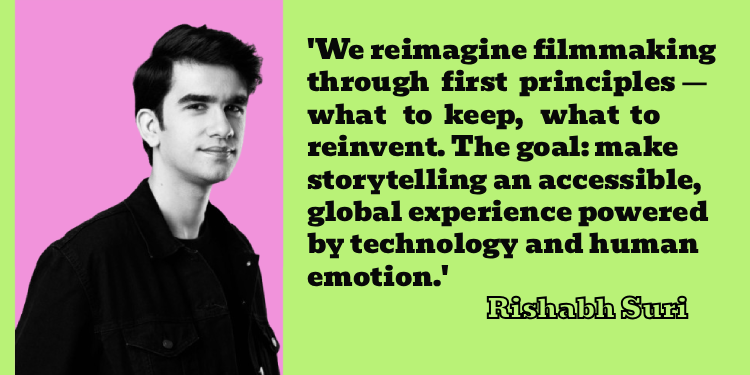
Rishabh: We think about filmmaking the way Musk thought about travel with Tesla and SpaceX, through first principles. Understanding how a film is made, why it is made, what from traditional processes we keep, and what we reinvent. The goal is to make filmmaking and storytelling a new, accessible experience for creators everywhere.
Q. How do you bring writers, DOPs, and directors into AI filmmaking?
Rishabh: AI does not make a filmmaker. It is still the human eye that chooses the frame. The writer, the DOP, the art director, they are the real architects. We just give them new tools to play with. Cinema has always been a technological medium. AI is simply the next camera. You could hand everyone a CCTV camera, but only talent can make The Conjuring. That is filmmaking.
Q. How is AI changing production timelines?
Joel: AI does not just make things faster. It makes them possible. If you want a red horse galloping across the Kalahari at sunset, you can have that tomorrow. That is creative power at scale. The challenge is to move fast without losing soul, that is what separates the noise from the craft. Most people treat AI like McDonald’s, one prompt, one output. We are running a Michelin kitchen.
Q. What are some projects that define Studio BLO’s style?
Rishabh: We are collaborating with some of the best minds this industry has ever produced, directors, designers, cinematographers, and technologists, to co-create entire worlds across formats. These are not just films or campaigns, they are blueprints for the next era of storytelling.
In advertising, we recently worked on the Almost Gods x FILA collab where we cloned the models and their outfits to create a visual that felt global in scale but rooted in culture. On the other end, our work with Mahindra and Bridgestone was all about emotion, stories filled with warmth, sincerity, and nostalgia. Getting real emotion out of AI imagery is our favorite kind of challenge, and when it works, it feels like magic.
Q. What did R&D look like for your technology?
Joel: Our best R&D was conversations, sitting with producers, actors, and DOPs who have lived through every version of this industry. You start to see what slows them down and what could set them free. That is how we build, by listening first, then coding later.
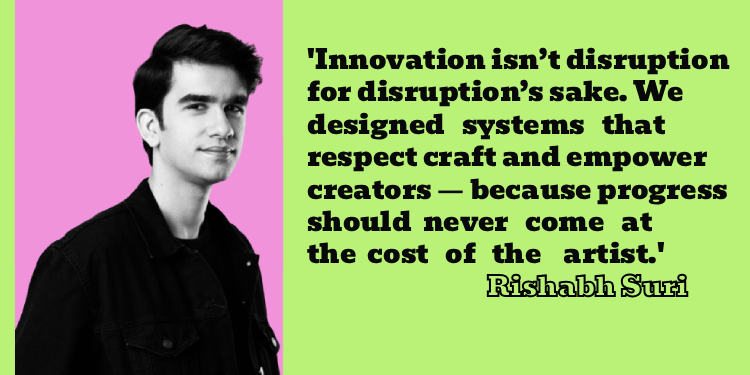
Rishabh: We realised real innovation happens when you understand people, not papers. Talking to industry professionals helped us design systems that respect their craft. The idea was never to disrupt for the sake of it but to create an ecosystem where everyone wins.
Q. Do filmmakers and agencies need to reskill for the AI age?
Joel: They just need to stay curious. You cannot love cinema and fear the tools that evolve it. The ones who adapt early will lead. We have VFX artists from DNEG and MPC, traditional directors and DOPs, all working side by side with twenty-year-old AI creators. It is not about who knows what. It is about who is willing to unlearn.
Q. How do you see AI changing platforms like Netflix?
Rishabh: We are entering an era where personalization will define how stories are consumed. What excites us is not the technology itself but the creative challenge of keeping emotion intact when every story can be tailored to the viewer. That is where the art lies.
Joel: 2025 is year zero. Everyone is experimenting, Netflix, Disney, studios across the world. There is already Showrunner, an app where you can type a storyline and get a custom show back. Will audiences really want that level of control? Time will tell. But one thing is certain, stories are going to get personal. Everyone will have their own universe, their own mythology. We are here to make that future cinematic.