MUMBAI: LS Digital, a leading independent Digital Business Transformation (DBT) company, has released an analysis on the state of AI adoption in India. Titled, The Rise of AI-Native Advertising in India: Hyper-Personalisation Meets Vernacular Scale, this report leverages LS Digital’s proprietary ‘Quilt’ methodology, an AI-led framework that applies machine learning to search, social and public web data to uncover themes, trends and consumer insights.
One of the key highlights of the report is India’s AI paradox, a powerful gap between consumer literacy and industry capability. Consumers are still learning the basics of digital advertising, yet the industry is already building advanced, AI-driven programmatic models at scale. This environment is driving innovation, leading to Hyper-personalisation becoming the single biggest theme, accounting for 47% of all industry discourse.
Key Insights from the Report
1. India has unusually high trust in AI, despite a foundational knowledge gap
- Consumer Learning: 99% of consumer search queries are about basic definitions of native advertising. Only 1% mention specific platforms like Google or YouTube.
- AI Comfort: 82% of consumers are open to AI-led recommendations.
- Content Trust: 48% trust AI-generated content, which is far higher than global levels.
This creates a rare opportunity where high AI confidence and low foundational knowledge pave the way for the development of AI-native ad models in India.
2. Hyper-personalisation is the biggest talking point
A staggering 47% of all industry conversations are about hyper-personalised ad experiences. This is driven by a consumer base that expects tailored content and is open to AI-enabled targeting.
3. Vernacular AI is emerging as a strategic priority
- Engagement Lift: Vernacular content drives 30-40% higher engagement than English-only messaging.
- Discourse Share: 11% of the industry’s conversation is now focused on Vernacular AI.
- Focus Breakdown:
- 70% is about multilingual content and cultural adaptation.
- 10% focuses on regional voice interfaces.
- 10% focuses on dialect-level targeting.
This signals a critical shift towards reaching the next billion users by leveraging linguistic diversity.
4. AI is democratising the ‘Bharat’ market
Social commerce in India is projected to hit USD 70 billion by 2030. A significant “Democratising Bharat” conversation is on the rise that represents:
- 50% of the focus is on empowering SMEs with self-serve AI tools that offer big-brand targeting precision.
- 13% highlights Tier 2/3 city growth.
- 13% addresses rural digital inclusion through voice-led, low-cost tools.
This showcases that AI is becoming the equalizer that gives smaller businesses metro-level sophistication.
5. Human-AI creativity is the preferred model
73% of Marketers believe the AI should support, not replace, human creativity. The “Creative Balance” theme (14% of conversation) shows:
- 77% focuses on AI enhancing creative work through rapid, high-volume asset generation.
- 23% stresses the need for human oversight, cultural understanding, and ethical judgment.
The winning formula is thus the amalgamation of AI for scale and speed and humans for nuance and emotion.
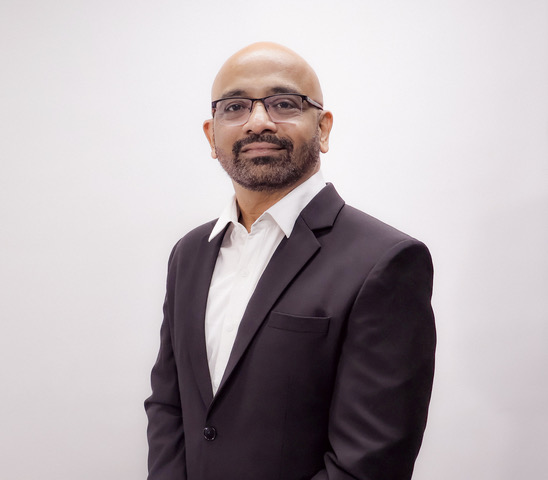
Speaking about the findings, Prasad Shejale, Founder & CEO, LS Digital, said “India is uniquely positioned. We are managing a paradox where the consumer is learning the basics yet is incredibly trusting of AI-driven personalisation. Our findings confirm that success lies in mastering the ‘vernacular imperative.’ Brands that prioritise scaling multilingual creative, which delivers 30-40% more engagement, while building responsible, privacy-preserving AI models, will be the ones to dominate the $70 billion social commerce wave by 2030.”
Along with technological acceleration, the report highlights the growing need for responsible advertising. The rising regulatory landscape, including the Digital Personal Data Protection Act (DPDPA), necessitates a shift towards consent-based, first-party data strategies and privacy-preserving AI models.
The report highlights that India’s AI-native future requires a careful balance between hyper-personalisation ambition and regulatory responsibility, driving a fundamental shift from event-based advertising to continuous, real-time, micro-moment contextual marketing.