LVL Zero is a gaming incubator launched in partnership with MIXI Global Investments and Nazara Technologies.
LVL Zero is an equity-free incubator with a $100,000 grant pool, designed to help early-stage founders move from prototype to market-ready products. Backed by MIXI’s global publishing expertise, Nazara’s distribution strength, and ChimeraVC’s capital network, LVL Zero aims to support 100+ gaming startups over the next five years across Mobile, PC, Console, game tech, AI/ML, and gaming-focused consumer platforms.
Medianews4u.com caught up with Sagar Nair, Head of Incubation, LVL Zero Incubator.
Q. With India poised to surpass 500 million gamers in 2025, what impact is LVL Zero looking to make?
LVL Zero has been created to empower Indian gaming talent and convert early-stage ideas into sustainable startups. Our focus is on helping founders move from prototype to market quickly by accelerating their development cycles, offering hands-on operational support, and connecting them with publishers, ecosystem platforms, and investors.
The goal is simple, to ensure more Indian gaming startups reach market readiness with the speed, clarity, and confidence required to build globally competitive products.
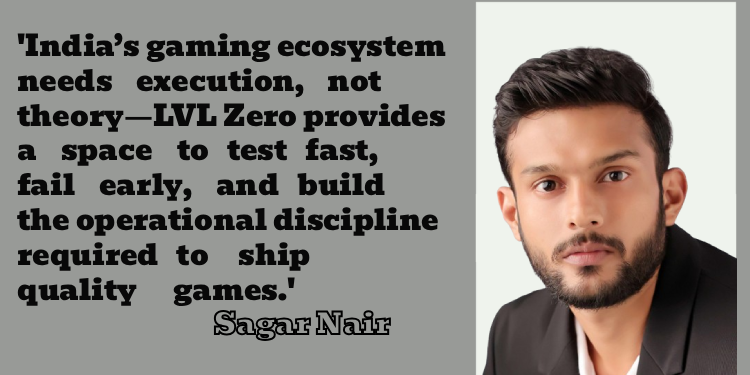
Q. What goals have been set for 2026, and what is the game plan to get there?
In 2026, LVL Zero will run its first cohort, onboarding ten high-potential teams and supporting them in delivering products that are either soft-launch or launch-ready. The approach is deeply execution-first where founders receive hands-on mentorship from industry experts, operate within a pressure loop designed to accelerate product iteration, and gain strategic introductions to publishers and investors.
The year will mark the delivery of India’s first founder-focused, execution-heavy gaming incubator where teams learn fast, iterate fast, and ship fast.
Q. In the partnership, what do MIXI Global Investments and Nazara Technologies bring to the table?
MIXI Global Investments brings deep expertise in publishing and live-ops, along with a strong understanding of the Japanese and broader APAC gaming markets. Nazara Technologies adds India-scale insights, distribution know-how, and proven operational experience in publishing and monetisation.
Together with Chimera VC, the partnership creates a full-stack support system covering product development, go-to-market strategy, and access to capital, designed to help founders build games, platforms and tools with global potential.
Q. Why does India’s gaming startup ecosystem need founder-focused incubation?
Because taking a gaming product from zero to one is fundamentally different from traditional tech. Founders need support across game design, mechanics, playtesting, production discipline, core loop optimisation, UA strategy, and monetisation design, none of which can be mastered through theory alone. Indian founders need a space to fail fast, validate early, and build the operational muscle required to ship high-quality products.
LVL Zero fills this gap by providing structured, execution-driven support at the earliest and most critical stage.
Q. How will the passage of PROGA help the gaming industry by giving it legitimacy?
Regulatory clarity is a foundational requirement for the sector. PROGA is expected to reduce uncertainty for investors, publishers, and platforms, enabling long-term planning around monetisation, partnerships, and compliance.
This legitimacy will attract more institutional capital, open doors for global publisher deals, and empower gaming startups to build sustainable business models with confidence.
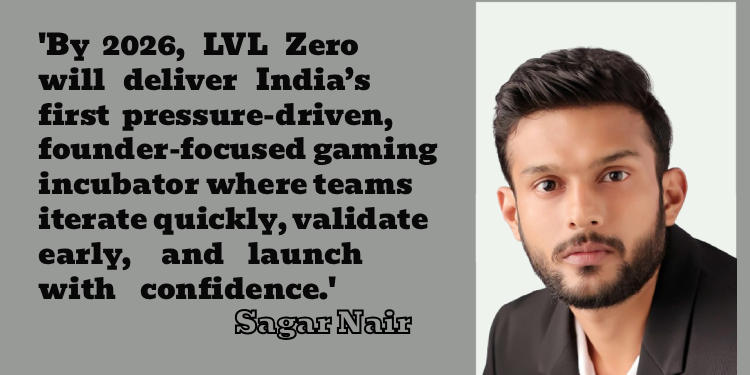
Q. Could you offer insights into LVL Zero’s 100-day execution-first sprint and how it helps teams ship faster?
The 100-day sprint is structured into three tightly focused phases that push founders toward clarity, product confidence, and market readiness.
Phase 1, Ignition, aligns the cohort on expectations, vision, and structured milestones. Phase 2, Core Build, centres on gameplay testing, ICP validation, and user-driven feedback loops. Phase 3, Orbit Ready, prepares teams for the market with data rooms, GTM frameworks, business modelling, and strong pitch narratives.
This structure ensures every week converts into measurable progress, enabling teams to iterate faster and ship with clarity.
Q. What are global publishers and investors looking for in Indian game studios today?
Investors and publishers are looking for clear signals of retention, monetisation potential, and team capability. This includes strong D1/D7/D30 retention metrics, a coherent UA strategy, a polished vertical slice, and a core team that can execute consistently.
They also value IP potential and teams that understand live-ops and community building, two areas critical for long-term success in gaming.
Q. Will studio business models in 2026 rely far less on advertising and more on subscription, battle passes, etc.?
The future lies in diversified monetisation. While advertising will continue to be important for scale-driven titles, Indian studios will increasingly lean on microtransactions, subscriptions, battle passes, and other owned monetisation channels to improve LTV and unit economics.
The most successful studios will adapt their monetisation strategy to the genre and audience rather than relying on a single revenue model.
Q. What role will AI play in helping India build globally competitive gaming products?
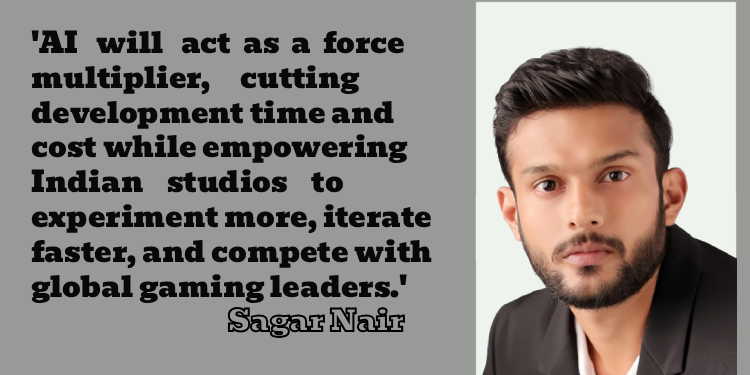
AI will become a major force multiplier across the development pipeline. It will accelerate level design, automate parts of QA, assist in art and narrative exploration, and strengthen analytics for UA and retention.
While AI won’t replace core creative decisions, it will significantly reduce production time and cost, enabling Indian teams to iterate faster and experiment more, key ingredients for building globally competitive games.
Q. When you look at developers in markets like Finland, what are the key learnings for India?
Finland showcases the power of small, disciplined teams operating with a global mindset. Their ecosystem thrives on focused product development, tight collaboration between studios, and strong support structures including publishing partnerships and talent exchange.
India can adopt these learnings by building deeper founder networks, encouraging knowledge sharing, and creating an ecosystem that helps studios scale both creatively and operationally.
Q. What trends are expected in 2026 across game tech, AI-assisted development, virtual production, and consumer platforms?
We expect wider adoption of AI-assisted tools across art and development pipelines, continued growth in virtual production for narrative and cinematic games, and the rise of consumer platforms built around retention and creator-led engagement.
Across the board, the emphasis will be on speed, efficiency, and deeper player-creator interaction.
Q. We are seeing celebrities endorse gaming companies. Will this activity intensify in 2026?
Yes, but the nature of celebrity involvement will evolve. Early partnerships were largely attention-driven.
Going forward, gaming companies will seek deeper and more meaningful integrations where celebrities become long-term partners with the IP, participating in campaigns, co-creating content, and contributing to world-building rather than simply appearing in one-off promotions.

Q. Universities are introducing game design courses. How will this fast-track advances in development?
Industry-linked, practical game design programmes will significantly strengthen India’s talent pipeline.
With structured curriculum, hands-on projects, and internship opportunities, students will graduate with job-ready skills, making hiring easier and faster for studios. This will expand the pool of reliable, skilled developers and accelerate India’s ability to build high-quality gaming products at scale.