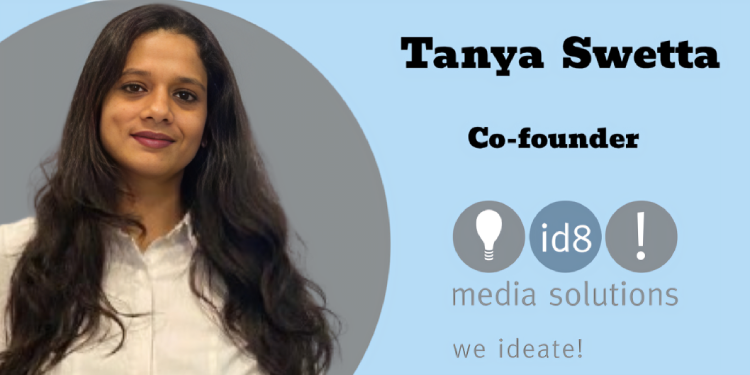
Founded in 2001 by Aman and Tanya Swetta, id8 Media Solutions has grown from a boutique PR firm into a full-spectrum integrated communications powerhouse.
Over the last two decades, id8 has partnered with 800+ brands across categories including retail, hospitality, beauty, fashion, education, logistics, finance, entertainment and technology. Known for its bespoke, insight-led marketing solutions, id8 continues to drive impact through strategic storytelling, innovative digital approaches, and strong brand-consumer ecosystems.
As AI rapidly reshapes how brands communicate, market, and build trust, the role of today’s marketer is evolving beyond creativity and execution. With over two decades of experience building integrated brand ecosystems across industries, Tanya brings a practical, leadership-driven perspective on how marketing teams can adapt to this shift without losing the human insight that drives strong storytelling and brand equity.
Medianews4u.com caught up with Tanya Swetta co-founder id8 Media Solutions
Q: Could you talk about the lessons from scaling id8 across markets while protecting culture, ethics, and decision-making in a hyper-competitive, margin-pressured industry?
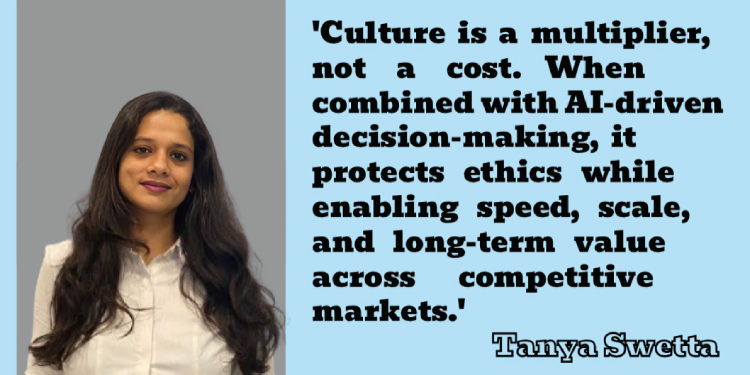
Scaling across markets has taught us that culture is a multiplier, not a cost. In hyper-competitive, margin-pressured industries, speed often trumps ethics—but that short-term mindset erodes long-term value.
At id8, we institutionalized AI-powered decision frameworks, mentorship programs, and market councils that allow teams to make fast, data-informed decisions without compromising values. For example, in India, our regional teams leverage AI-driven analytics to tailor campaigns for cultural resonance while maintaining brand ethics.
My lesson: Culture and AI together can future-proof decision-making. Teams guided by values and augmented by AI outperform in both revenue and reputation metrics.
Q: As the communication landscape changed, id8 media solutions pivoted into an integrated model. How has that enabled the company to help clients navigate a complicated media and communications landscape?
Fragmentation is the new normal. Brands today need an AI-enabled integrated ecosystem connecting earned, owned, and paid media. By using predictive analytics, social listening, and real-time performance dashboards, we identify what content works, where, and for whom.
For instance, a luxury client in India saw 40% faster engagement growth by using AI to optimize influencer selection and cross-channel content sequencing. The integrated model ensures every touchpoint reinforces the brand while delivering measurable ROI.
Q. For 2026, what goals have been set and what is the gameplan to get there?
Our 2026 roadmap focuses on three strategic pillars:
- AI-powered strategic intelligence – embedding AI across campaigns, predictive analytics, content optimization, and influencer mapping to drive faster and smarter decisions.
- Global expansion with local relevance – deepening presence in the US, Middle East, and APAC while using AI-driven insights to adapt messaging to local audiences
- Revenue-linked communications – every PR, content, and social initiative is tied to growth metrics, from customer acquisition to retention.
Additionally, id8 offers various partnership models for CEOs, CMOs, CTOs, and CIOs:
- Outsourced CMO function – we act as the full marketing leadership for the brand
- Fractional CMO function – providing strategic oversight for select initiatives
- Team partnership model – our teams integrate as an extension of the client brand
We are currently working with several brand partners in fractional CMO roles, which comes with significant responsibility—as they say, “with great power comes great responsibility.” AI augments this responsibility by providing predictive insights, trend analysis, and scenario planning to ensure every decision drives business impact.
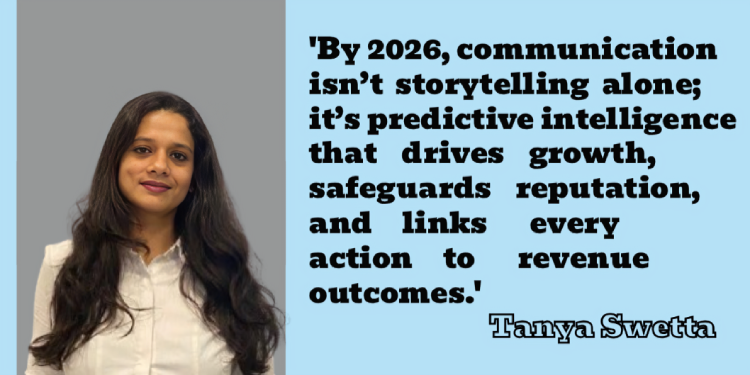
In 2026, communication is not just about telling a story—it’s about predicting trends, driving growth, and safeguarding reputation. Whether acting as a fractional CMO, outsourced marketing partner, or embedded brand team, id8 combines AI and human intelligence to deliver measurable, strategic impact.
Q. How will AI reshape the PR and communications landscape in 2026, and how will id8 leverage it to make smarter decisions?
AI is transforming every aspect of communications. By 2026, it will enable brands to:
- Predict trends and audience sentiment before they go viral
- Identify the highest ROI influencers and distribution channels
- Automate monitoring while generating actionable insights in real-time
At id8, we leverage AI to anticipate reputational risks, optimise influencer ecosystems, and drive content personalisation at scale. For example, predictive AI helped a fintech client in India avert a potential social media backlash 36 hours before escalation, saving both reputation and revenue.
AI is not optional—it is now the backbone of decision intelligence in communications, particularly when we act in fractional or outsourced CMO capacities.
Q. Could you shed light on how the role of communication has shifted from coverage-driven PR to revenue-linked reputation? What are most brands still getting wrong in 2026?
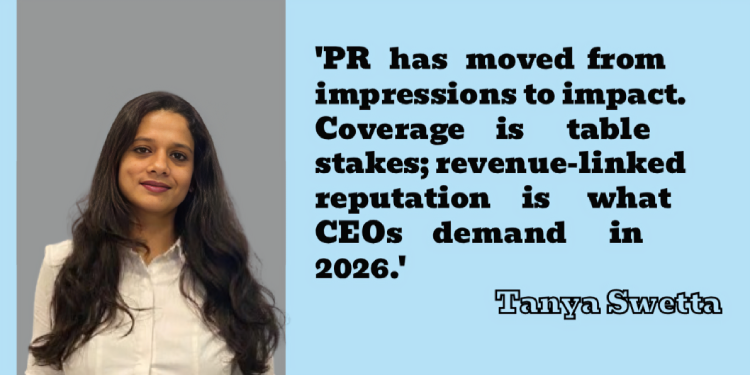
PR today is business-critical, not vanity-driven. Coverage is table stakes; CEOs now demand communications that move the needle on revenue, market share, and brand equity.
Many brands still fail by isolating PR from business strategy, chasing impressions instead of impact. At id8, we integrate AI-driven insights, CRM data, and sales metrics to link every campaign to business outcomes, ensuring communications are measurable, accountable, and ROI-focussed.
Q. id8 has worked across retail, hospitality, beauty, fashion, education, logistics, finance, entertainment, and technology. Which categories have been most challenging and rewarding?
Most challenging: Finance and technology. Both are highly regulated, with complex narratives and intense scrutiny. AI-powered sentiment analysis is critical here to anticipate issues and guide messaging in real time.
Most rewarding: Hospitality and lifestyle brands. These allow us to experiment creatively, leveraging immersive storytelling, influencer ecosystems, and AI-driven content optimization. A recent campaign in luxury hospitality in India drove a 30% increase in bookings through AI-optimised influencer sequences and real-time content adjustments.
Q. Tracking social media is a 24/7 job. Will tech advances make this easier, or will it remain a challenge?
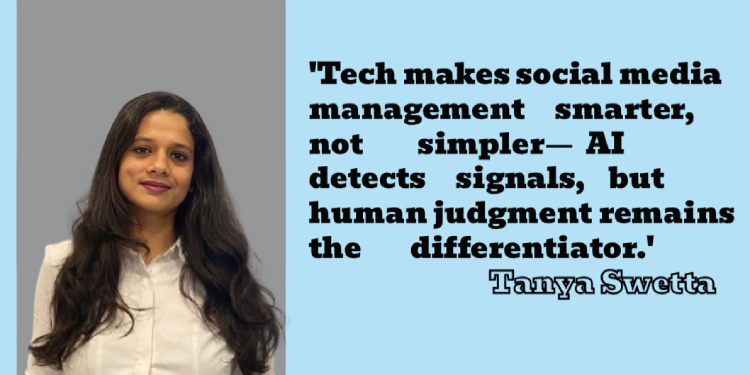
Tech makes it smarter, not simpler. AI-driven dashboards predict engagement, detect crises, and analyse sentiment in real time—but human interpretation remains essential. In 2026, smart humans augmented by AI will be the winning formula for effective social media management.
Q. Could you talk about the work that id8 does with content creators and influencers? Why do brands need to think in terms of always-on influence ecosystems?
Influence is continuous, not episodic. Brands must operate in AI-enabled, always-on ecosystems where creators amplify messaging authentically.
For example, a fashion client maintained a consistent AI-optimized influencer narrative across four product launches, resulting in a 40% boost in social engagement and a 15% increase in sales. The insight: always-on influence ensures sustained engagement, relevance, and measurable business outcomes.
Q. Senior corporate leaders often post announcements on LinkedIn. Is this platform becoming an alternative to press releases?
LinkedIn is complementary, not a replacement. While executives can break news directly to their audience, press releases remain essential for regulatory, investor, and archival purposes. At id8, we orchestrate executive LinkedIn messaging and press strategy to maximize reach, credibility, and business impact.
Q. Does id8 focus equally on both earned and paid media?
Earned and paid media are mutually reinforcing levers. Paid accelerates reach and precision targetting, earned builds trust and credibility. AI enables us to analyze which mix delivers the highest business ROI in real time, creating a feedback loop for continuous optimisation.
Q: How closely does id8 work with CMOs and marketing departments?
We embed ourselves within client teams to co-create strategy, align KPIs, and monitor performance. Whether in fractional, outsourced, or team partnership roles, this ensures campaigns are not just creative but business-impactful, transforming id8 into a strategic partner rather than a service vendor.
Q: Compliance with DPDP (Data Privacy regulations) takes effect from November. How is id8 gearing up?
DPDP compliance is a critical challenge and opportunity. We are deploying privacy-by-design frameworks, AI-driven consent tracking, and client education modules. The key is balancing personalization with compliance—AI helps us maintain this balance, ensuring campaigns are effective, ethical, and future-proof. Our partner is Privezi.
Q. Your views on content moderation guidelines on platforms like Meta and X?
Guidelines are essential but restrictive. We use AI and human oversight to adapt messaging while maintaining brand voice, ensuring campaigns comply without losing creativity or engagement.
Q. ID8 launched in the US a few years back. What progress has been made? Which markets are next?
In the US, we’ve secured key partnerships across tech, lifestyle, and fintech. Next focus markets include the Middle East, select APAC hubs, and high-potential European cities. Our approach is targeted expansion with local insights, powered by AI for market intelligence and decision-making, ensuring scale without compromising quality or culture.