For all the innovation in haircare, anti-dandruff remains surprisingly unchanged. Most solutions still promise quick flake removal — conditioning consumers to treat dandruff as a recurring issue rather than something that can be structurally addressed.
Nat Habit is attempting to challenge that reset point.
Ahead of its campaign ‘The End of the Dandruff Trade-Off’, rolling out on 25 February, the brand is reframing dandruff as a broader scalp imbalance shaped by microbial activity, oil fluctuation, barrier disruption and environmental stress — not just a standalone fungal concern.
The timing is notable. Dandruff continues to drive nearly 30% of hair-related online searches in India, yet user behavior still reflects a cycle of temporary fixes and recurrence. The category conversation, however, remains largely centered on suppression even as awareness around scalp health grows.
Backing this shift is FlakeZero Technology, a multi-pathway scalp system developed over two years of R&D. Instead of targeting fungi in isolation, the formulation works across microbial control, sebum regulation and barrier support simultaneously.
At its core is 5% Beracyl, a naturally derived active aimed at neutralizing dandruff-causing fungi while maintaining scalp integrity — an approach designed to reduce the harsh oil-stripping cycle many users associate with anti-dandruff routines.
More broadly, it signals a quiet shift in how emerging beauty brands are approaching mature categories — not just by reframing the story, but by rethinking what sits inside the bottle.
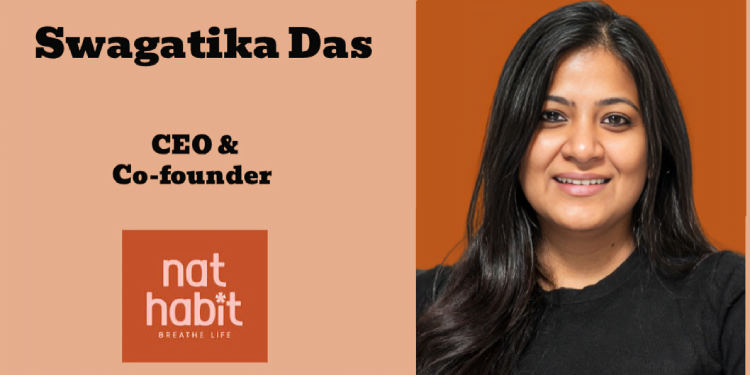
Medianews4u.com caught up with Swagatika Das CEO, Co-founder Nat Habit
Q. Where is the whitespace for growth in 2026? Is predictive analytics becoming central?
The biggest whitespace in 2026 lies in scalp microbiome science without synthetic dependency. For decades, dandruff has been treated as a cosmetic inconvenience rather than a biological imbalance. Most solutions focus on suppression, temporary flake removal, without addressing recurrence, resistance, or scalp barrier damage.
Predictive analytics is now changing that. Search behaviour shows consumers asking why dandruff returns, questioning the long-term safety of medicated antifungals, and actively seeking natural yet effective alternatives. These are not transactional queries; they are trust-seeking signals.
With nearly 30% of Indian haircare searches linked to dandruff, analytics is no longer just a marketing tool, it is a product-strategy engine. It allows brands to study rebound cycles, humidity-linked flare-ups, sebum-driven fungal growth, and antifungal resistance patterns.
The brands that will lead in 2026 will not merely predict consumer intent, but anticipate recurrence behaviour and design multi-pathway systems that reduce adaptation risk and improve long-term scalp balance.
Q. Will marketing in 2026 revolve around efficacy and trust?
Yes, but not perceived efficacy. Proven efficacy.
Consumers today are ingredient-literate, research-driven, and sceptical of exaggerated claims. They Google side effects, cross-check bans, and understand that instant relief often comes at the cost of long-term scalp damage.
Marketing in 2026 must move from claim amplification to mechanism explanation. If a brand cannot clearly explain how its formulation works at a biological level, it will struggle to earn trust.
Credibility will be built on four pillars:
- Clear mechanism of action
- Long-term safety and non-dependency
- Resistance prevention
- Barrier protection
Trust will not come from louder messaging, but from transparent science, showing not just what works, but why it works and how it stays effective over time.
Q. How did Nat Habit decide to shift the narrative around dandruff?
Most anti-dandruff shampoos eliminate only a fraction of visible flakes per wash while aggressively stripping the scalp. This creates dryness, irritation, and rebound dandruff, locking consumers into a cycle of dependency.
A broader concern in the category is over-reliance on single-pathway antifungal systems. Ingredients such as Ketoconazole or Zinc Pyrithione primarily act through one dominant mechanism. Over time, consumers often report reduced perceived efficacy, leading to increased frequency of use or stronger formulations.
This cycle can create a dependency pattern, where relief feels temporary rather than corrective.
At Nat Habit, we asked a more structural question: Why are we settling for cyclical suppression instead of aiming for long-term correction?
That shift reframed our R&D priorities entirely. We moved away from suppression and toward multi-pathway microbial control, barrier repair, and long-term scalp resilience. The result was a system designed not for temporary relief, but for lasting correction.
Q. How much R&D went into Flake Zero?
Flake Zero is the outcome of over two years of focused R&D and is built on a multi-pathway microbial inhibition model, a principle used in advanced biological systems to prevent resistance.
Instead of attacking dandruff through a single route, the formulation works on three interconnected levels:
- Microbial level: Neutralises dandruff-causing Malassezia strains while preventing regrowth
- Sebum level: Regulates excess oil without stripping, cutting off the fungus’s fuel source
- Barrier level: Calms inflammation, restores pH balance, and repairs scalp integrity
At the core is 5% Beracyl, a naturally derived active that eliminates dandruff-causing fungi within two minutes of contact before adaptation can occur.
This delivers medicinal-grade efficacy without synthetic antifungals, marking a significant shift in how natural scalp treatments are engineered.
Q. Tell us about “The End of the Dandruff Trade-Off” campaign?
‘The End of the Dandruff Trade-Off’ was more than a campaign; it was a category intervention.
We observed that the anti-dandruff market had quietly normalised compromise. Consumers were trained to believe that solving dandruff required harsh formulations, or that choosing natural meant settling for partial results. That binary thinking needed to be dismantled.
We reframed dandruff through the lens of scalp biology – sebum regulation, microbiome balance, barrier integrity, and environmental stressors. When you shift the narrative from symptom suppression to system restoration, the entire conversation changes.
The campaign integrated influencer-led scalp journeys, founder-driven scientific storytelling, and search-backed education. Each layer worked to build not just awareness, but informed conviction.
Our goal was not simply to launch a product. It was to elevate the discourse around scalp health and demonstrate that performance and gentleness are not opposing forces.
In doing so, we are moving the category from compromise to confidence.
Q. AI is impacting Search marketing. How are you going beyond keywords?
Search today is no longer about keywords, it’s about intent, context, and curiosity.
Consumers aren’t searching for products first. They’re searching for answers.
Instead of chasing generic terms like “best shampoo” or “hair care products,” we map question clusters that reflect real, layered concerns:
- Why does my scalp feel uncomfortable even when my hair looks fine?
- Why does my skin react differently in different seasons?
- Are everyday products meant for long-term use?
- Why do “gentle” products still feel harsh over time?
AI helps us decode these patterns, not as isolated queries, but as signals of confusion, frustration, and learning intent. This allows us to respond with education, context, and clarity, rather than pushing products prematurely.
Search has evolved into a pre-purchase learning channel, where trust is built long before checkout. The brands that win aren’t the ones bidding higher, they’re the ones answering better, more honestly, and more completely.
Q. How will AR/VR/MR deepen storytelling?
For us, immersive technology is an education tool.
Scalp health is invisible. Oil imbalance, fungal regrowth cycles, resistance pathways – these are biological processes people cannot see, which is why they struggle to understand why dandruff keeps returning.
We are exploring AR-enabled tools that could help decode visible oil imbalance patterns in real time.
We envision 3D visualisations that demonstrate how superficial cleansing differs from multi-pathway microbial control.
Interactive education journeys can make biological mechanisms more intuitive, helping consumers understand recurrence cycles rather than just visible flakes.
When science becomes visible, trust becomes rational.
Platforms like Instagram Reels and YouTube Shorts have already changed how younger audiences consume information. Gen Z does not read instruction manuals; they experience information visually. If microbiology can be demonstrated in 30 seconds through immersive storytelling, it becomes intuitive rather than intimidating.
The future of beauty education will not be longer claims, It will be clearer explanations.
And immersive technology allows us to make the invisible visible.
Q. Is data-driven marketing non-negotiable now?
Absolutely. Data is no longer a support layer in marketing, it is the backbone of every meaningful decision.
Today’s consumers are shaped by multiple variables at once: climate, geography, lifestyle shifts, ingredient awareness, cultural conversations, and fatigue with exaggerated claims. Without data, brands risk operating on assumptions that no longer hold true.
Data informs everything from recurrence cycles and seasonal triggers to regional behaviour patterns, ingredient search spikes, and evolving consumer concerns. It helps brands understand not just what people are buying, but why they are searching, questioning, and hesitating.
For instance, growing interest in terms like “gentle,” “non-stripping,” or “long-term safe” signals a deeper mindset shift, from quick fixes to sustainable solutions. These insights guide not only communication, but also product development, education strategies, and content timing.
Without data, marketing becomes guesswork. With data, brand and product evolution become continuous and responsive.
Most importantly, data enables brands to move from transactional selling to behavioural understanding. In a crowded marketplace, the brands that win are not the loudest, but the most aligned, listening closely, adapting intelligently, and building trust through relevance.
Q. Will minimising friction be key? Online vs offline split?
Yes, minimising friction from discovery to purchase across online and offline channels is becoming central to success, but it must be paired with education before conversion.
Today’s consumers don’t shop in straight lines. They start with search and discovery, often online, where they learn, compare, and build trust before deciding. In beauty and personal care, online channels have transformed this pre-purchase phase: e-commerce accounts for a decent percentage of global beauty sales, and social and digital discovery drives a growing share of early engagement.
But physical retail still matters, especially for tactile validation, sensory experiences, and reassurance, with offline outlets continuing to contribute a majority of total sales globally.
As a result, the modern purchase journey looks like this:
Search → Learn → Compare → Trust → Purchase.
Online dominates education, recommendation, and comparison, while retail strengthens confidence, sampling, and final validation. Data also shows that shoppers who shift between online and offline channels tend to spend more and convert more consistently.
The future won’t be about channel-first strategies, but integration-first experiences that reduce friction and meet customers where they are digitally informed yet physically reassured.
Q. How are emerging brands rethinking what sits inside the bottle?
Emerging beauty brands are starting not with trends or claims, but with structural gaps in mature categories. Many legacy segments were built for scale, not nuance, leaving white spaces where evolving consumer needs went unmet or oversimplified.
From there, brands move closer to the consumer problem. Instead of asking “what can we sell,” they ask what isn’t working: routines that feel harsh over time, products that solve one issue while creating another, or formulations that ignore long-term skin and hair behaviour. These insights reveal gaps between promise and experience.
Product development then becomes an exercise in fit, not novelty. Formulations are designed inside-out, microbiology-aware, barrier-first, and compatible with regular use. Actives are chosen for performance, stability, and safety, not just familiarity or storytelling value.
Only once this fit is achieved does communication follow. Media and performance are used to clarify mechanisms and educate, not inflate claims. The result is a tighter loop between problem, product, and proof, allowing emerging brands to compete in mature categories by being more precise, not louder.
Q. What is the challenge of offering natural yet effective solutions?
The biggest challenge is perception. Consumers often assume that natural means mild, slow, or less effective. The real work lies in proving that natural actives, when engineered intelligently, can deliver medicinal-grade performance without compromising safety.
This is where modern formulation science changes the narrative. Actives like Beracyl, derived from daruharidra and reinforced with amino acids, palm, and coconut derivatives, demonstrate that it’s possible to achieve high efficacy without relying on endocrine-disrupting synthetics or EU-banned ingredients. Similarly, proprietary technologies such as LentilClear™ is made to enhance the dal power with natural surfactants to leave skin clear, bright and beautifully balanced.
The future of natural is not romanticised or intuitive. It is deliberate, tested, and engineered.
At Nat Habit, innovation doesn’t dilute natural, it gives it structure, strength, and credibility for modern, long-term use.
Q. Are Gen Z and Gen Alpha forcing a playbook shift?
Absolutely. Authenticity is not a buzzword for Gen Z and Gen Alpha, it’s a filter. These consumers have grown up with access to information, peer reviews, and creator-led education, which means traditional beauty marketing tactics no longer work the way they once did.
In the beauty category especially, exaggerated claims, overly polished visuals, and fear-based messaging are met with skepticism. Younger consumers actively question why a product works, how it’s made, and whether it’s safe to use over time. They look for ingredient transparency, formulation logic, sourcing clarity, and honest conversations around results including limitations.
Data shows that Gen Z spends significantly more time researching before purchase, often moving between search, social platforms, and community discussions. They trust creators who show real routines, unfiltered results, and lived experiences over aspirational endorsements.
This shift is forcing beauty brands to move from promise-led marketing to proof-led communication. Education, mechanism clarity, and consistency across product, packaging, and messaging have become non-negotiable.
In response, the beauty playbook is evolving from persuasion to participation, from aesthetics to evidence, and from short-term attention to long-term trust.
Q. What role does packaging play in repeat orders?
Packaging plays a far deeper role than visual appeal, it is a key driver of trust, consistency, and repeat behaviour across categories. For products used regularly, packaging signals functional credibility and reassures consumers that what they are using is safe, well-designed, and meant for long-term use.
Effective packaging protects formulation integrity through food-grade materials, barrier layers, and UV-protected structures that shield products from light, temperature variation, and external exposure. This ensures that freshness, efficacy, and texture remain consistent from first use to last, reinforcing performance memory, a critical factor in repeat purchase.
Beyond protection, packaging influences behaviour. Clear usage instructions, ingredient transparency, hygienic dispensing, and sustainability cues reduce friction and build confidence in everyday use.
Batch-level QR integration enables complete traceability, from manufacturing to dispatch and automatically restricts products that fall outside internal quality limits.
Together, robust packaging and intelligent shelf-life control close the trust loop. They ensure consumers receive products that perform exactly as expected, every time turning reliability, not novelty, into the strongest driver of repeat orders.