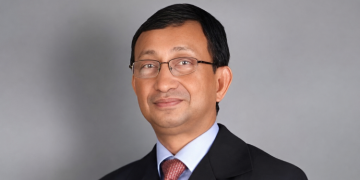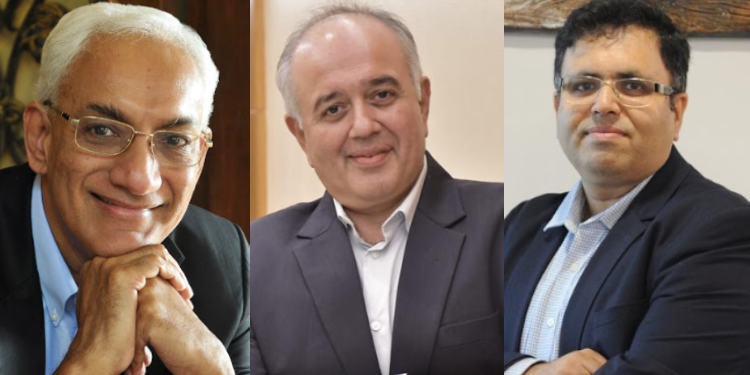
Mumbai: There is something refreshingly honest about the way Srinivasan K. Swamy opens a conversation about Goafest’s place in the global advertising order. “I don’t want to be pompous,” he says, swatting away any temptation to overstate the festival’s global influence. It is a moment of rare candour in an industry that rarely suffers from an excess of modesty. And perhaps that honesty is itself the most compelling argument for why Goafest, now heading into its 2026 edition under the theme Reset for Growth, deserves to be taken seriously — not as a pale imitation of Cannes Lions, but as something altogether more grounded and, arguably, more relevant to the market it serves.
A Festival Finding Its Own Voice
For years, Goafest has lived under the long shadow of its international counterparts — Cannes, Spikes Asia, Adfest — measured against benchmarks that were never designed with Indian realities in mind. The 2026 edition appears, at last, to be making a conscious effort to step out of that shadow.
The theme — Reset for Growth — is not merely a tagline. It is a directional statement. Mohit Joshi, Co-Chair of the Organising Committee and CEO of Havas Media Network India, articulates it plainly: everything is outcome-driven now, and even creativity must answer to that reality. The festival’s programming reflects this shift. An AI conclave spanning five to six dedicated panels, masterclasses on consumer behaviour, content creation and the creative economy, senior entrepreneur keynotes, and — most significantly — a structural integration of clients into the conversation, not as guests in the gallery but as voices on the stage.
This is not a festival content to admire its own reflection. It is attempting, earnestly, to be useful.
The Client Question: Partners, Not Patrons
Perhaps the most significant structural shift at Goafest 2026 is the elevated role of the client. In previous editions, marketers appeared at the margins — present, but peripheral. This year, they are arriving in greater numbers than ever before, and they are not just filling seats. Clients are on stage, in panel discussions, and — in a telling sign of deeper commitment — writing cheques as sponsors. Britannia, LG, and ITC are among the brands putting their names to the festival.
Jaideep Gandhi, Vice President, AAAI and Chairman of the Goafest 2026 Organising Committee, frames it well: nothing in this industry is done on an individual basis. Even an idea needs a client’s input. The format of sessions this year is designed to be genuinely collaborative — agencies and clients on the same stage, at the same time, working through the same questions.
Mohit Joshi takes this further, arguing that the shift is not just logistical but philosophical. When clients sit on stage and articulate their expectations from the creative and media industries, the industry stops talking to itself. It starts listening. That distinction — between an industry congress and a genuine industry dialogue — is the difference Goafest 2026 is trying to make.
Swamy offers a pointed global comparison: even at Cannes, the so-called gold standard, the ratio of advertisers to agencies barely touches 10%. Goafest, by his account, matches or exceeds that ratio — and does so without treating client participation as a novelty. That is, quietly, a significant achievement.
The Media Entries Gap: A Structural Footnote
Not everything at Goafest 2026 tells a story of progress. The disparity between creative and media award entries — 97 versus 13 in newly introduced categories — is a number that deserves scrutiny, even if the explanations offered are reasonable.
Joshi attributes it, fairly, to the maturation curve of new categories. Newer award verticals take time to bed in; agencies need a cycle or two before they calibrate their submissions. Swamy, characteristically blunt, points to a structural reality: for every one media agency in India, there are roughly ten creative agencies. The submission gap, in that light, is less a reflection of media’s ambition and more a reflection of its sheer numerical disadvantage.
Both explanations hold water. But the underlying question — whether media agencies are investing sufficiently in self-celebration and industry recognition — remains worth asking year after year, particularly as media strategy grows ever more sophisticated and data-driven in its own right.
GoaFresh: Planting Seeds for the Next Decade
If the client integration story is Goafest’s headline act, GoaFresh is its most important long game.
The initiative, now in its second year, brings students from premier institutions — IIM Bangalore, IIM Ahmedabad, IIM Calcutta, MICA, ICP Jain — into the festival ecosystem, exposing them to the industry before the industry loses them to consulting, technology, or finance. Last year, five or six institutes participated. This year, the number has grown to between ten and fifteen.
Joshi is candid about the motivation: good talent had stopped flowing into advertising. GoaFresh is a direct response to that haemorrhage — a structured, deliberate attempt to reintroduce the industry to the generation it needs most, before habits and career paths calcify. Masterclasses covering AI, creative economy, and consumer behaviour trends, delivered by bodies such as MRSI and ARPA, give the initiative intellectual substance beyond mere industry cheerleading.
It is early. One initiative does not reverse a decade-long talent drift. But the direction is right, and the urgency behind it is real.
AI: From Buzzword to Backbone
No serious industry gathering in 2026 can afford to treat artificial intelligence as a side panel, and Goafest is not making that mistake. The AI conclave — a dedicated, multi-session track — signals that the festival organisers understand AI not as a trend to acknowledge but as a force to reckon with. The participation of technology-led sponsors, who are, by Jaideep Gandhi’s account, now taking the front seat over traditional media brands, underscores how profoundly the sponsorship and conversation landscape has shifted.
A series of dedicated sessions exploring what new technology holds in store for the industry — flagged by Swamy as among the key highlights — are some of the more anticipated moments on the agenda, promising to push the conversation well beyond the familiar contours of creativity and media strategy. The advertising industry’s relationship with AI is still being negotiated — between enthusiasm and anxiety, between automation and authorship. A festival that creates genuine space for that negotiation, rather than defaulting to either breathless optimism or defensive scepticism, will earn its place in the calendar.
The Bigger Picture
Goafest has never been, and should not try to be, Cannes on the Konkan coast. Its value lies elsewhere — in its proximity to the market it serves, in the particular texture of Indian creativity, in the scale and diversity of a media economy that no other country quite replicates.
What the 2026 edition suggests is that the festival’s leadership understands this. The humility with which Swamy opens the conversation, the pragmatism with which Joshi frames the theme, the structural seriousness with which Gandhi approaches the format — these are not the instincts of an event trying to punch above its weight. They are the instincts of one that has decided, at last, to own its weight entirely.
Reset for Growth is a theme that could easily become wallpaper. In the hands of this edition’s organisers, it reads, instead, like a genuine intention. Whether Goafest 2026 delivers on that intention will be tested not in the press room in May, but in the work celebrated, the conversations started, and the careers redirected in the months that follow.
The sun sets beautifully over Goa. What matters, in the end, is what gets built in the daylight.