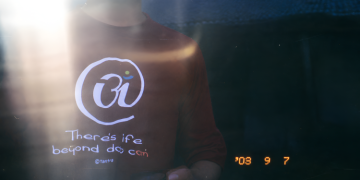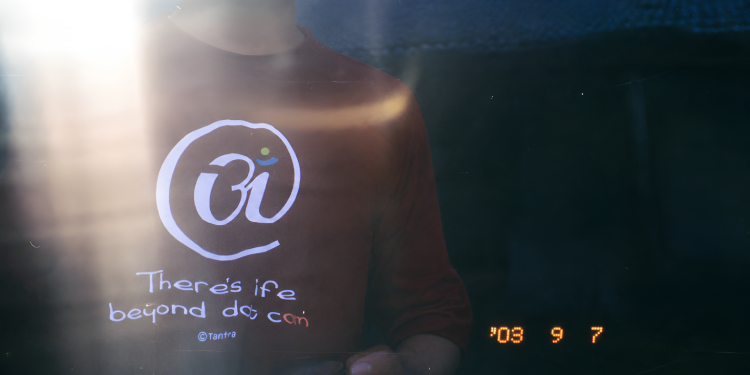
A few weeks ago, while going through some old photographs, I came across one where I was wearing a Tantra T-shirt that said, “There’s Life Beyond Dot Com.”
That pic took me back to the late 90s. I was lucky enough to live through the dotcom boom and the dotcom bust. Back then, adding “.com” to your company name could magically add a few crores to your valuation. Eyeballs mattered more than earnings. Business models? Yeh kya hota hai?
Then the bubble burst.
The interesting thing is, the internet survived. The bubble didn’t.
Looking back, I don’t think bubbles are always bad. Every new idea is a kind of a bubble … they create believers, attract talent, bring in money and make people dream bigger than they otherwise would. Without that madness, I am not sure digital would have become what it is today.
And then when the bubble starts making decisions for you, the trouble begins. Some of those bubbles push industries forward. Some quietly influence decisions.
Over the last few years, consulting has given me a ringside view into dozens of organisations across industries. Different products, different leadership teams, different cultures. What amazed me wasn’t how different they were. It was how similar they were.
Every organisation has its own bubble … The founder has one … The CEO has another … Marketing has one … Sales has bubbles of all shapes and sizes (guess one for each question) 😉… The agency has one.
And the customer… wasn’t invited into any of them.
I have redesigned an entire UI because five friends of the boss in the US didn’t like it. Five people. Millions of users never got a vote.
I have had the management of a large portal proudly tell me they published 235 content pieces every day, when the point I was making was that users couldn’t find the one, they were actually looking for. Somewhere, the conversation had shifted from “Can people find our content?” to “Look how much content we produce.” Somewhere along the way we started celebrating activity instead of usefulness. Now how familiar does that sound to you?
I have sat in media meetings where once upon a time Print was the answer to everything … then in meetings where television was the answer to everything. A few years later I sat in digital meetings where print was dead and television was measuring its coffin size 😀 . Radio, by the way, has attended more funerals than any other medium. “Video Killed the Radio Star”… that song by the Buggles that made MTV famous … (Some of us had heard it on AIR long before MTV made it fashionable.) … Television or Streaming or Podcasts haven’t killed it yet. Every few years radio’s obituary gets written and then in every car ride it cheerfully turns up to tell us where the traffic jam starts.
I have seen agencies passionately defend campaigns that consumers forgot before the weekend. I have also seen products become runaway successes after somebody in the boardroom had confidently announced, “This will never work.” Looking back, I don’t think bad decisions happen because people are stupid. They happen because everyone in the room has been talking to each other for so long that they all begin sounding the same.
“I showed it to a few people.” “I did a dipstick study” these two sentences give me panic and anxiety attacks!
We have all said these and used these 😊… the only problem is that those “few people” somehow always end up being friends, colleagues, family, the leadership team, or that one chap who has just come back from the US and suddenly has very strong views on user experience. Are they the people who are actually going to buy the product? … what do you think?.
The market doesn’t know your five friends, your boss’s wife’s kitty party, your award jury or that CFO who thinks consumers can be understood on an Excel sheet. It simply gets on with life. People either buy your product or they don’t. They use your app or they uninstall it. They recommend your brand or they move on to the next one. Reality is harsh and is boring both at the same time. It kind of ignores everything that happened inside the boardroom… and they don’t even know if everyone was in the room or virtually connected. Who cares!
This is one of the reasons why consulting has been such an eye-opener for me. When you are inside one organisation, you slowly inherit the baggage … the vocabulary, the assumptions and, without realising it, its bubble.
Spend enough time inside one company and you slowly stop saying “the customer” and start saying “our customer”.
There is a difference there. That’s usually the day the bubble starts inflating.
Maybe that’s why I never threw away that old Tantra T-shirt.
When I bought it, I thought it was talking about the internet. Today I think it is talking about us.
Every generation creates its own bubble. Mine started with print and dotcoms. Today’s probably starts on LinkedIn. Tomorrow it’ll be something else.
The bubble isn’t the problem.
Believing the bubble is the whole world usually is.
(Views are personal)