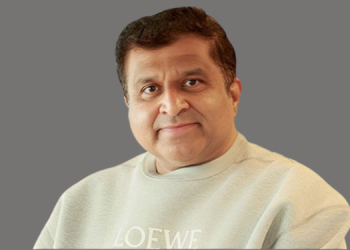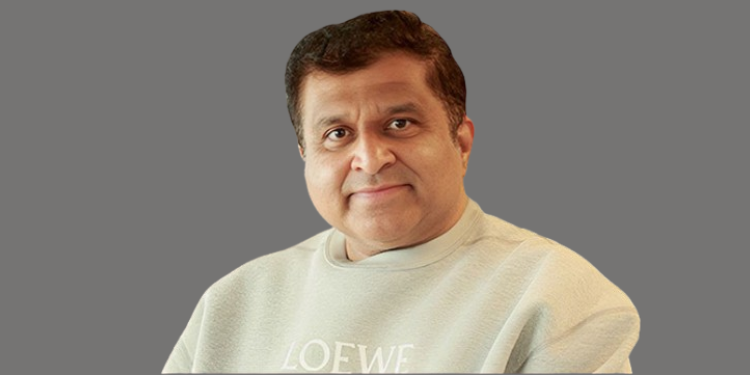
Mumbai: Atul Hegde, Founder and Chairman of YAAP, passed away earlier yesterday, July 7, 2026, after suffering a heart attack. He was one of the most visible entrepreneurial voices in India’s advertising and marketing industry, and his death has left the community he built and mentored in mourning.
Over a career spanning nearly three decades, Hegde witnessed — and helped shape — India’s advertising industry as it moved from television and print dominance into a digital-first era. He entered the industry in the 1990s at Havas, before moving into leadership roles at Vyas Giannetti Creative. As internet adoption began accelerating in India, Hegde shifted his focus decisively toward digital, going on to lead Ignitee Digital Solutions as CEO, one of the country’s early specialist digital marketing agencies. He was also among the founding members of Networkplay, a digital media venture that later became part of Bertelsmann India Investments, and was associated with several other ventures that helped accelerate the growth of digital advertising in India during its formative years.
That early conviction — that digital would fundamentally rewrite the rules of marketing — stayed with him for the rest of his career.
Building YAAP into an alternative
In 2016, Hegde founded YAAP with a vision of bringing creativity, technology, data and content together under one roof — an approach that stood in contrast to the traditional, media-buying-led model of the global advertising holding companies that have long dominated the industry. As those legacy networks grappled with slowing growth, budget pressure, and a wave of in-housing by clients globally, YAAP represented something different: a homegrown, digital-first challenger willing to bet on technology rather than legacy scale.
Under his leadership, YAAP expanded across digital marketing, influencer marketing, content solutions, analytics, and — in its most recent chapter — AI-powered marketing platforms, building an operating presence across India, Singapore, and the UAE.
FY26 marked what Hegde himself called a defining year. YAAP reported revenue of Rs 184.89 crore, up from Rs 152.54 crore the previous year, while profit after tax nearly doubled to Rs 22.2 crore. The company also listed on the NSE, becoming, in Hegde’s words, India’s first independent digital agency network to go public. Just weeks later, YAAP announced its acquisition of the GOZOOP Group, alongside the launch of its AI-powered video intelligence platform, Tags, and creator-tech platform, Buzzar — moves that signalled a company, and a founder, still very much looking ahead rather than resting on its milestones.
A mentor as much as a founder
Beyond YAAP, Hegde co-founded Rainmaker Ventures in 2015 alongside Sudhir Menon, an early-stage investment firm backing startups in digital media, marketing technology, and enterprise technology, with a portfolio that included YAAP itself, Oplifi, Mellora, and EasyPlan. He also advised government initiatives such as Make in India, Startup India, and Incredible India, and served on IAMAI’s Digital Media Committee — extending his influence well beyond the companies he built.
Colleagues and founders who worked with him often pointed not to his balance sheets but to his generosity — with time, with ideas, and with mentorship. That spirit was evident in his final LinkedIn post, published just two weeks before his passing, in which he thanked the people who built YAAP with him over the past decade and described industry veteran Raj Nayak as the company’s “guiding light” through its toughest moments. He closed that post with a line that now reads as unintentionally prophetic: the NSE bell, he wrote, wasn’t the finish line — YAAP was “just getting started.”
An industry in mourning
News of Hegde’s passing brought an outpouring of tributes from across advertising, media, marketing, and India’s startup community. He is remembered as an early believer in technology-led marketing, a builder who tried to prove that an Indian-born, independent agency could scale globally on its own terms, and a mentor whose door was open to founders navigating their own early, uncertain years — much as he once did.
He leaves behind a company still mid-ascent, and an ecosystem that, thanks in part to his efforts, has more homegrown, growth-focused players willing to challenge the old order than it did when he started.