Antara Senior Care, a fully integrated senior care ecosystem, earlier this year had launched a digital campaign featuring television actor Hiten Tejwani, for raising awareness about safe and dignified care solutions to help India age better. The five-part campaign, currently released on YouTube, will be amplified across social media platforms throughout the week by Antara, which is a part of the $5-billion Max Group and a wholly owned subsidiary of Max India Limited.
The ‘Expert Senior Care, Apno Jaisi’ campaign highlight the emotional reality of ageing and caregiving in today’s India. As children move away for education or work, they worry constantly about their parents’ wellbeing and safety. Parents, in turn, struggle with loneliness. In addition to everyday instances of assisted living scenarios, the campaign brings to light situations where seniors benefit from specialised support.
For instance, recovery from stroke or cardiac arrest requires a combination of speech, occupational therapy and physiotherapy; post-surgical rehabilitation, such as for knee replacement, demands 24*7 nursing care and long-term physiotherapy; the complexity of managing dementia affects both seniors and their loved ones. Each film underscores Antara’s commitment to ensuring seniors and their families have just the kind of professional support they need in a homely environment, balancing health and happiness with ‘apno jaisi care’.
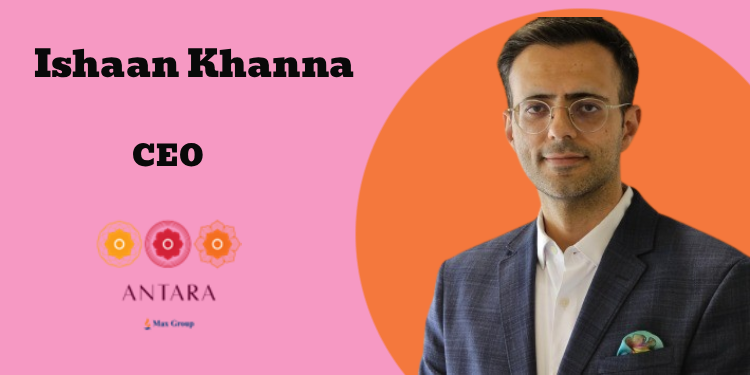
MediaNews4U.com caught up with Ishaan Khanna, CEO, Antara Assisted Care Services
Q. From a marketing perspective, is building trust and empathy and addressing misconceptions about healthcare and ageing the key priorities and focus areas of Antara?
Simply put, yes. Senior care, unlike many other categories, is very people-first; it concerns the people whom we are extremely sensitive about. When it comes to our parents, especially when they’re ageing and are at a very vulnerable stage, trust and empathy are perhaps the most critical factors. This is compounded by the fact that senior care is intensive and long-term.
It’s not a one-time transaction. For example, if one is scoping Antara for their parents, whether it’s a care home or a product, it’s a long-term engagement. It’s generally true across healthcare that trust and empathy are key priorities. However, in our experience, we’ve seen that it’s much more magnified for senior care, where people don’t want to just be assured of quality, but also trust that you have their parents’ best interests and comfort at the core of each offering.
 Q. Could you talk about the brainstorming that took place with the creative agency that led to the digital campaign with Hiten Tejwani?
Our primary objective with this campaign was to raise awareness, because care homes as a category is quite new. Not many people know what it entails or why it’s a good solution to so many of their felt pain points. From there, we knew the face of the campaign had to be someone who can personify care and responsibility.
Hiten Tejwani, through his roles, has come to be seen as a dutiful son / son-in-law among Indian audiences. So, we felt he could authentically convey our message. When it comes to caregivers, the biggest worry is the health and comfort of their parents when they’re not staying with them. They want a solution that is clinically backed, but also a warmer environment than a hospital. This is the gap our Care Homes address.
Q. In starting an honest conversation about the anxieties of caregiving and the loneliness of ageing, is the goal to build trust among caregivers?
Yes, definitely. With this campaign, our focus is the caregivers. They are key decision-makers when it comes to care options for their parents or other ageing relatives. Campaigns like this are important because there is still a lot of cultural taboo around senior care, due to how ‘old age homes’ are in the popular imagination.
Care Homes are entirely different, but many would not even consider this option because of the ‘log kya kahenge (what will others say)’ mentality. The fact is that this kind of structured, dedicated care is difficult to provide at home no matter how dedicated one is. It can foster healthy, dignified ageing for seniors. Our outreach to caregivers through this campaign is an attempt to break these taboos and expand people’s understanding of senior wellbeing needs.
Q. Since the TG is broad — from caregivers to seniors — how important is channel-specific communication?
In this case, our primary TG was the caregiver. That’s why this entire campaign is digital first. Channel-specific communication is critical for us, because you have to meet people where they are. When we’re trying to reach seniors, we would prioritise print or specific social media like WhatsApp. It’s not that seniors aren’t increasingly tech savvy, but each demographic has their own habits and nuances.
For example, they might hold newspaper at a higher credibility even if they are also active on social media. The focus with which they approach channels will does matter.
 Q. In the media mix, does Antara use digital the most? Or is traditional media key in reaching seniors?
It’s a digital-first strategy, for three main reasons:
– Like we have discussed, our primary TG is the caregiver, and majority of caregivers are in a space where digital is most native to them.
– A lot of the seniors in our target segment are at that age where they are also increasingly comfortable with digital.
– At an organisation-level, Antara is a tier-1 brand currently present in Delhi, NCR, Bangalore and Chennai. Our metropolitan presence means digital is an effective way to reach our target groups.
Q. WhatsApp has recently launched features for businesses. How is this making it a valuable platform in building the Antara Community?
WhatsApp has become one of the most valuable platforms for building the Antara Community as it bridges technology and trust. Unlike traditional social media, WhatsApp allows us to create intimate, two-way conversations that feel personal, immediate and inclusive, which is especially meaningful when engaging with seniors and their families. With WhatsApp’s new business features like broadcast lists, community groups and quick replies, we’ve been able to build a structured, interest-based ecosystem across six dedicated groups (Wellness & Fitness, Art of Living & Lifestyle, Medical & Expert Assistance, etc.).
These features help us share verified health content, campaign updates, expert videos, and even collect real-time feedback through polls, all within a familiar, easy-to-use interface. For our senior members, WhatsApp brings the comfort of a familiar platform, accessibility and easy participation, while for Antara, as a brand, it drives authentic engagement, customer trust and measurable ROI through two-way conversations rather than one-way communication.
Q. Could you shed light on the SEO strategy to grow brand searches and drive conversions?
SEO is one of our core pillars of brand discovery. Since it is a need-based category, search becomes the first interface of how people seek knowledge. There are certain keywords people search for when they are looking for solutions. As a brand, we want to be part of those intent searches, because often we are exactly what people are trying to find. So, SEO is one of the most important pillars of our discovery and building awareness about our brand.
Q. Does email marketing play an important role?
For us, email marketing is not an acquisition strategy. But, for nurturing and customer retention, it is an important medium.
 Q. What role is AI playing in various areas like product service innovation and campaign optimisation?
AI definitely plays a very important role. And the role of AI is increasing day by day. We’ve started using AI in content creation because that’s the biggest space. This includes AI-led videos, voiceovers, or adapting primary communication into vernacular languages.
Q. Do you think the use of AI dilutes the authenticity that a brand brings to the table? A lot of brands are deliberately choosing to move away from using AI to do creatives, voiceovers, and storytelling.
The use of AI is not black and white. I think of AI adoption as a journey, or an evolution. Anything new that comes to the horizon will always have limited trust in the beginning. So, just like any other technology, AI is right now at that nascent stage.
But it’s through our use of it that we learn what’s not working and refine what is working. At the end of the day, AI is a way of communicating your message. The core of the message, and who is saying it, is most important.
Q. According to data analytics, does the white space for growth lie in tier 2 and 3 towns and cities where healthcare access is an issue?
We’re seeing two distinct growth patterns across our business lines that reveal how the senior care market is evolving in India. For our AGEasy product line, tier 2 and 3 cities are already driving significant growth—nearly 50% of our customers come from these markets. The combination of strong digital penetration, active social media usage, and reliable delivery infrastructure means customers in Coimbatore or Indore can access our products as easily as those in Mumbai. Many receive their orders within 24 hours.
Our Care Homes business, however, follows a different adoption curve. Currently, our early adopters are concentrated in metros where specific conditions create immediate need: dual-income nuclear families, children working abroad, and limited extended family support. These urban professionals need—and can afford—professional care solutions for their aging parents. The need for assisted living certainly exists in tier two and three cities, particularly as more young professionals migrate for work.
However, several factors delay adoption. Many families still relocate together or rely on extended family networks. Cultural perspectives on elder care remain more traditional. And awareness of professional care options is still developing. Looking ahead, we see tremendous potential in these markets. As India’s demographic shifts accelerate—from large joint families to smaller nuclear units—the demand for senior care will become universal. Our strategy focuses on building awareness, addressing cultural sensitivities, ensuring affordability, and preparing for when these markets are ready. The white space is there; it’s about timing our expansion to match market readiness.
Q. What further marketing campaigns and innovations can one expect during the festival season?
Our marketing and communications strategy is usually not centred around the festive season as we are a need-based product and solution. However, festivals do present an opportunity to reiterate our purpose of building a society where senior care is treated with dignity and care.
 Q. What role does hyper-personalisation play for Antara and areas like e-commerce?
At Antara, we recognise that while the need for excellence, compassion, and care in senior living is universal, how each family experiences that need is deeply personal. Our brand campaigns establish the foundation of trust and awareness, showing our commitment to these universal values. But hyper-personalization is how we deliver on that promise individually.
In e-commerce, this means curating product selections based on specific health conditions, mobility levels, and lifestyle preferences. In our Care Homes, it translates to customised care plans, personalized activity schedules, and family communication preferences. The brand promise is consistent, the delivery is personalised. That’s how we ensure every senior and family feels Antara was designed specifically for them.