For the first time in its history, the IPL has faced two consecutive years of ecosystem valuation decline.
D and P Advisory recently curated ‘Beyond 22 Yards – ‘The Power of Platforms, The Price of Regulation’– an IPL and WPL Valuation Report for the year 2025’
Key Highlights
· For the first time in its history, the IPL has faced two consecutive years of ecosystem valuation decline—from Rs. 92,500 crore in 2023 to Rs. 82,700 crore in 2024, and further down to ₹76,100 crore in 2025.
· The drivers of this contraction are structural. The consolidation of media rights under JioStar has ended the competitive tension that once fuelled “auction fever.” Meanwhile, the sweeping ban on Real Money Gaming (RMG) advertising and sponsorship has removed Rs. 1,500–2,000 crore of annual spend from the ecosystem, leaving a visible void across broadcaster revenues, franchise partnerships, and fan-engagement activations.
· These twin shocks—the collapse of rivalry in media rights and the exit of the IPL’s most aggressive sponsor category—mark a reset for the league’s business model.
· Compared to the previous edition, the WPL ecosystem’s value has decreased from Rs. 1,350 Crores to 1,275 Crores, marking a 5.6% decline. In dollar terms, this translates from $160 million to $ 148 million, reflecting an approximate 7.5% drop.
· Royal Challengers Bangalore (RCB) finally ended their title drought in IPL 2025, lifting the trophy for the first time and instantly reinforcing their position as the league’s strongest brand.
Medianews4u.com caught up with Santosh N Managing Partner D and P Advisory
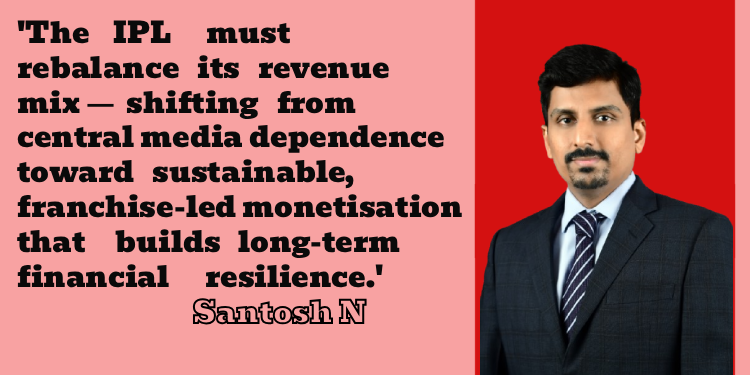
Q. The report noted that a reset is needed for the league’s business model. What would this entail?
It would mean rebalancing the IPL’s revenue and cost structures . moving from dependence on central media income to sustainable franchise-led monetisation.
Q. With the JioStar merger do you see major media rights like the IPL, ICC remaining stagnant or even dropping in value?
In the near term, consolidation may plateau growth as competitive bidding reduces, but over time bundled platforms could enhance reach and monetisation efficiency.
Q. The ban on Real Money Gaming has seen Rs. 2000 crore of annual spend being removed from the ecosystem. Do you see other categories filling the void?
Yes, sectors like FMCG, auto, fintech, and e-commerce should step up, though the intensity and risk appetite that RMG brought may take time to replace.
Q. Is expanding at some point to 94 matches a good idea or will it result in viewer fatigue?
I don’t think there will be viewer fatigue if the matches increase from 74 to 94 in steps (first to 84 and next to 94).
However, matches played at 3.30 PM would have lower viewership and hence lower revenue to the broadcaster. These increased matches coupled with a longer IPL window would be value accretive to all the stake holders.
Q. How is digital reshaping storytelling in the IPL through tech innovations?
AI-driven analytics, multi-angle viewing, and creator-led short-form content are letting fans co-create the IPL narrative beyond the live match.
Q. RCB is set to be sold according to media reports. Is this a surprise or a natural outcome after winning their first IPL title?
It’s a natural inflection point — valuations peak after success, making it a strategic time for investors to monetise their stake.
Q. RCB’s greatest strength lies in its unmatched fan loyalty which grew despite taking many years to win a title. What are the learnings from this for the other franchises?
Authenticity, consistent brand voice, and emotional storytelling matter more than trophies. Fans invest in identity, not just results.
Q. Gujarat Titans has a new owner Torrent. What do you think the company brings to the table and how will they benefit?
Torrent’s deep regional roots and diversified consumer base can enhance the franchise’s brand partnerships and long-term commercial stability.
Q. Do you expect to see more complete or stake sales moving forward?
Yes, as valuations mature and institutional capital flows in, we’ll likely see partial exits and diversification of ownership structures.
Q. What things would you like to see franchises do to bolster local revenue and deepen fan engagement next year?
Invest in city-specific experiences, regional content, and grassroots academies that build year-round community connection.
Q. What trends are seeing in terms of how team sponsors and partners are activating their deals through avenues like on-ground, digital?
There’s a clear pivot toward digital storytelling, influencer tie-ins, and AR/VR-enabled fan activations
Q. How do you see the WPL’s journey in terms of carve out its own identity and setting its goals?
The WPL is moving from novelty to narrative, defining itself through competitive quality, relatable stars, and a purpose-driven brand story rather than being a derivative of the IPL.
Q. There is a point of view that other sports following the IPL’s template are making a mistake. That is because cricket went through a journey of several years to get to the IPL. The IPL didn’t become a success overnight. Do you agree?
The IPL’s success rests on cricket’s deep cultural roots, existing fan base, and a mature ecosystem built over decades.
Replicating that overnight in other sports without similar historical depth or emotional connection can be premature.