Mumbai: Zota Healthcare’s retail arm, Davaindia, has expanded its flagship #CareForAll campaign – a community-driven initiative that provides shelter, medical response, and humane care for stray animals across the country. The scale-up comes in the backdrop of the recent Supreme Court directive mandating the removal of stray dogs from Delhi-NCR within eight weeks, pushing for humane adaptation and sheltering solutions.
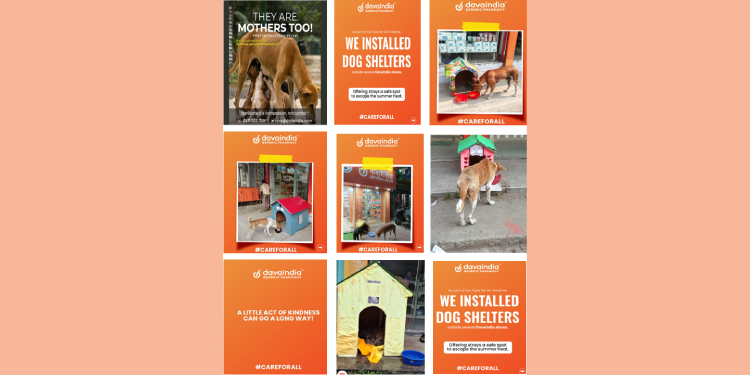
As part of the campaign, Davaindia has been setting up low-cost, weather-proof outdoor enclosures outside its COCO stores, which double as feeding stations and safe shelters for community dogs. The initiative is supported by collaborations with veterinary practitioners and animal-welfare NGOs to facilitate vaccination, sterilisation, medical treatment, and long-term sheltering for strays.
Experts have warned that abrupt large-scale removal of stray dogs can create health and ecological risks, including outbreaks of disease and the “vacuum effect,” where unvaccinated, potentially aggressive dogs take over cleared territories. Davaindia has positioned its programme as a humane model to counter these risks by prioritising mass sterilisation and vaccination drives alongside sheltering.
Talking on behalf of Davaindia, Dr. Sujit Paul, Group CEO — Zota Healthcare, stated, “Neutering and spaying of dogs is the only sustainable method of mitigating litter at the source — and that, if undertaken in a systemic manner, the communities will be stabilised in a decade, with spay/neuter averages of aprox ₹1000–₹2000 per animal being small costs relative to the human and animal suffering we are preventing. India lacks shelter infrastructure to humanely house millions of stray animals, which is why DavaIndia is trying to address the issue with a community shelter operation at company stores and mass vaccination campaigns. We must also avoid the vacuum effect — i.e. removing territorial attendant to unvaccinated dogs to occupy their territory creating exposure to zoonotic outbreaks of leptospirosis, mange, parvovirus, etc. During visits to South Africa (content that supports community based sheltering in pet food stores) and Georgia (rural community program) I observed radio/RFID tagging and also willing to pilot microchipping and RFID linkage with municipal records whenever possible (to improve accountability and follow up care)”.
The #CareForAll programme will now be rolled out in priority cities with more dog shelters at Davaindia COCO stores, alongside sterilisation and rehabilitation efforts through block-level Animal Birth Control (ABC) camps and subsidised spay/neuter slots. Injured, pregnant, and vulnerable dogs will be given priority medical attention.
The campaign also seeks CSR partnerships, sponsorships, and municipal cooperation to help subsidise sterilisation costs (₹1000–₹2000 per dog), while integrating RFID/microchip tagging for sterilised and vaccinated dogs. This system aims to improve accountability, prevent repeat measures, and build a long-term database for animal welfare efforts nationwide.
By combining community shelters, vaccination, sterilisation, and technology-driven tracking, Davaindia’s #CareForAll campaign positions itself as a scalable, humane model to address India’s stray dog challenge in alignment with public health and animal welfare needs.