New Delhi: In a significant push to revamp India’s public broadcasting and media measurement systems, the Government of India has undertaken a two-pronged approach—modernising Akashvani (All India Radio) and Doordarshan Kendras under the BIND Scheme, while also initiating key reforms in the television audience measurement ecosystem.
Minister of State for Information and Broadcasting Dr. L. Murugan informed the Lok Sabha on Wednesday that the government is upgrading broadcasting infrastructure nationwide through the Central Sector Scheme – Broadcasting Infrastructure and Network Development (BIND) 2021–26. With a total outlay of ₹2,539.61 crore, the BIND scheme aims to digitise and modernise broadcasting equipment, replace outdated systems, and introduce advanced studio and transmitter infrastructure across states.
“The government has undertaken measures for the modernization and expansion of Akashvani and Doordarshan Kendras (DDK) across all the states,” Dr. Murugan said in a written reply. He added that the upgrades under BIND are designed to strengthen public broadcasting, particularly in underserved and regional markets.
Bihar is among the states receiving targeted support under the scheme, with ₹64.56 crore allocated for Akashvani Kendras and ₹4.31 crore for Doordarshan Kendras.
“The focus of the scheme is on: digitalization and modernization of broadcasting equipment; replacement of old systems; upgradation of studio and transmitter infrastructure; and introduction of new technologies and digital workflows,” Murugan added.
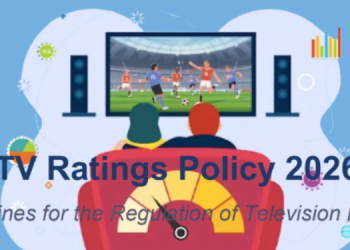
Alongside the infrastructure push, the government is also moving to overhaul the country’s television ratings ecosystem. Responding to an unstarred question by Members of Parliament Eatala Rajender, Chamala Kiran Kumar Reddy, and DK Aruna, Dr. Murugan revealed that draft amendments to the Policy Guidelines for Television Rating Agencies (originally issued on 16.01.2014) have been published for public consultation on the Ministry’s website.
“The proposed reforms aim to enable fair competition, generate more accurate and representative data, and ensure that the TRP system accurately reflects the diverse and evolving media consumption habits of viewers across the country,” he stated.
Currently, the Broadcast Audience Research Council (BARC) is the sole ratings agency in India, but has faced industry criticism over transparency and methodology. The new guidelines propose to open the ecosystem to multiple players by removing restrictive provisions, thereby democratising the television audience measurement system.
Notably, the revised framework advocates for technology-neutral ratings that capture viewer data across platforms such as cable, DTH, terrestrial TV—and, where feasible, digital/online platforms as well.
These twin measures—the BIND scheme and TRP policy reforms—signal the government’s intent to make state-owned broadcasting more competitive and relevant in an era of rapidly evolving viewer preferences and intense digital disruption.