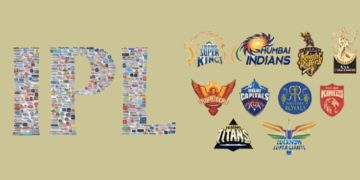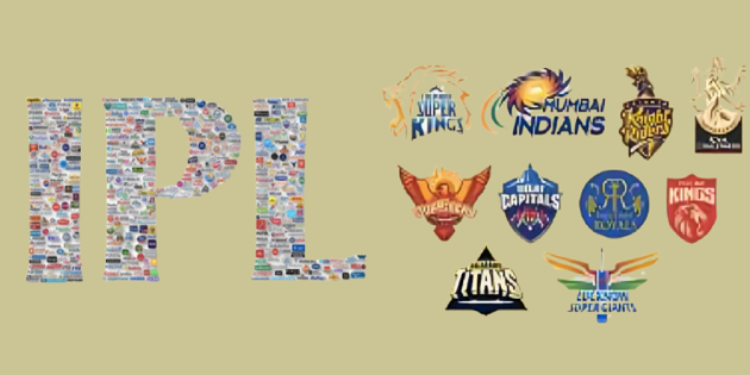
IPL 2026 is reinforcing the league’s status as one of the most powerful advertising ecosystems in global sport. With projected advertising revenues of ₹4,900–₹5,200 crore and a strong roster of over 25 sponsors across FMCG, tech and fintech categories, the tournament continues to command unmatched brand interest. Backed by media rights exceeding ₹48,000 crore and rising franchise valuations, the IPL has evolved into a multi-platform commercial engine. Yet, as the ecosystem matures, success is no longer defined purely by spend—but by effectiveness, recall and strategic execution.
Insights from the “Advertising on Cricket – A Compelling Playbook” report by Synchronize India in collaboration with Unomer reveal how advertising on IPL has undergone a fundamental transformation over the past 18 seasons—from volume-driven visibility to precision-led impact.
Creative Effectiveness: What Really Works
In an environment often described as the “Kumbh Mela of advertising,” where thousands of creatives compete for attention, the report underscores a critical truth—creative quality is the single biggest differentiator.
The analysis, based on the Creative Power Score (CPS), shows that the most effective ads consistently combine strong branding, clear messaging, and emotional or quirky storytelling. Celebrity presence continues to play a significant role, with a majority of top-performing creatives featuring well-known faces. However, celebrity alone is not sufficient—execution determines impact.
Interestingly, quirky and unconventional storytelling emerges as the most effective creative approach, outperforming even promotional or offer-led messaging. Emotional narratives also perform strongly, particularly when they tap into themes like family, aspiration and trust. In contrast, purely transactional creatives tend to have limited longevity and weaker recall.
Another key finding relates to ad duration. While the ecosystem has shifted towards shorter formats such as 10- and 20-second spots due to rising media costs, the most effective creatives tend to balance brevity with clarity. Over-compression of messaging risks misattribution, where viewers remember the ad but not the brand—leading to inefficient spending.
Ultimately, the report reinforces that in IPL’s high-clutter environment, creativity is not an add-on—it is the primary driver of effectiveness.
Strategic Takeaways for Advertisers
The evolution of IPL advertising offers several clear strategic lessons for brands. First, consistency matters far more than episodic participation. Advertisers that return season after season build stronger recall and achieve better returns compared to those that treat IPL as a one-off campaign.
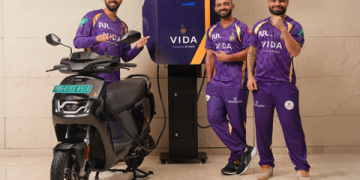
Second, the shift towards ownership-led visibility—through team sponsorships and central partnerships—indicates that brands are increasingly prioritising sustained presence over fragmented exposure. These formats not only enhance visibility but also strengthen brand association with the league and its teams.
Third, the importance of integrated, cross-platform strategies has grown significantly. With audiences now consuming IPL across television, mobile and connected TV, advertisers must design campaigns that work seamlessly across formats rather than treating each medium in isolation.
Finally, measurement has become critical. Traditional metrics such as GRPs and spend are no longer sufficient to evaluate effectiveness. The report highlights the importance of composite metrics like visibility and recall scores, which provide a more accurate picture of brand impact.
Structural Shifts in IPL Advertising
Over the past decade, IPL advertising has undergone three major structural transformations.
The first is the shift from linear television to digital. The introduction of streaming platforms and free mobile access has fundamentally altered consumption patterns, with digital viewership now surpassing television. This has expanded inventory, enabled targeted advertising and attracted a new generation of mobile-first brands.
The second shift is from volume to efficiency. Earlier, success was often equated with the number of creatives or the scale of spend. Today, brands are focusing on fewer, more effective creatives that deliver stronger recall and engagement.
The third shift is from exposure to measurement. Advertisers are increasingly moving away from vanity metrics and adopting more sophisticated frameworks that evaluate visibility, recall and creative effectiveness. This marks a transition towards accountability-driven advertising, where outcomes matter more than inputs.
Together, these shifts signal the maturation of IPL as an advertising platform—one that is becoming more data-driven, performance-oriented and strategically nuanced.
The Future of IPL Advertising
Looking ahead, the IPL advertising ecosystem is poised for further evolution. Digital will continue to gain dominance, with connected TV and mobile driving the next phase of growth. This will enable more personalised and targeted advertising, improving efficiency and return on investment.
Sponsorships are expected to become even more premium, as brands seek deeper integration with teams and league properties. At the same time, creative differentiation will become increasingly critical, as clutter intensifies and audience attention becomes harder to capture.
The report also points to a likely consolidation of advertiser power, where a smaller group of committed brands drives a larger share of total investment. This trend underscores the importance of long-term strategy and sustained presence in IPL.
Most importantly, the future of IPL advertising will be defined by memory, not just visibility. As the ecosystem becomes more competitive, the brands that succeed will be those that are not only seen, but remembered.
Over 18 seasons, IPL advertising has evolved from a high-reach opportunity into a sophisticated, multi-layered ecosystem where creativity, strategy and measurement intersect.
As IPL 2026 demonstrates, the league remains unmatched in scale—but its true value now lies in effectiveness. In a cluttered and rapidly evolving media landscape, the IPL is no longer just about who spends the most, but about who connects, resonates and stays in the consumer’s mind.