Mumbai: IPL 2026 is reinforcing the league’s position as one of the most formidable commercial ecosystems in global sport. The ongoing season is expected to generate between ₹4,900 crore and ₹5,200 crore in advertising revenue, with broadcaster JioStar onboarding over 25 sponsors across FMCG, technology and fintech categories. Despite regulatory pressures impacting real-money gaming advertisers, demand remains strong, reflecting the IPL’s ability to continuously attract a diversified advertiser base.
Media rights continue to provide the financial backbone of the league. The current cycle, valued at over ₹48,000 crore ($6.2 billion), ensures stable central revenue flows for franchises while strengthening the IPL’s long-term commercial outlook. This has directly translated into rising franchise valuations, with recent transactions valuing Royal Challengers Bangalore at $1.78 billion and Rajasthan Royals at $1.63 billion, signalling sustained investor confidence and growing global interest.
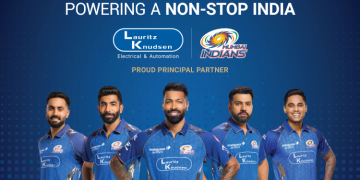
At the team level, franchises have evolved into high-value marketing platforms, with leading teams such as Gujarat Titans and Mumbai Indians securing upwards of 30 brand partnerships each. With revenue streams spanning sponsorships, advertising, ticketing, merchandising and digital content, IPL 2026 exemplifies a scalable and diversified business model that sits at the intersection of sport, media and advertising.
However, the true magnitude of IPL’s commercial success becomes clearer when viewed across its 18-season journey.
₹1.65 Lakh Crore: The Scale That Defines IPL
Over the past 18 seasons, the IPL has generated a cumulative investment of approximately ₹1.65 lakh crore, underscoring its evolution into one of the largest advertising-led sports economies globally.
This data, based on the “Advertising on Cricket – A Compelling Playbook” report by Synchronize India in collaboration with Unomer, highlights how IPL has built a deeply integrated financial ecosystem that extends far beyond sport.
A significant portion of this value is anchored in media rights, which account for nearly half of the total investment pool. Advertising and brand spends form the second-largest component, followed by team ownership investments and central sponsorship revenues. This layered structure demonstrates that IPL’s growth has not been dependent on a single revenue stream, but rather on a balanced and interdependent commercial model.
From Sporting Event to Media Economy
What began in 2008 as a $1.1 billion venture has transformed into a $18.5 billion media property by 2025, reflecting a 16-fold increase in valuation.
This expansion has been driven by a combination of factors, including aggressive bidding for media rights, rapid digital adoption, and sustained advertiser confidence. Over time, IPL has shifted from being a television-led property to a multi-platform media ecosystem, unlocking new layers of monetisation.
The steady escalation in media rights—from ₹8,200 crore in the first decade to over ₹47,000 crore in the current cycle—illustrates how centralised broadcast value has enabled the league to scale exponentially while supporting higher advertising rates and sponsorship premiums.
Advertising at Scale: Depth and Concentration
Advertising has played a central role in shaping IPL’s commercial trajectory. Between 2013 and 2025 alone, brands invested close to ₹30,000 crore into IPL advertising, with participation from over 500 advertisers.
Yet, the ecosystem is defined not just by participation but by concentration. A relatively small cohort of long-term advertisers accounts for a disproportionate share of total spending. This indicates that IPL rewards consistency and sustained presence, rather than one-time visibility bursts.
Categories such as smartphones, beverages, e-commerce, and automobiles have remained dominant contributors, reinforcing the importance of category-level commitment in building recall and brand equity on a high-clutter platform like IPL.
Sponsorship and Franchise Investments: Expanding the Value Chain
Sponsorships have emerged as a premium layer within the IPL ecosystem. In 2025 alone, central and team sponsorships together generated over ₹2,000 crore, with all available inventory—including jersey placements—fully monetised.
This reflects a broader shift in advertiser preference towards ownership-led visibility, where brands gain continuous exposure rather than relying solely on spot advertising.
Parallelly, franchise investments have strengthened IPL’s position as a high-value asset class. The sale of new teams in 2022 and the subsequent surge in team valuations demonstrate how franchises are now viewed not just as sports entities but as long-term commercial investments with global appeal.
A Self-Reinforcing Growth Cycle
One of the defining characteristics of IPL’s scale is its ability to create a multiplier effect across stakeholders. Higher media rights valuations drive increased advertiser interest, which in turn pushes up sponsorship deals and enhances franchise valuations. This interconnected system ensures that growth in one segment fuels expansion across others.
The shift towards digital consumption has further expanded this economic base. With digital viewership surpassing linear television and connected TV gaining traction, IPL has unlocked new advertising formats, improved targeting capabilities, and attracted a new generation of performance-driven brands.
Resilience Amid Structural Shifts
Despite its scale, the IPL ecosystem continues to navigate evolving challenges. Regulatory developments, particularly around online gaming, could impact advertising inflows in the short term. However, the league’s diversified advertiser mix and its ability to attract new categories position it well to absorb such disruptions.
More importantly, IPL’s strength lies in its adaptability. From television dominance to digital expansion, and from spot advertising to integrated sponsorships, the league has consistently evolved its commercial model to stay ahead of market shifts.
Conclusion: The Economics of Scale and Attention
The IPL’s ₹1.65 lakh crore journey is ultimately a story of how scale, consistency, and innovation can transform a sporting property into a global commercial powerhouse.
As IPL 2026 demonstrates, the league is no longer defined by cricket alone. It is a platform where media, advertising, and investment converge, creating a high-intensity attention economy that continues to grow in both scale and sophistication.
With strong fundamentals, expanding digital reach, and sustained advertiser confidence, IPL stands as a benchmark for how sport can be monetised at scale—both in India and globally.