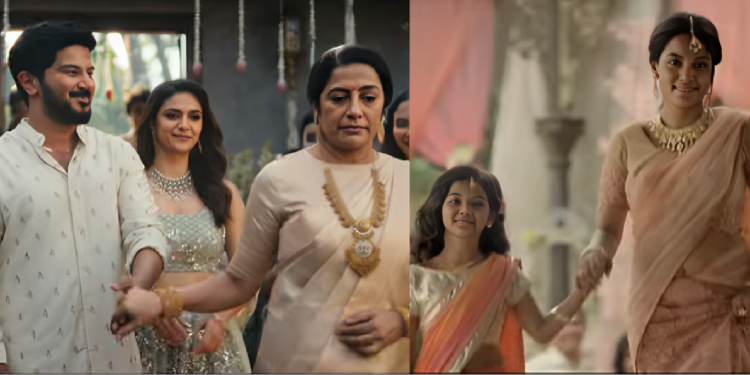
In Indian advertising, wedding films occupy a rare space where commerce, culture and emotion intersect. Only a handful of brand stories have managed to transcend product and become part of public memory. Among them, Tanishq’s 2013 Wedding Film by Lowe Lintas remains a benchmark — not for its jewellery, but for the quiet courage of its storytelling.
More than a decade later, Jos Alukkas’ latest campaign My Best Friend’s Wedding, created by Kochi-based Toki Creative Collective, arrives not as a copy of that moment, but as its natural successor — reflecting how Indian weddings, relationships and choice have evolved.
Together, the two films feel less like competitors across time and more like chapters in the same cultural story.
Two eras, one emotional language
The Tanishq Wedding Film (2013) used remarriage as its emotional anchor — a bold move for mainstream Indian advertising at the time. By centring the story on a bride with a child from a previous marriage, the film quietly challenged social stigma while positioning Tanishq as a brand that stood for modern Indian womanhood.
The jewellery in that film was never the hero. The courage to choose happiness again was.
Jos Alukkas’ My Best Friend’s Wedding picks up that same emotional grammar — but in a very different social climate. Where Tanishq had to persuade society, Jos Alukkas now speaks to a generation that has already internalised those freedoms.
There is no shock factor in the Jos Alukkas film. There is no confrontation. Instead, there is something more powerful: quiet certainty.
From ‘permission’ to ‘confidence’
In 2013, Tanishq’s film was about asking society for permission — permission for a woman to love again, permission for a blended family to be seen as whole, permission for a wedding to look different.
In My Best Friend’s Wedding, no one asks.
The wedding simply unfolds.
Dulquer Salmaan, Keerthy Suresh and Suhasini Maniratnam don’t perform conflict; they inhabit stability. Their presence signals three generations who are aligned, not arguing. The film doesn’t explain relationships — it assumes them.
That shift is everything.
It tells us how far Indian wedding culture has moved: from proving legitimacy to simply living it.
Jewellery as witness, not spectacle
Both films share another rare quality in jewellery advertising — restraint.
In the Tanishq film, the jewellery frames the bride as she steps into a new chapter, but it never demands attention. It quietly marks a moment of acceptance.
Jos Alukkas follows the same philosophy. Jewellery is not displayed; it is worn. It doesn’t announce itself; it belongs. It becomes part of the memory rather than the message.
As Paul Alukkas puts it, design today is shaped by how people want to live with their jewellery, not just how it looks on a single day — a belief that mirrors Tanishq’s original storytelling approach.
Two agencies, one cultural instinct
Lowe Lintas in 2013 and Toki Creative Collective in 2026 operate in very different industry climates, but their creative instinct is strikingly similar.
Both films trust the audience.
Both avoid melodrama.
Both use intimacy instead of spectacle.
Anjo Jose Kandathil of Toki speaks about wanting to create a story that would “stay with people and start a conversation.” That is exactly what Lowe Lintas achieved in 2013 — and what Jos Alukkas has now continued.
A shared legacy across brands
What makes My Best Friend’s Wedding remarkable is that it does not try to outdo Tanishq’s iconic film. Instead, it completes it.
Where Tanishq showed a society learning to accept new forms of love, Jos Alukkas shows a society that already has.
Together, they map a cultural journey — from courage to confidence, from disruption to belonging.
In doing so, Jos Alukkas doesn’t just release another wedding film. It places itself inside a lineage of Indian advertising that believes jewellery is not about ornamentation, but about the moments people choose to remember.
And that is what makes My Best Friend’s Wedding feel not like a rival to Tanishq’s 2013 masterpiece — but its most fitting companion.