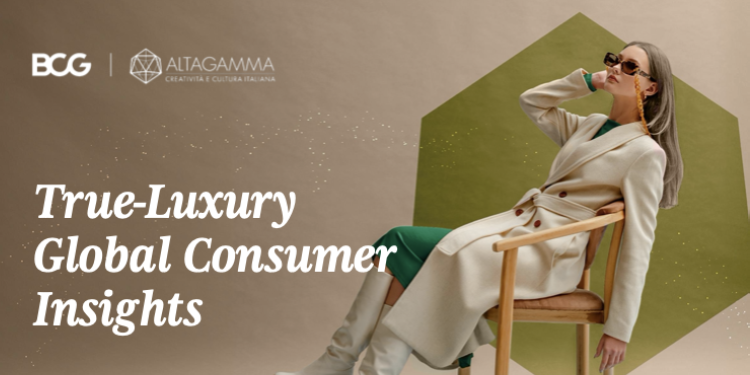
The global personal luxury goods market is witnessing a pivotal shift as it braces for its first significant slowdown in more than a decade, with 2025 growth projected to be flat or even slightly negative. According to the latest True Luxury Global Consumer Insights 2025 report by Boston Consulting Group (BCG), this deceleration signals a fundamental reordering of the market’s growth drivers.
While aspirational consumers—those who have historically formed the bulk of luxury’s customer base—are pulling back amid rising affordability concerns, the ultra-wealthy are emerging as the primary engine of value creation in the luxury space. These top-tier clients, representing just 0.1% of the population, now account for a staggering 23% of global luxury spending.
BCG’s report, based on a comprehensive survey of luxury consumers across all spending levels, highlights how the industry’s rapid expansion over the past decade may have diluted the exclusivity and essence that once defined it. “In chasing scale, the luxury sector lost sight of its soul,” the report states, cautioning that brands overly reliant on the aspirational segment are now facing declining performance.
A Market Reset: Back to the Core
The research outlines a clear way forward: a return to core principles and a sharper focus on top-tier clients—who on average spend €355,000 annually on luxury and belong to a broader base of high-net-worth individuals growing at around 10% per year globally.
These elite consumers are demanding more than just products—they are seeking personalization, intimacy, excellence, and genuine human connection. However, many feel today’s luxury offerings have become “too noisy, too crowded, too industrialized.”
Beyond Ownership: A Lifestyle Mindset
BCG also observes a paradigm shift in how luxury is being consumed. While personal luxury goods remain a cornerstone, the ultra-wealthy are increasingly spending across broader lifestyle categories—including wellness, health, and immersive experiences—signaling a transition from “ownership” to “orchestration.”
This evolving mindset aligns with the rising ‘health-as-wealth’ philosophy among top-tier clients, presenting new opportunities for luxury brands that are agile enough to diversify their offerings and engage deeply across lifestyle touchpoints.
India: A Market to Watch
Although India is not yet the “next China,” BCG highlights the country as a rising force in global luxury. With its population of high-net-worth and ultra-high-net-worth individuals projected to grow at a robust 11–15% CAGR through 2034, India presents fertile ground for long-term investment and localization strategies.
“As wealth creation accelerates and a brand-conscious, younger demographic emerges, India is becoming an essential frontier for luxury brands,” the report notes.
A Call for Renewal
As the market recalibrates, the report calls on luxury brands to return to their roots—craftsmanship, personalization, and trust—especially in emerging economies where affluence is rapidly catching up with aspiration.
In a world of volatility and overexposure, BCG’s message is clear: enduring growth will come not from chasing the crowd, but from deepening connections with those who matter most. For luxury to thrive in this new era, brands must elevate experience over expansion—and soul over scale.