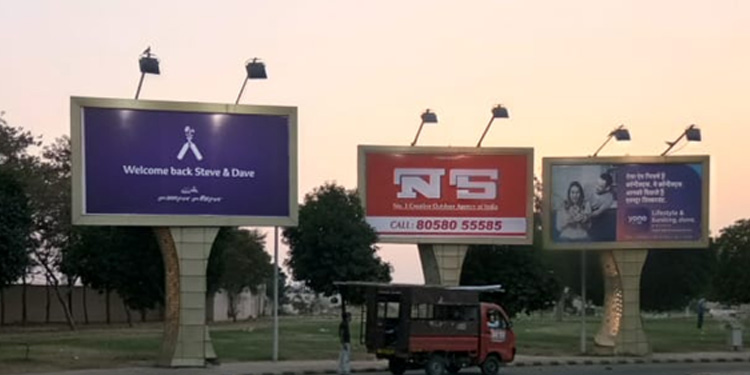
Mumbai: In a landmark reform aimed at unlocking new revenue streams and ensuring transparency, the Maharashtra government has introduced a comprehensive policy for outdoor advertising hoardings across the state. This is the first such initiative beyond Mumbai, which has operated under a standalone policy since 1988.
The new framework, issued through a Government Resolution (GR) by the Revenue and Forest Department on Monday, empowers District Collectors to auction government land for advertisement hoardings through digital e-auctions. Officials estimate that the move could generate hundreds of crores in non-tax revenue while standardising practices across urban and rural regions.
“This policy will enhance state revenue and also contribute to employment generation,” the GR stated, calling the initiative long overdue given the surge in advertising demand across Maharashtra.
Key Features of the Policy
-
Digital E-auctions: Each district will serve as a single auction unit, with oversight committees headed by Collectors and nodal officers.
-
Reserve Price Formula: Lease prices will be linked to land value and the Marginal Cost of Lending Rate (MCLR). Premium locations such as highways, municipal corporations, and A-class municipalities will carry reserve prices at five times land value × MCLR; smaller towns and rural areas will be pegged at three times.
-
Eligibility Norms: Only Maharashtra-based firms registered with the Directorate General of Information and Public Relations (DGIPR), with at least five years of experience and a turnover double the reserve price, can participate.
-
Lease Terms: Hoardings will be leased for five years, renewable once for an additional five years at a 25% fee hike. Winning bidders must also provide free space for government campaigns for at least seven days per quarter.
Safeguards and Penalties
The policy bars political hoardings during election periods in line with the Model Code of Conduct. Hoardings that obstruct traffic signals, endanger public safety, or harm the environment will be prohibited.
Violations will attract strict penalties, including immediate cancellation, fines of up to double the rent for three years, forfeiture of deposits, and blacklisting from future auctions. Allottees are also required to dismantle hoardings at their own expense once leases expire.
Insurance and safety responsibility rests entirely with the lessee, with full liability in case of accidents.
Political and Industry Implications
While the government is pitching the move as a revenue, transparency, and job-creation reform, analysts expect political debate over control of outdoor publicity space in the run-up to elections.
For advertisers and media firms, the policy opens structured access to valuable government land across urban pockets, semi-urban stretches, rural markets, and highways—unlocking a market that has so far remained fragmented outside Mumbai.