For years, organisations believed they could manage perception and experience separately. Marketing focused outward, on reputation, visibility, and differentiation, while people strategy remained an internal discipline, largely centred on hiring, engagement, and retention. That separation worked in a slower, more compartmentalised world. It no longer does.
Today, employees, candidates, customers, and investors consume the same information, often at the same time. The distance between what an organisation says and how it behaves has narrowed dramatically. In this environment, marketing is no longer just about shaping external perception. It is inseparable from how people experience the organisation from within.
The future workforce has not changed the rules loudly, but it has changed them decisively. It is not simply younger or more digitally fluent, it is more observant. People watch how leaders act under pressure, how trade-offs are explained, and how values show up during moments of uncertainty. Purpose statements are no longer accepted at face value. They are tested against behaviour.
This has exposed a familiar weakness in many organisations, purpose that exists as language, not practice. When brand purpose lives only in campaigns, it creates internal expectations that people strategy is often unprepared to meet. Employees do not disengage because purpose exists. They disengage when it feels performative.
What people are ultimately asking for is not perfection, but consistency.
In the past, marketing could afford to project aspiration. Today, aspiration without alignment carries risk. Employees experience the organisation through everyday decisions, who is promoted, how workload is managed, and whether flexibility is real or symbolic. These lived experiences form the most credible narrative about the brand, far more powerful than any advertisement or employer branding exercise.
This is why people strategy has become central to brand credibility. How an organisation recruits, develops, listens to, and supports its people is now visible to the market. When marketing and HR operate in isolation, contradictions surface quickly. When they move in alignment, purpose becomes believable.
Moments of tension reveal this most clearly. Growth phases, restructuring, cost pressures, and strategic pivots expose an organisation’s true priorities. During these moments, employees observe closely. Are leaders transparent? Are decisions explained or simply announced? Are people treated as stakeholders or as variables to be managed?
From an HR perspective, this demands a reframing of people strategy. Engagement is no longer driven primarily by programmes or incentives. It is driven by clarity. People want to understand what matters, how decisions are made, and which trade-offs the organisation is willing to stand by. Without this clarity, even well-intentioned initiatives feel hollow.
Leadership becomes the critical connector. Employees do not experience brand purpose through messaging. They experience it through leadership behaviour. Managers translate intent into action every day. When leaders explain their thinking, acknowledge uncertainty, and remain predictable in their values, trust strengthens, even during difficult periods.
This is where alignment becomes operational rather than philosophical. Leadership development is no longer just about building capability. It is about protecting brand integrity. A brand promise that cannot be lived by managers at scale is not a promise. It is a liability.
The future workforce also places a premium on fairness and predictability. Flexibility, wellbeing, and inclusion are often framed as benefits, but they are experienced as signals. People understand that not every role allows the same flexibility. What they look for is honesty and consistency. When expectations are clear and applied fairly, trust grows. When policies exist but are unevenly enforced, cynicism follows.
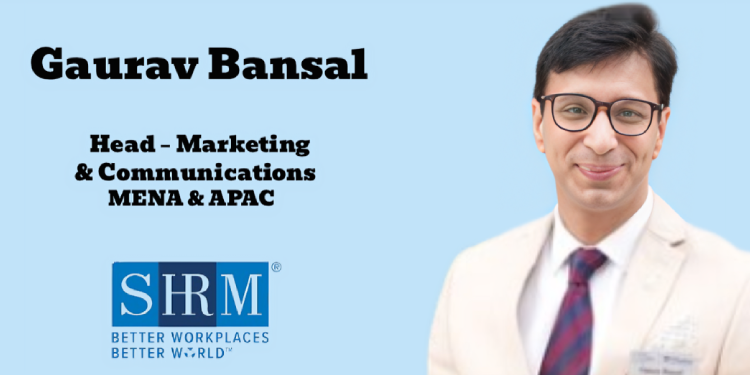
For SHRM and HR leaders globally, this moment represents an opportunity to reposition people strategy as a central driver of organisational trust and brand strength. As a champion of HR best practices, SHRM works closely with organisations to help leaders align intent with execution, ensuring that growth, transformation, and technology are anchored in people-first decisions.
In the age of the future workforce, attention alone is not enough. Reputation must be reinforced by retention, trust, and internal advocacy. Marketing, in this context, is no longer about persuasion. It is about alignment.
When brand purpose and people strategy move in the same direction, organisations earn belief, first from within and then from the world outside. That belief is what allows teams to scale without losing meaning and brands to grow without losing trust.
(Views are personal)