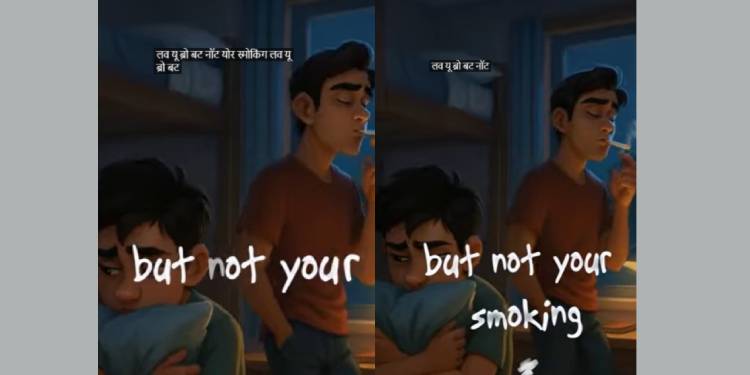
Mumbai: Ahead of World No Tobacco Day, MediBuddy, a digital healthcare platform, has launched its latest awareness initiative — #NoPuffPlease — a bold, peer-driven campaign urging individuals to quit smoking not just for their own health, but for the safety of those around them.
At the heart of the campaign is a one-of-a-kind musical anthem titled “Love You Bro… But Not Your Smoking,” crafted entirely using AI — from lyrics to rhythm and melody. The track takes an emotionally charged yet relatable approach to highlight the social and emotional damage caused by smoking, especially to passive smokers — friends, family members, and even strangers — who inhale harmful smoke without choice.
MediBuddy’s decision to go beyond conventional scare tactics stems from alarming data. According to the Global Adult Tobacco Survey (GATS), India has over 267 million tobacco users, with 28% of adults aged 15–24 being regular smokers. WHO reports from 2024 reveal that more than 40% of non-smokers are exposed to secondhand smoke, leading to nearly 1.2 million global deaths annually — a significant share of which comes from India.
“MediBuddy believes preventive care begins with awareness,” said Manu Sankar Das, Head of Brand Marketing, MediBuddy. “The statistics on smoking are deeply concerning, especially among the younger demographics, and as India’s largest digital healthcare company, MediBuddy feels the urgent need to connect with this demographic differently, as traditional hard-hitting advisories often miss the mark. The #NoPuffPlease campaign and the AI-crafted anthem ‘Love You Bro… But Not Your Smoking’ are consciously moving beyond scare tactics. Instead, by harnessing AI to create a relatable song from lyrics to rhythm, we’re adopting a peer-driven approach. Our aim is to genuinely resonate with young adults, highlighting how smoking impacts not just their personal health, but profoundly affects the well-being of their friends, family, and even strangers, ultimately straining the relationships they cherish. It’s a call for collective responsibility and healthier connections.”
Built on a catchy Hinglish rhyme scheme with a modern, street-style beat, the song is designed to appeal to Gen Z and millennial listeners. The anthem blends humor with a hard-hitting message, making it easily shareable and impactful — a call to take collective responsibility for healthier lives and stronger social bonds.