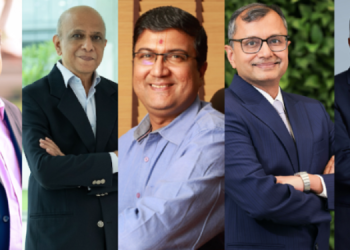
Mumbai: In a panel discussion on the second day of FICCI Frames WPP Media’s Head Content Entertainment, Vinit Karnik said that other sports following the IPL model predominantly is not a great idea.
He noted that what works is firstly building communities, a very solid fan base and possibly look at scaling up on that. “That’s exactly what cricket did. I mean, we keep talking about the World Cup win in 1983 which obviously was the pivotal point for us in the world of cricket. Then you obviously had the master in Sachin Tendulkar which happened to us in 88-89 and then followed by that was a great initiative by Jagmohan Dalmia around 1992-93 if I remember it right, where the first time ever I mean BCCI got the broadcasting rights.” Earlier DD would automatically get the rights
BCCI and cricket also has gone through that journey till 2007 when the T20 team won the World Cup in South Africa. “The rest is history and IPL happened. So I think there is a lot and lots to learn from cricket as a case study. I think if we adopt some of those nuances and adopt to the sport nuances and culturally make those two ends meet, I think we have a massive story to be told in the world.” The example of Kabaddi was offered. It was an indigenous sport coming from India, curating those audiences across the country and elsewhere. These learnings need to be adopted to other sports and predominantly the Olympic sports.
It is important to collectively make those right moves, take those right decisions, build communities around what is done. Then there is no dearth of money in this country for sure.
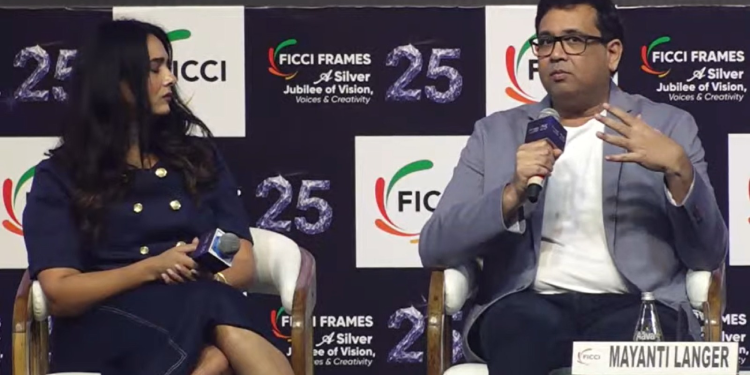
The Panel Discussion was called ‘Cricketainment & Beyond – The Power of Live Entertainment That Fuels M&E’. The moderator was sports Journalist Mayanti Langer.
Karnik noted that cricket has been a 30-year journey where a lot of hard work has gone into it in terms of the way the structure has been put together in terms of grassroots, the local sports, the state federations who actually drive cricket in India. “I mean, we all see the face of cricket in India but the real work that happens is at the state federation level.” He gave the examples of the Irani Trophy, the Deodhar Trophies, the Ranji Trophy which actually feeds into Team India. “That’s the bench strength that it has created.”
Karnik also spoke about the shift in importance of ticket sales as a key revenue source for events. “There was a huge myth that Indians don’t pay for tickets and Indians don’t pay premium for tickets and here we are today where the entire economics of live entertainment is on the back of gate revenue.
“Sponsorship obviously comes as a huge cherry on the cake but the live entertainment business today is predominantly driven by ticket sales. Now that’s a massive shift in consumption in our audience and wedding parties, sangeet parties are today a part of every millennial’s life and I think it surprises us but I think it’s absolutely a given. So I think from a consumption perspective, from an audience perspective, curation perspective, we have come a long way and this is only growing in double digits and more.”
Langer asked JioStar executive VP Sidharth Sharma about kabaddi. He noted that it has transformed not just the company’s broadcast numbers but has appealed to so many different generations. “Yes we packaged it differently but it was a very conscious effort because in a way you are contributing to India’s sports culture.”
He noted that initially there was cynicism. “We Indians are a bit of a cynical lot, when we started there was cynicism within us that will this sport that’s not been actively consumed or seen anywhere, part of a vestigial recollection, can it really capture a generation or this generation which has probably never seen the sport. What what good marketing, solid product and concerted efforts from the federation can deliver is a prime example of what kabaddi did and how it captured the nation and went on to become the second most watched sport.”
He noted that there was a strong undercurrent where people used to play kabaddi in a lot of regions even around Mumbai, the kabaddi clubs in Mumbai were in thousands even then. The fcat though was that they were never exposed or given it the kind of structure or framework and the broadcast heft that JioStar brought to it.
“It was also fomented with a lot of support from the federation which allowed us to tinker and tweak the rules of the sport. A raid could be a 30 second raid which kind of added that drama into the, we created a new lexicon of the sport. We designed the mat, the color of the mats and ensuring that does not clash with any of the jerseys.
“The franchises were very kind to allow us that kind of latitude and us saying no to the kind of jerseys that they were allowed to wear or not to wear. I think all of this went without diluting the core proposition, the essence, the earthiness of the sport and coupled with the aspirational value that we drove with it where we wanted to give these players the pride of place that they deserve. The product was very powerful.”
He noted that people watch sport when they see competition of a particular level and if that competitiveness exists then you find the audiences. “In cricket we have reached a stage where we are probably the best in the world. In kabaddi they were always the best in the world, what they did no one else did.
“The kind of athleticism, the kind of energy, the way that they kind of played the sport was something that enraptured the nation because nobody expected this level of tug and pull to happen. The physicality of the sport grabbed it, the nature of the sport that it’s so instant and it’s snackable. Every rate is 30 seconds.
“You don’t have to wait for a high point. It’s at every 30 second interval, 40 minutes of the sport and the way that we packaged it, the graphics, the in-depth storytelling, building new heroes, building the lexicon of the sport, training commentators, every producer that really came on to it, that grabbed the nation and that made kabaddi the product that it eventually went on to become and that’s a persistent effort. We have not let the ball drop on it and we’re consistently working towards ensuring that it is India’s global sport, India’s desi cool sport that we give to the world.”
There was push to have audiences around the world watch the sport. “So when the kabaddi world cup happened it was broadcast on ESPN in the US and Sky in the UK and Fox in Australia. We as recently as last year had an exhibition match in collaboration with Visit Victoria and we did that in Melbourne where the Australian team as well as the Indian players played. So we are always constantly looking at giving the audiences the opportunity, the aperture to engage deeply with kabaddi and really talk to the recollection that they have that this is a sport that we’ve seen growing up, we’ve played growing up and a new sport for the younger generation to cheer.”
Sharma also noted that live sports and broadcast have been synonymous and had a symbiotic relationship over the years. “We start from the advent of radio and commentary for sports on radio to where cricket and live sports coverage currently is. It’s had a quantum leap and in a nutshell if I were to really talk about this journey, from there where in 1983 it was that one moment where peering through neighbours’ windows to watch that final trophy come to the hand, the provincial cup coming to the hand of Kapil Dev and which kind of collectively brought that cemented that Indian-ness for an entire generation to now curating individual experiences for every person who owns a screen collectively as well as individualistically to give them the access, empowering them enough to make choices on the basis of their watching preferences, their angles in which they want to watch, the languages in which they want to watch, their ability to consume second screen on the same screen with all the data and stats that are available to them to cater to a demographic that does not just necessarily watch cricket in one way which was the traditional way of a very pontificating approach or deep analysis that came with it but also making it more relatable, accessible and giving newer audiences to have a taste of cricket and help them dive deep into fandom.
“All of that has changed and with that change has revolutionised as well as democratised consumption as well as the ability to engage with fans, engage in building communities getting new touch points, crafting unique experiences. So the world has completely evolved and changed and live and live sports and this this intersection at which we were is something that has been catalysed by broadcast.”
Wizcraft Entertainment co-founder, director Sabbas Joseph noted that technology helps track people, how you track the experience, how you’re getting input from there that goes back to the curation and the planning and all of that. “Technology is also the great equalizer that helps you reach everyone almost at the same time and same time technology allows you to be individual so you can curate the experience the way you want to receive it, the way you want to do it and I think what Star has been doing, JioStar has been doing on the cameras and different angles that you get with it, it’ll transform it.”
He said that besides the event screen there’s a second experience that’s been given to you at the event on your mobile phone, on the iPad and you’re seeing it in VR, you’re seeing it in different angles, you’re seeing close-ups etc. “So you will find that happening not just in entertainment events, you will have that within a stadium and that’s what we predict technology is going to be able to do. It’s not going to be able to just help us to get there but it’s going to help us to experience it even better.”
On the jobs creation front he noted that the event industry, working with the Prime Minister’s office and leaders, has stopped asking the government what it can do for it. “We went out there and asked India what can we do for you and in trying to answer this question of what can we do for India, several things came out. The job creation by the event industry across the tourism sector etc turned out to be more than 10 million people. We’re employing across the events industry from people who have never been to school to MBAs, IIMs and the management graduates coming from across the world, the best in class.”
He noted that we are fortunate that we are in the time where the government of India has finally woken up and woken up all the states and the entire country about the concert economy. Event management is now a part of state policy and economic policy. And now the government of India has created a joint working group.
“It has never happened before. We pleaded for this but for the first time the government of India has created a joint working group with 10 different ministries represented on this joint working group.”
The group also has the likes of Zomato District on it. There are event managers on it. There is BookMyShow, the music companies. “All of them are part of this initiative. We’re looking at greenfield projects to develop them into venues now where government and private partnership is something we’re persevering. They’re looking at changing the licensing structure which we have some ridiculous 20 to 30 licenses that you obtain for any concert.
“That has been changed. Now if that is changed one big thing will happen but the real big change that has to happen is how to convert cricket grounds into entertainment venues. How can these become multi-purpose venues because the best infrastructure with the best parking, best facilities, security in place are the stadiums.
“It is imperative that we get all of this in order as we open up the economy across the space. You do not have this infrastructure in the smaller towns. The tier two, tier three cities which I refer to as growth cities. These growth cities don’t necessarily have that but the consumers there, the opportunity is there. Of course there are the challenges and I think the fact that the government has woken up to the opportunity and is ready to work with the industry in an active manner. I think we have solutions on its way and this industry is going to grow by leaps and bounds.”