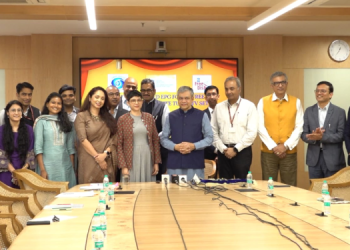
Mumbai: A Parliamentary panel has urged the government to examine the feasibility of tightening penal provisions against the publication or broadcast of fake news, including the possibility of cancelling the accreditation of journalists or content creators found guilty of spreading misinformation. The recommendations were part of a report tabled in Parliament on Tuesday (December 2, 2025).
The report, submitted by the Parliamentary Standing Committee on Communications and Information Technology chaired by BJP MP Nishikant Dubey, forms part of an ongoing review of India’s regulatory approach to misinformation across print, electronic, and digital platforms.
Call for Clear Definition of ‘Fake News’
The report noted persistent ambiguity surrounding the terms “fake news” and “misinformation,” warning that the lack of clarity continues to hinder effective enforcement. It recommended that the Ministry of Information and Broadcasting develop a nuanced definition of fake news in consultation with media bodies, legal experts, and digital platforms.
“A clear and consensus-driven definition is essential for ensuring that regulation does not impinge on freedom of speech,” the Committee said, adding that any amendments must safeguard the constitutional rights of individuals and the press.
Stronger Penal Provisions Across Media Categories
The Committee recommended amendments to existing Acts, Rules, and Guidelines governing each form of media—print, electronic, and digital—to strengthen punitive action against the creation or propagation of fake news. A key suggestion is to explore whether accreditation of journalists or creators can be revoked if they are found guilty of such offences after due process.
The panel emphasised that any punitive measures must emerge from consensus-building among industry stakeholders to prevent regulatory overreach.
Mandatory Fact-Checking and Internal Ombudsman Structures
In a move aimed at reinforcing self-regulatory frameworks, the Committee proposed making fact-checking mechanisms and internal ombudsman systems mandatory within all news organisations. It argued that these steps would significantly bolster institutional accountability and curb the spread of misinformation.
“Strengthening in-house verification processes and grievance redressal will go a long way in restoring public trust,” the report noted.
The Committee has urged the Ministry of Information and Broadcasting to ensure uniform implementation of these mechanisms across the industry.
Balancing Regulation and Freedom
While advocating stricter penalties and clearer definitions, the panel underscored the need to maintain a “delicate balance” between curbing misinformation and protecting free expression. It reiterated that any new regulatory framework must uphold constitutional freedoms while addressing the growing challenges posed by digital media proliferation.
The government is expected to review the recommendations and consult stakeholders before drafting any amendments or policy changes.