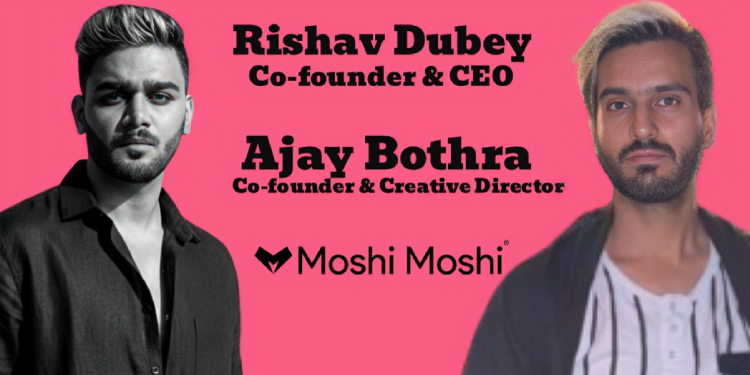
Moshi Moshi is a communication company powered by strong values and a passionate team of 150+ brand managers, strategists, creative minds, communication specialists, developers, and coders — on a journey towards becoming a 500-member powerhouse.
What began in 2015 as a digital signage agency with Rs. 1,200 and two 20-year-olds Rishav Dubey and Ajay Bothra — has evolved into a full-service communication partner. Today, Moshi Moshi works with 1000+ brands including Tata, Uber for Business, Haldiram’s, RBI, Godrej, Amazon, SAP, Ola, ITC, IHCL, MTV, and many more. The firm supports clients across the spectrum — from start-ups and SMEs to Fortune 500 giants and government bodies.
Medianews4u.com caught up with Rishav Dubey, Co-founder & CEO, Moshi Moshi- The Communication Company and Ajay Bothra, Co-founder & Creative Director, Moshi Moshi- The Communication Company
Q. How has Moshi Moshi evolved since launching a decade ago as a digital signage agency?
Over the past decade, Moshi Moshi has undergone a significant transformation from its origins as a digital signage agency to becoming a full-fledged communications company. What began as a media solution provider has now evolved into an end-to-end brand communications partner.
Today, Moshi Moshi operates on a unique three-phase communication model. Phase one focusses on building the brand’s core identity; phase two involves creating key brand assets such as websites, mobile apps, and web apps; and phase three is dedicated to taking the brand to market through structured go-to-market strategies.
The company has significantly evolved from its early days of offering just digital signage solutions. Today, we handle comprehensive brand mandates, right from defining the brand’s foundation to executing its go-to-market strategy. We now deliver a fully integrated, end-to-end communication and marketing solution.
 Q. This year what are the goals in terms of revenue, growing the client roster, expanding services?
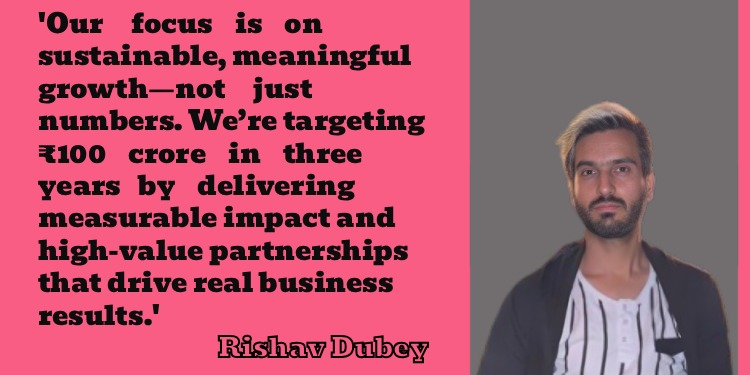
This year, our focus is on sustaining our strong growth trajectory. We’ve been growing at a rate of 100% year-on-year, and we’re targetting Rs. 100 crores in revenue over the next three years. While we’re already working with leading pan-India brands like Haldiram’s, Uber, ArcelorMittal, and Tata, our goal isn’t just to grow the client roster for the sake of numbers.
Instead, we’re focussed on delivering the right solutions to the right clients, regardless of size, and ensuring their brand objectives are met through high-quality service. Our growth strategy is driven more by expanding and refining our service offerings than chasing big-name clients. It’s about being a true partner and delivering meaningful impact.
Q. Could you shed light on Moshi Moshi’s signature 3-Phase Communication Approach?
Moshi Moshi’s signature 3-Phase Communication Approach is a unique, in-house framework designed to address brand needs in a structured and strategic manner. While this model is proprietary to us, its logic is universally applicable to any brand, regardless of size or industry.
a) Phase One focuses on Brand Consultancy. This is where we work with companies that are either building their brand from scratch or undergoing a rebrand. It’s about defining the brand’s identity, positioning, and core communication strategy, essentially giving birth to the brand.
b) Phase Two is all about Asset Creation. Once the brand identity is in place, we develop essential digital assets such as websites, web apps, and mobile apps, everything a brand needs to establish its presence across touchpoints.
c) Phase Three is where we take the brand to market. This includes Go-to-Market (GTM) execution, covering digital marketing, PR, video production, and other outreach strategies to ensure the brand reaches the right audience and sustains visibility.
This model was born out of a recurring insight: many brands were trying to solve deeper branding or tech foundation issues (phase one or two) through marketing (phase three). By misidentifying the real problem, their efforts weren’t delivering results. Our 3-phase approach helps clients clearly understand where they are in their brand journey and what specific solutions they need. It brings clarity, structure, and efficiency, and it’s something our clients truly value.
Q. What is Moshi Moshi’s USP that makes clients like the Garage Co., Klub choose it?
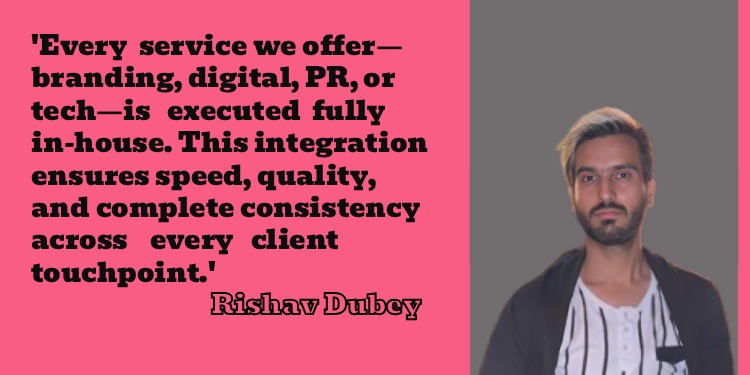
Moshi Moshi’s core USP lies in its fully in-house, multi-specialty service model. Unlike many agencies that outsource parts of their offerings or treat certain services as secondary add-ons, every solution we provide, from branding and digital marketing to PR, website, and video production, is executed entirely by dedicated, in-house teams.
This means that when a client partners with us, they aren’t dealing with fragmented outputs or diluted expertise. Each department is built as a core competency over the past decade, allowing us to offer best-in-class service across the board.
What truly sets us apart is our commitment to quality across the full 360° spectrum—not just claiming to be a 360° agency, but ensuring every single degree of that circle functions at the highest standard. Whether it’s a brand preparing for a rebrand, a high-growth startup planning an IPO, we provide end-to-end, high-impact communication solutions under one roof.
It’s this depth, consistency, and integration that clients love. They get everything they need in one place, without compromise.
 Q. Is Moshi Moshi’s remuneration model starting to be tied to business outcomes of the client?
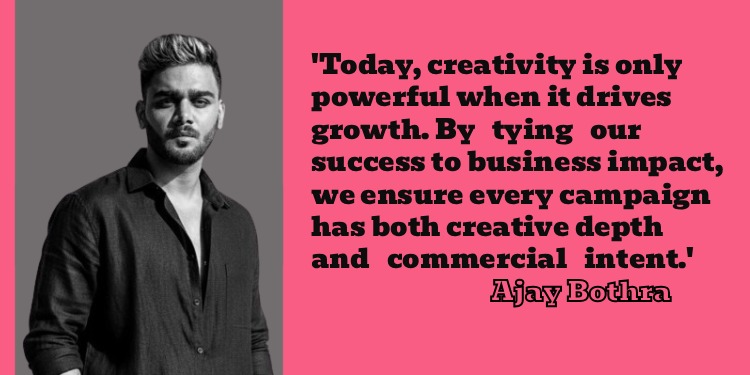
Yes, Moshi Moshi has recently shifted its positioning to adopt a growth partnership model, moving beyond traditional communication services to focus directly on business outcomes and revenue growth for clients.
While we continue to deliver end-to-end communication solutions, our approach is now deeply tied to growth planning, revenue mapping, and performance-oriented objectives. We’ve launched new departments specifically dedicated to driving measurable business growth for our clients, recognizing that what clients truly care about are results—not just services.
This shift means we’re no longer just a creative partner; we’re becoming a strategic growth partner. We’re aligning our efforts with client KPIs and taking ownership of the impact we create. In a landscape where many agencies avoid accountability for sales or business performance, Moshi Moshi is stepping in confidently, with services built around real outcomes.
Q. Is the media and entertainment sector like OTT platforms, broadcasters an important client base?
At Moshi Moshi, we follow a sector-agnostic approach. While we have worked with top brands across categories, including media and entertainment—we don’t limit ourselves to any one industry. Our philosophy is rooted in solutioning, not specialization by sector.
Focussing on a single vertical can be risky, if that sector slows down, the business impact can be significant. Instead, we’ve built our expertise across a wide range of sectors including transport, e-commerce, and yes, media and entertainment, among others.
We see ourselves as creative problem-solvers, much like chefs who can tailor a recipe to suit any palate. Whether it’s an OTT platform, a broadcaster, or a tech startup, any brand that needs meaningful communication and growth solutions can find a partner in Moshi Moshi.
Q. The aim is to become a 500-member team from 150+. But is attracting the right talent a big challenge for Moshi Moshi? The best talent today is going into AI, crypto, deeptech.
Attracting the right talent is always a dynamic challenge, especially in a market where new agencies are constantly emerging and tech sectors like AI, crypto, and deeptech are drawing significant attention. However, we believe that the rise of AI isn’t a threat to our talent pool, but rather an enabler. AI is like a bicycle for the brain, it can accelerate thinking and execution, but it can’t replace the creativity, intuition, and strategic insight that great communication work requires.
At Moshi Moshi, we’re focussed on roles and skillsets that AI can’t replicate, empathy-led storytelling, strategic thinking, human-centered design, and high-touch client servicing. While certain tasks may be automated, the essence of brand-building and growth planning remains inherently human.
As we scale to a 500-member team, our goal is to attract people who are not only skilled but also deeply aligned with our vision of becoming growth partners for brands. We’re building an environment where talent can thrive by leveraging technology without being overshadowed by it.
 Q. Could you talk about work recently done with companies like Tata, Uber for Business, Haldiram’s, RBI, Godrej, Amazon that stands out?
We’ve had the opportunity to work on some truly exciting and high-impact projects across sectors. For example, with Tata Electronics, the manufacturing arm of Tata, we’re currently leading their rebranding and brand-level communication mapping- from visual identity to communication dockets that define how the brand is presented across touchpoints.
With Uber for Business, we’re supporting the India launch of their B2B vertical, helping them shape how the brand connects with enterprise audiences in the market.
Another standout project is with Emmvee Solar, where we’ve not only rebranded the company but are also managing its communication strategy as it heads toward an IPO, a significant milestone in its growth journey.
Across the board, from consumer giants like Haldiram’s and Amazon to institutions like RBI and Godrej- we continue to take a creative-first, solution-led approach. Each engagement is tailored, and we pride ourselves on crafting brand stories that resonate, scale, and deliver business impact.
Q. How has AI been integrated into Moshi Moshi to improve operational efficiency, enable quicker turnaround times?
At Moshi Moshi, we’re in the early but exciting stages of integrating AI to enhance operational efficiency and accelerate turnaround times. Every department is working to develop its own AI-driven edge, leveraging tools like Midjourney, ChatGPT, and sector-specific platforms such as Runway for video. Our approach is intentional: we focus on automating repetitive, labor-intensive tasks, but we draw a clear line when it comes to creative processes and strategic thinking, which we believe require human originality and insight.
Our goal with AI is not to replace our talented teams, but to empower them- freeing up their time for higher-value, creative work by streamlining routine operations. Each department is equipped with AI solutions tailored to their unique needs, allowing us to deliver better results for our clients, faster. This balanced approach ensures we maintain the authenticity and creativity that define our work, while also improving efficiency across the business.
Q. What tools does Moshi Moshi use to track ROI? Could you offer examples where campaign adjustments have been made in real time?
At Moshi Moshi, we believe the most accurate and meaningful ROI tracker is revenue itself. While many agencies rely on vanity metrics, we focus on what truly matters to clients – their sales performance and bottom line. At the start of every campaign, we align closely with clients on their top-line objectives, whether that’s revenue growth, lead generation, or pipeline expansion.
We use customised trackers, updated in real-time, which are shared with clients and monitored regularly by our internal teams, including marketing POCs, business heads, and campaign managers. This ensures complete transparency and agility.
When a campaign needs course correction, we don’t wait. We analyze ongoing results, hold review meetings, and make adjustments on the fly to stay aligned with client goals. It’s a clean, results-driven approach that keeps us focussed on outcomes over optics.
Q. Large digital platforms like Google, Meta frequently change their algorithms. Does it make it more challenging for a brand to grow their social media presence?
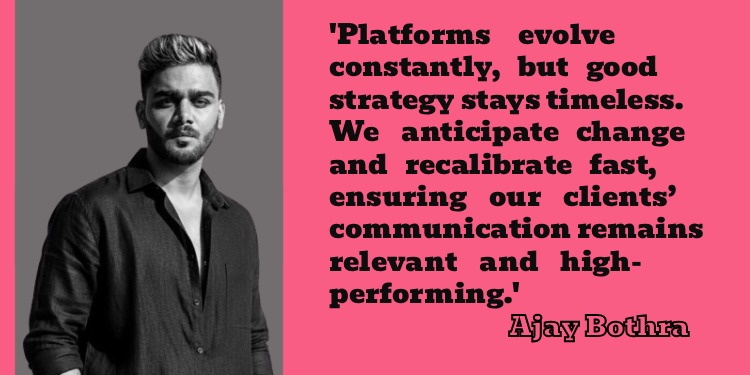
The constant changes from platforms like Google and Meta do make it more challenging for brands to maintain and grow their social media presence. These platforms are value-driven, and highly business-driven. As they evolve their algorithms, pricing models, and feature offerings to drive efficiency and profitability, brands need to continuously adapt.
Take, for example, recent updates like Gmail’s pricing restructuring or Meta’s frequent backend changes- these shifts impact how content performs, how much campaigns cost, and how users engage. That’s why our team is always on its toes, staying updated with every change and proactively adjusting campaign strategies in real time.
Clients retain us not just for execution, but for strategic adaptability. Our job is to absorb these constant shifts, recalibrate our approach, and ensure that campaigns remain effective despite the moving target that is today’s digital landscape.
Q. Is staying ahead of trends an important focus area? If so, how does Moshi Moshi do this in a rapidly moving digital world?
Staying ahead of trends is important, but at Moshi Moshi, we don’t chase trends for the sake of it. Our focus isn’t on following what other agencies are doing. We believe in focusing on what our clients need and how we can create genuine value for them.
Trend mapping, for us, is strategic. Just because a trend is gaining traction, like influencer marketing, doesn’t mean we’ll immediately jump on it. We only introduce new services or departments when they meet three key criteria: they add real value, integrate seamlessly with our existing offerings, and present a strong revenue opportunity.
 Q. Is the importance of short form content growing in getting out the message or is longform more important? Does the approach here depend on the sector?
The debate between short-form and long-form content is ongoing, but the reality is, they both matter. The key lies in understanding the brand’s objective and where the audience is consuming content.
Platforms like Instagram and Reels are perfect for short-form content, ideal for entertainment, trend participation, and grabbing quick attention. On the other hand, platforms like YouTube or podcasts are better suited for long-form content, which helps build thought leadership, trust, and deeper brand narratives.
Short-form content often acts as a hook that draws people in and creates curiosity. But for brands looking to build long-term equity or position themselves as leaders in their space, long-form content plays an equally critical role.
Take Zomato, for example. The brand uses short-form, quirky content to stay relevant on social media, while its founder Deepinder Goyal uses long-form platforms like podcasts to share deeper insights and thought leadership.
Both formats serve different purposes and are valuable in their own way. So yes, the approach does vary—not just by sector, but by brand goals. A smart content strategy balances both, depending on what the brand wants to achieve and where its audience is most engaged.