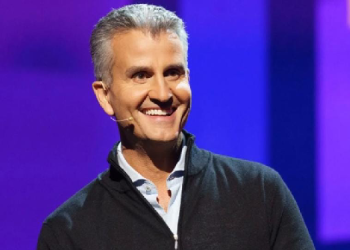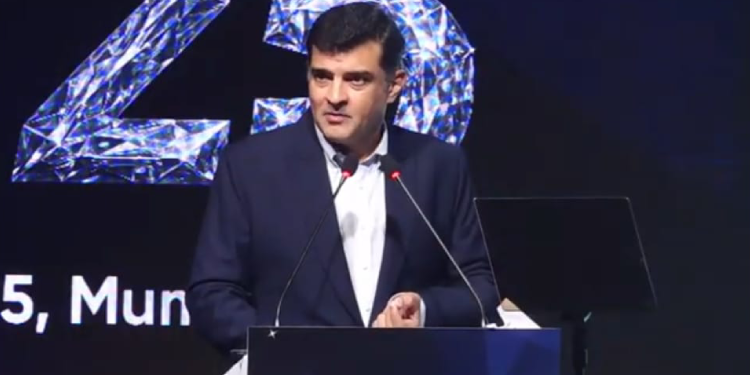
MUMBAI: Founder, Roy Kapur Films and film producer Siddhartha Roy Kapur delivered a keynote at FICCI Frames. He noted that the industry is in uncharted waters. There are the platforms that are changing, the distribution models are changing, the audience is changing, this new technology, AI is coming in, which we now know that we are not going to be fully capable of handling and having in our control. It will grow in ways that we have no idea about. And so there is a certain amount of trepidation amongst people around where is all this going.
He also noted that due to consolidation you will increasingly have many fewer players being the gatekeepers to the media and entertainment ecosystem. And that with the dichotomy of the fact that today, every single person is also a content creator. So your gatekeepers are fewer, but actually, each individual person is a curator and a creator of content also at the same time.
The topic was ‘Platform Shifts & Uncharted Story-Scapes: New Frontiers of Creativity and Distribution.’ He also noted that whether we like it or not, content sensitivity is heightened. “And here, I’d say we’re not alone. It’s happening around the world. When you look at Jimmy Kimmel in the US, that would never have happened a few years ago. When you look at the fact that we also have to be that much more cognizant because both politically as well as culturally today, there are sensitivities that whether we like it or not, we have to be cognizant of. Now, I’ve just rattled off a bunch of stuff, a list of things that we know, and we know we know these things.”
His speech was inspired by a quote from former US Secretary of Defense Donald Rumsfeld who decades ago during the Iraq War made a quote about something to do with the war. The war obviously was a disastrous decision.
“He spoke about the fact that there are known knowns, which are, these are things that we know, we know. We also know that there are known unknowns, that is to say, there are some things that we do not know, but we know that we do not know them.
“But there are also unknown unknowns, the ones that we don’t know that we don’t know. And if one looks throughout the history of our country and other free countries, it is the latter category that tend to be the difficult ones. Now, there’s no way of knowing what we don’t know, or knowing that we don’t know what we don’t know.”
The Known Knowns: For one thing digital is now central to our lives. “And there’s no doubt about that. And within India, a bot dominates, which is the advertising video on demand model. SVOD is definitely growing. But we know that unlike many other, you know, developed countries in the world, we are an advertiser driven model, not a subscription driven model. And digital is growing by leaps and bounds.
“Regionalisation has increased to a large extent where today you have, you always had the southern film industries being very strong. But today, at least in India, you’ve got very, very strong regional markets that have business models unto themselves completely a creative ecosystem that is completely unique to them. And ways of doing business that are also quite unique to them. Despite the fact that now you’ve got large global players coming in and working across geographies.”
Social media he noted is pretty much ubiquitous. “And we are all living in parallel content universes, each one of us as an audience is living in our own, you know, echo chamber, which is driven by an algorithm understanding of who we are as people. And therefore, it’s feeding us content that if you look at the social media feed of even your closest friend, it’ll be nothing like yours, because you’re being fed what you have been shown to like.
“Increasingly, we’re living in a very fragmented content universes, each of us independently. And we’re actually curating that content based on the things that we gravitate towards. The theatrical experience, which after COVID was under threat, and people were talking about our theaters ever coming back, etc, is very, very much in existence.
“Yes, it will take a little while. And it will take a little more thought from people to figure out what it is that audiences really want to watch in a theatrical space. But just going by the last couple of years, you’ve got in fact, in the last few months, you’ve had ‘Sayara’, you’ve had ‘Mahavatar Narsimha’, and you’ve had a Japanese anime film called ‘Demon Slayer’, all completely wildly different films doing spectacularly well at the box office.”
The lesson is that if you give audiences something compelling, unique, differentiated they will come to watch. He also noted the streaming dominance around the world. Seven to 10 years ago, streaming was something that was still in its infancy. Today, it pretty much is dominating. “I know India is quite different when it comes to linear. But there is a sense overall, just look at in the global sweep of things, that linear is declining and streaming is growing. And that just is because of the preponderance of the consumer convenience that streaming gives you, you will be going towards streaming.
“But in India, it is hybrid viewing right now.” He also shed light on the growing demand for live experiences. “Today, you’ve got so many people thirsting for that human to human connection. And therefore, live experience has become that much more in demand. Concerts are doing better, plays are doing better. People have much more disposable income, and they want to be able to spend it on things that bring them together, rather than sitting and scrolling only. We have devalued content to a large extent because of the fact that, and this has happened because of technology.
“Earlier, we used to have to go to seek out a film, or seek out a show and make an appointment with ourselves to watch it. But today, all the content ever available to humanity is at our fingertips on the flick of a switch with around seven subscriptions. That actually makes you flirt with content.
“Now, you don’t have to commit to watching something because you’ve got the DVD from Blockbuster, or because you’ve made an appointment to watch it at 9 pm. It’s pretty much on demand. Global content crossovers are happening much more. Hopefully, our time will come. You have the ‘Squid Games’ and the ‘Parasites’ etc happening much, much more, especially from the Far East.
The known unknowns: In the area of what we know we don’t know he mentioned AI. “We’re definitely going to be using it. We’re going to be harnessing it. We’re going to be getting costs down. We’re going to be making things more efficient. All those things are going to be happening.
“But there was a firm that just launched an AI actress the other day, which has created a furore in Hollywood. Today it is a furore and tomorrow it is the way things are being done. It’s not something that we’re going to be able to run away from.
“It is the reality of the future. What I guess we definitely don’t know is how audiences are going to react to this, how much they’re going to demand authenticity and reality, versus an AI created piece of content, and whether that is going to be a differentiator or not, we don’t know.” He also wondered whether regulatory guardrails for AI will ever come in. Are they going to be regulations that have some teeth that come in? There are moral and there are ethical issues that are a dime a dozen today, when it comes to music, when it comes to character rights, when it comes to world creation, when it comes to all kinds of things.
“But how active are governments going to be going forward to be able to actually put those regulations into force? And has the bird already flown the coop? Is it already too late? We don’t know. Which content formats will survive? If you told someone 15 years ago that a thing called a DVD will not exist, they would have laughed at you. There’s a whole home video industry that’s just been decimated before our eyes in the last few years. Today, things that we take for granted might not actually be around five or seven years later, we have no idea.”
He also questioned how much Indians will be willing to pay for OTT subscriptions beyond a point? “What is the depth to which we will be able to go in terms of getting people to pay for content? We’ve been famously unhappy paying for content, right? We’re not a nation that enjoys paying for content, we much prefer getting our content free. And today, there are many ways for that to happen. How much will the SVOD market grow? That’s another thing that we don’t know.”
He also says that one does not know the role that emerging markets like India, Africa, and the rest of East Asia have in the future? Will we be the dominant creative forces 20, 30, 40 years down the line?
The Unknown Unknowns: In this regard Kapur wondered if there will be new creative mediums altogether? “Streaming didn’t exist a few years ago, and today we can’t imagine life without it. Will there be something completely new? Will there be neural and sensory experiences for which you consume content in the future that we don’t even understand today? Will there be a collapse of trust in AI content? AI right now is something that is the buzzword, but are people going to feel like, okay, we don’t want to consume AI, because we want real experiences.
“Again, this might be partially wishful thinking, but who knows that could happen, right? Will there be an unforeseen platform collapse? Will there be a complete shift in audiences culturally away from technology as a reverse sort of reaction to their lives being inundated with technology today? Will that happen in the future?”
What Needs To Be Done: Kapur offered a few words of advice on what needs to be done. First is double down on content creation, focus on who we are, what we know to do best. “And I know it sounds like a bit of a cliche, but it’s a cliche because it’s true that any format you talk about, from a long-form series format to a theatrical format, to a micro drama, to a short film, to a reel, what unites them all? Great material.
“What is the one thing that gets something to go viral on any of these formats? Something great in terms of content. And I think as content creators, as a content creator community, the best that we can do is just create good stuff and hopefully find the right format for it and the audiences will come. He also suggested embracing AI as an aid rather than a replacement.
“Find ways in which it can help us cut costs, find ways in which it can help us move forward in terms of taking our narrative to the next level faster, cheaper, but without compromising on authenticity. Self-regulate, build our own guardrails around that. Invest in building audience intelligence, trying to understand who our audience really is rather than thinking of them as monolithic groups of people.
“The elder audience, the youth audience, the Gen Z audience. Today, because they’re so fragmented and living in their own content ecosystems, they’re very, very different subcultures within each one and understanding them. And protect our IP because going forward, that’s what’s being used to create the learning for all these new technological tools that we’re having to face in the future.
“So again, given all the knowns and the unknowns that I’ve spoken about, the most famous line about knowledge in the entertainment industry was William Goldman’s line that nobody really knows anything. So I’m going to end with that and say, let’s go forward and embrace the future with a healthy sense of knowing that nothing is forever, but at the same time, just putting ourselves down and saying we will make great stuff and audiences will come.”