Indian Institute of Creative Technologies (IICT) is an institute for the AVGC-XR (Animation, VFX, Gaming, Comics & Extended Reality) sector — established as a national initiative supported by the Ministry of Information & Broadcasting, Government of India, along with FICCI and CII.
Its work is anchored in four strategic pillars:
1. Academics – Future-ready programs in Animation, VFX, Gaming, XR, and more.
2. Start-up Incubation – Empowering creative tech entrepreneurs through mentorship, funding access, and industry networks.
3. Policy Advocacy – Driving India’s AVGC-XR policy agenda in collaboration with government and industry bodies.
4. Research – Advancing technology, skills, and IP creation in creative media.
Current Campus & World-Class Infrastructure
Operating from its Phase-1 campus within the NFDC premises at Peddar Road, Mumbai, IICT offers a creative-technology environment, including:
● India’s only 12-bit @ 120Hz ready Virtual Production LED Wall
● 72-camera photogrammetry rig | 30-camera motion capture environment
● 4K HDR Edit & DI rooms with 7.1 reference-calibrated audio
● Dolby Atmos-enabled 4K laser theatre for DI & preview
● High-end Alienware workstations with the latest NVIDIA GPUs for VFX & gaming
This facility is designed as an open, accessible hub for students, professionals, studios, and start-ups to experiment, create, iterate, and deliver world-class work.
Future-Ready Learning at IICT
IICT offers structured range of academic and upskilling programs co-developed with industry:
● 2-Year Undergraduate Diplomas in Animation, VFX, Gaming, XR & more
● 1-Year Diplomas for high-demand creative tech roles
● 6-Month Certificate Programs for targeted upskilling
● 3-Month Certificate Programs for niche creative domains
All programmes integrate studio-style learning, project-based assessments, and industry-validated curriculum.
Strategic Partnerships
IICT has signed MOUs and strategic alliances with leading global technology and creative industry leaders, including NVIDIA, Adobe, Microsoft, Google/YouTube, Wacom, Green Rain Studios, WPP, Comic Con India, Netflix, FTII, SRFTI, University of York and more.
These collaborations bring access to advanced tools, training resources, industry mentors, and global exposure for students and start-ups, while enabling joint curriculum development, research projects, and talent showcases.
The Future at Film City
IICT’s permanent 10-acre campus is under development at Mumbai Film City, supported by the Government of Maharashtra. This future campus will anchor India’s rise as a global leader in AVGC-XR and immersive media innovation.
Shaping India’s Creative-Tech Future
IICT says that it is building the next generation of creators, technologists, innovators, and entrepreneurs —empowering India to shift from being a global service destination to a global IP and innovation hub.
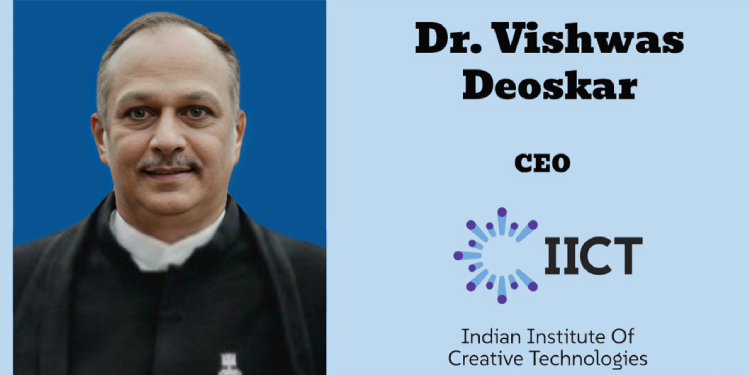
Medianews4u.com caught up Dr. Vishwas Deoskar, CEO, IICT
Q. What was the gap in the education sector that led to the creation of IICT?
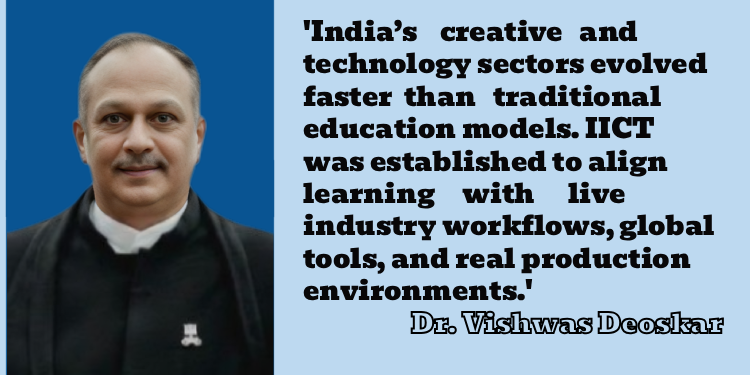
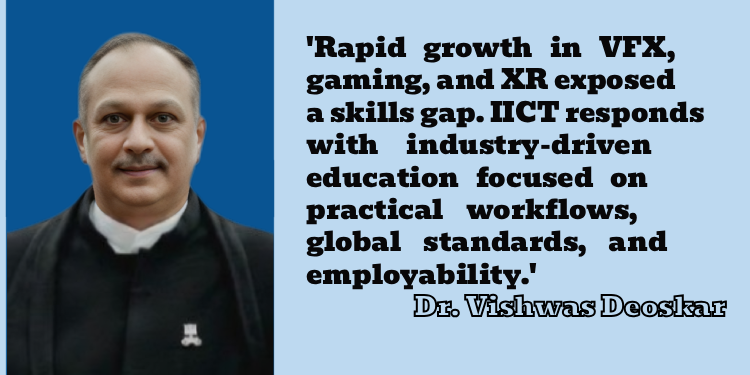
India’s creative and technology sectors have been growing faster than the talent available. While industries such as VFX, animation, gaming, XR, and spatial computing advanced rapidly, the education ecosystem remained fragmented, overly theoretical, and disconnected from real-world workflows. IICT envisioned by the Hon’ble PM Shri Narendra Modi ji and announced by the Hon’ble Information & Broadcasting Minister Shri Ashwini Vaishnav ji was established to bridge this gap, offering students training on the same tools, frameworks, and problem statements used by leading global studios and tech companies.
With India’s AVGC-XR and creator economy expanding, IICT integrates animation, VFX, virtual production, gaming, XR, AI-assisted creation, design, and entrepreneurship under one academic and industry-aligned platform, aiming to build a robust national talent pipeline.
Q. Could you shed light on the nature of IICT’s Public-Private Partnership (PPP)?
IICT operates as a Section‑8 non-profit company and has built one of the largest industry–academia collaboration networks in India. Its formal MoUs and partnerships include Google, NVIDIA, Apple, Meta, Microsoft, Adobe, WPP, Netflix, Lakshya Digital, Green Rain Studios, Skyesports, JetSynthesys, Comic Con India, York University (UK), and Deakin University (Australia). These partners contribute in areas such as AI, cloud, digital content creation, XR support, GPU and virtual production infrastructure, Pro Apps workflows, global creative standards, and international academic exchange.
In addition, IICT collaborates with government forums and policy platforms and has participated in key events including WAVES Summit 2025 (Mumbai), IFFI Goa, FICCI FRAMES, IndiaJoy, and IGDC Hyderabad. This PPP ensures that IICT remains industry-integrated, globally connected, and aligned with evolving creative-tech demands.
Q. Accessibility is central to its philosophy. Is this going to be a key focus area in penetrating the country?
Yes. Accessibility is a cornerstone of IICT’s philosophy. Courses are designed to be affordable, industry-aligned, and digitally accessible, ensuring that students from diverse backgrounds can participate.
Partnerships with global tech and creative firms allow IICT to provide students access to international standards, tools, and mentorship, creating opportunities for talent to work on global projects while developing their careers locally.
Q. IICT envisions a 24-hour campus modeled after rigorous institutions like IIMs. What have been the key learnings from the IIMs’ success that IICT will look to replicate?
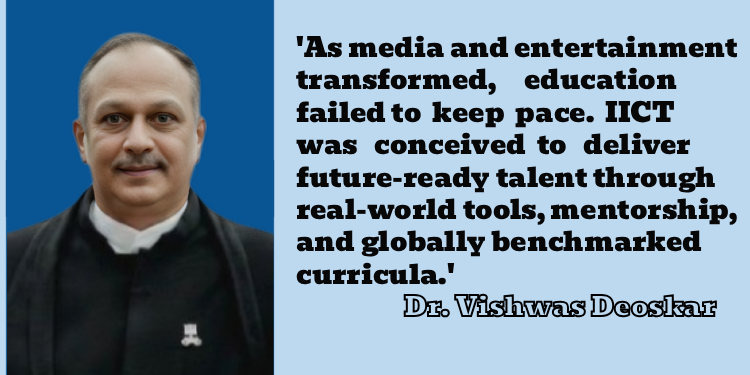
IICT draws lessons from IIMs in creating a holistic, immersive learning ecosystem, with campuses designed for 24/7 access to labs, studios, workshops, mentorship, and collaborative spaces. IICT offers integrated facilities for VFX, XR, animation, AI, and virtual production, with round-the-clock faculty, mentors, and peer learning.
Emphasis is placed on industry-aligned curriculum, performance-driven pedagogy, alumni network building, and entrepreneurial mindset development, enabling students to be employable and industry-ready.
Q. Could you talk about the advanced programmes in integrated media post-production, animation, VFX, XR, and other emerging technologies that are being offered?
IICT currently offers 18 industry-aligned programmes across post-production, animation, VFX, XR, game design, virtual production, and AI-powered media technologies: six in Gaming, four in Post-Production, and eight in Animation/Comics/XR. These programs are structured to integrate creativity with technology and are designed in collaboration with global industry partners such as Google, NVIDIA, Adobe, Apple, Meta, Netflix, and WPP.
Students learn on real-world pipelines using industry-standard tools. The first academic batch began in September 2025 at the Phase-1 campus at NFDC, Pedder Road, Mumbai.
Q. In creating a pipeline between industry needs and academic delivery, what is going to be the challenge?
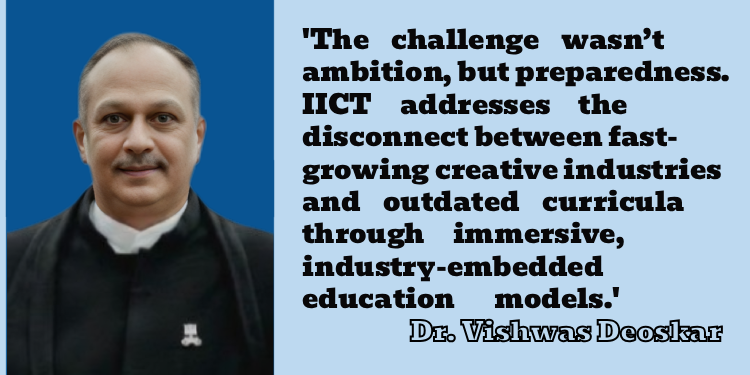
The primary challenge is keeping the curriculum aligned with rapidly evolving industry requirements. IICT addresses this through constant industry dialogue, live projects, workshops with global leaders, and an iterative feedback loop.
Bridging the skills gap across diverse student backgrounds is another challenge, which IICT manages through accessibility initiatives, scholarships, mentorship programmes and hands-on exposure to real-world workflows.
Q. Could you talk about the MoUs with companies like Google, NVIDIA, Apple? How important will their support be in the success of IICT?
IICT has formal MoUs and collaborations with Google, NVIDIA, Apple, Meta, Microsoft, Adobe, WPP, Netflix, Lakshya Digital, Green Rain Studios, Skyesports, JetSynthesys, Comic Con India, York University (UK), and Deakin University (Australia).
These partners provide mentorship, technical expertise, access to next-gen tools, industry pipelines, and global standards. Their support ensures students are trained on cutting-edge technologies, real-world workflows, and internationally relevant creative practices, making IICT graduates globally competitive.
Q. IICT is registered as a Section 8 non-profit company. How does this allow for agility and innovation often hindered in traditional government-run models?
Being a Section 8 non-profit allows IICT operational agility and mission-driven innovation. The institute can rapidly introduce new programs, collaborate with multiple global industry partners, experiment with AVGC-XR, gaming, esports, virtual production, AI integration, and entrepreneurship incubation, all without bureaucratic delays. This flexibility ensures alignment with global industry standards while maintaining financial discipline and social purpose.
Q. The university is also setting up incubation centers for entrepreneurship and IP development. What role will companies like Google play in areas like mentorship?
IICT’s incubation centers nurture entrepreneurship, innovation, and IP development in AVGC-XR and creative-tech sectors. Companies like Google provide mentorship, technical guidance, and access to global networks, helping startups validate ideas, scale prototypes, adopt advanced tools, and align with global market standards and sustainable business models.
Q. It has been launched in Maharashtra. What are the expansion plans going to be in the coming three years?
Over the next three years, IICT plans to establish regional centers in South India, Western India, and other emerging creative hubs. These centers will offer hands-on training, advanced labs, and industry integration to ensure that students from diverse geographies can access high-quality creative-tech education and contribute to India’s growing digital economy.
Q. What marketing activities is IICT doing to create awareness about its offerings?
IICT uses a multi-pronged marketing approach, including:
Digital campaigns targetting students, creators, and young professionals.
Collaborations with industry and media partners to showcase student projects and programmes.
Presence at major AVGC-XR, gaming, and creator-economy events like FICCI FRAMES, IndiaJoy, IGDC, and Comic Con India.
Workshops, masterclasses, and campus engagement programs in schools and colleges.