Triumph Group, one of the world´s leading intimate apparel companies, has been around for over 135 years, becoming larger and more international by the decade.
Earlier this year Triumph, an international lingerie brand, expanded its successful “#IFeelNothing” campaign with the launch of its Spring/Summer (SS’25) collection. The new line emphasised comfort, empowering women to feel confident and distraction-free throughout their day. The collection reinforces Triumph’s commitment to creating intimate wear that prioritizes how women feel, highlighting “lingerie you’ll love to forget.”
The campaign featured short films showcasing relatable scenarios where Triumph lingerie allows women to be themselves without discomfort. One film tenderly captures the essence of an Indian wedding, depicting a bride navigating her wedding day preparations with the quiet confidence provided by a comfortable and supportive Triumph bra. The film illustrates how perfectly fitted Triumph lingerie allows her to feel cherished, celebrated, and utterly free to embrace the magic of her special day.
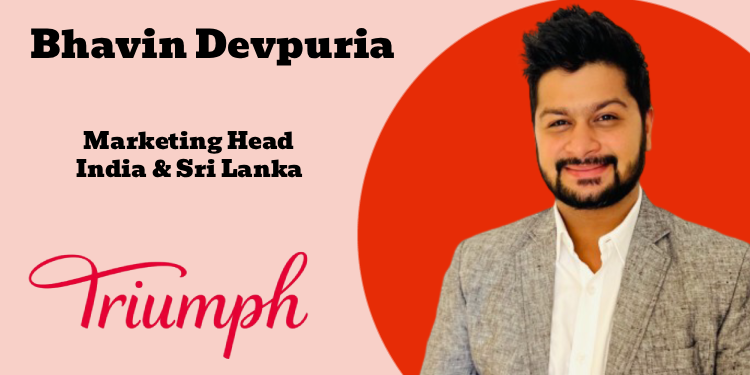
Medianews4u.com caught up with Bhavin Devpuria, Marketing Head Triumph Group (India & Sri Lanka)
Q. Lingerie cannot be discussed in an open manner like other FMCG brands. How does that factor into marketing decisions taken and choices made? Is marketing in the category more conservative in nature compared to other categories like formal wear?
Absolutely, lingerie as a category does carry certain cultural and societal sensitivities in India. But instead of seeing it as a limitation, we see it as an opportunity to educate and empower. Our marketing choices are rooted in normalising conversations around comfort, fit, and self-expression.
That doesn’t mean we’re conservative—it means we’re thoughtful. We’ve found that using a tone that’s confident yet respectful resonates more with our audience. Our recent campaigns, including those around our Spring/Summer ’25 collection, focus on real women and real moments—building emotional relevance without sensationalism.

Q. Digital is the main focus area for Triumph international. What is the media mix for 2025?
· Digital-First Approach
Digital remains the centrepiece of Triumph’s strategy, with strong presence across the D2C website, social media platforms, and online marketplaces to drive both visibility and sales.
· Influencer Marketing in Tier II & III Cities
Partnering with nano- and micro-influencers from regional markets helps create authentic engagement and deeper connections with local audiences, delivering high ROI and reach.
· Always-On Communication Strategy
Triumph runs continuous digital campaigns that balance brand awareness (upper funnel) with performance-driven ads (lower funnel), ensuring the brand stays top-of-mind year-round.
· Personalised Content & SEO
Digital content is customised using customer data and marketplace insights. SEO efforts are focussed on replicating the in-store experience online and driving organic discovery.
Q. Could you shed light on the marketing activities and innovations that will be done in the coming months? Is marketing a year-round activity to create awareness on new collections launched?
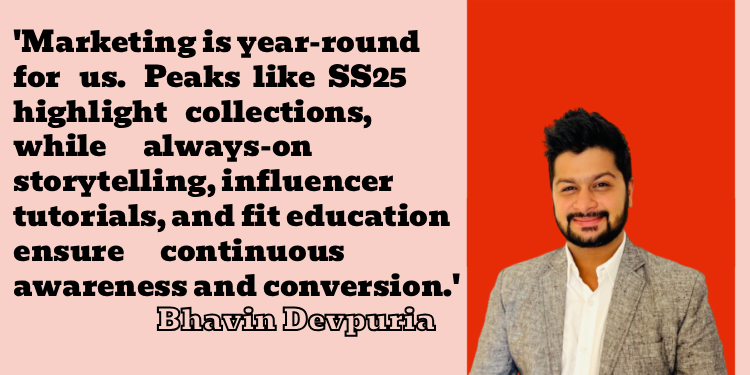
Yes, marketing for us is absolutely a year-round effort. While product drops like our SS25 collection become campaign peaks, the always-on layer is focussed on storytelling, education, and driving conversion—especially digitally.
In the coming months, we’re doubling down on influencer-led tutorials and fit education, regional content to drive vernacular engagement, and high-touch retail activations
Q. Could you shed light on the SEO strategy and is the company exploring AI search like Perplexity as an alternative to Google? Are some ad spends shifting away from Google?
Our SEO strategy focusses on improving semantics, creating high-quality content, and making sure our online presence reflects our in-store experience.
We keep investing in Google as a key part of our marketing strategy and are not moving our ad spending away from it. Right now, we are not using AI search platforms like Perplexity as an alternative to Google, but we do keep an eye on new search technologies to look for future opportunities.
Q. Last year the company did a campaign to encourage women to embrace their authentic selves. Will that be built upon this year?
Yes, absolutely. This year, we’re continuing to build on our message of self-acceptance and individuality with our SS25 campaign.
Rooted in the emotional expression of “I Feel Nothing”, the campaign explores how true comfort can empower women to feel completely free — in their bodies, in their choices, and in how they present themselves.
The messaging remains inclusive, emotional, and deeply personal, reflecting our ongoing commitment to authenticity and a genuine connection with our consumers.
Q. Does the company’s influencer marketing strategy mainly focus on educational and informational? Is influencer activity linked to business outcomes or is mere content engagement enough?
Our influencer approach today is far more strategic and focused on building advocacy through education. We collaborate with nano and micro creators, especially from tier 2 and 3 towns, who bring authenticity and relatability to conversations around lingerie.
These creators help simplify concepts like bra types and sizing, which goes a long way in markets where lingerie education is still limited. More than just engagement, we look at how these creators help shape brand perception and build long-term trust with our audience.
Q. Is the TG women across the country 18-65? What role is data analytics playing in precision targetting and geo targeting?
Our main TG is women over 30, but with new launches, we are reaching out to a younger audience to expand our market. Data analysis is important for improving our targeting. It helps us find high-potential customer groups and tailor our communication for various age groups and regions.
It also allows for exact geo-targeting based on buying trends, store catchment data, and online traffic patterns. In addition to marketing, analysis guides product development by showing consumer preferences, sizing needs, and category gaps. This ensures our products are relevant, timely, and connect with different segments across the country.

Q. What role does experiential marketing like the brafitchallenge play in the communication strategy?
Experiential is a key pillar of our communication—especially in a category like lingerie, where fit and feel make all the difference. The #BrafitChallenge was inspired by the insight that a large number of women are still wearing the wrong bra size.
Triumph’s belief is that lingerie should feel “made to measure, not one-size-fits-all”, and that comes through in how we create experiences. Through fit sessions, pop-ups, and retail activations, we’re not just showcasing products—we’re helping women discover what comfort really feels like, while creating one-on-one, lasting connections with them.
Q. Is balancing D2C versus on the ground sales at stores tricky? Are both equally important?
Yes, balancing D2C and offline retail can be tricky, but for Triumph, both channels are equally important and play complementary roles.
Our D2C platform offers convenience, deeper brand storytelling, and access to the full product range — it’s ideal for personalised experiences and data-driven marketing.
At the same time, on-ground stores remain crucial, especially for lingerie, where touch, fit, and personal consultations influence purchase decisions.
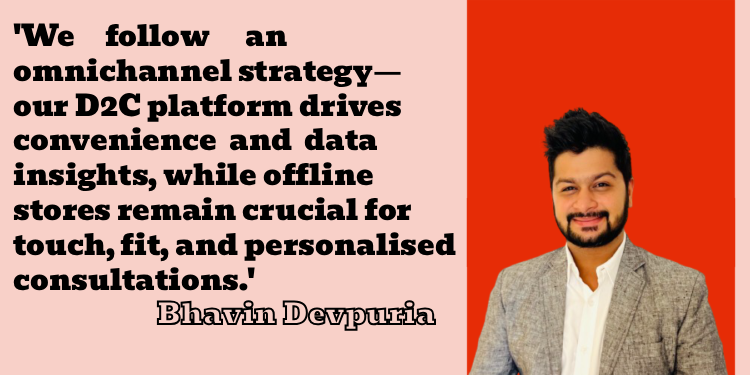
We follow an omnichannel strategy that ensures a seamless consumer journey between online and offline — whether a customer discovers us online and shops in-store, or vice versa. The key is not choosing one over the other but integrating both in a way that enhances customer experience and builds long-term loyalty.
Q. One issue is that the consumer experience at retail stores is lacking in a few categories including luxury. Do exclusive stores help rectify this situation? Is lack of experience in the lingerie category an issue when consumers visit retail outlets?
Definitely. At Triumph, we’ve designed our exclusive stores to offer a personalised, high-touch experience. Every customer is assisted by a trained fit expert, who helps them find their correct size and also teaches them how to self-measure—so they feel confident, even when shopping independently.
We’ve also focussed on inclusive visual merchandising, featuring mannequins and imagery that represent a range of sizes and real skin tones. It’s all part of our effort to make the experience less intimidating and more empowering, whether you’re walking into a store for the first time or the fiftieth.
Q. Hyper personalisation is an important focus area across categories. What are Triumph International’s plans in this area?
Hyper-personalisation is a key focus for Triumph as we aim to create more meaningful, relevant experiences for every customer. We’re leveraging customer data, shopping behaviour, and fit preferences—especially through our D2C site and loyalty programmes—to deliver personalised content and promotions.
A standout initiative is our Bra Fit Challenge, which helps women discover their correct fit while educating them about styles that suit their body type and lifestyle. It not only builds confidence but also fuels our personalisation engine by gathering valuable insights that shape future communications.
From personalised bra fit journeys to customised communication and curated product suggestions, we’re committed to making each interaction feel uniquely crafted for the individual — whether they shop online or in-store.


![Beyond Ello, you can expect [x]cubeLABS to lead the transition from generic “chatbots” to Vertical AI Agents: Sridhar Muppidi](https://www.medianews4u.com/wp-content/uploads/2026/03/Sridhar-Muppidi-Ello-350x250.png)