WeNaturalists is a global ecosystem uniting nature professionals, conservationists, eco-entrepreneurs, climate startups, researchers, and grassroots voices.
As the climate crisis accelerates, the challenge isn’t a lack of passion but the absence of connection, visibility, and collective momentum. This is where WeNaturalists steps in — building bridges and amplifying a united movement for change.
Why this matters now:
Climate innovators, small impact-driven startups, and field activists often work in silos — with limited access to resources, collaborators, or storytelling support.
The world hears of Greta Thunberg — but what about the tribal leader rewilding 5,000 hectares? Or the 23-year-old building vertical forests in urban slums?
There’s a critical need for a space that empowers every voice for nature, not just the loudest.
What WeNaturalists is building:
· A community across 160+ countries where ideas, projects, jobs, and research meet.
· Tools for collaboration, visibility, and funding designed for the planet-first community.
· A space where climate startups can grow, policy thinkers can connect, and field workers can be heard.
Whether it’s a climate-tech founder in Nairobi or a mangrove conservationist in Odisha — WeNaturalists is stitching together a global ecosystem that doesn’t just talk sustainability, it lives it.
Medianews4u.com caught up with Amit Banka, founder WeNaturalists
Q. WeNaturalists was founded six years back to bring together nature professionals, conservationists, eco-entrepreneurs, climate startups, researchers, and grassroots community voices. What progress has been made since then?
We have been fortunate to serve as a catalyst in this changing environment, particularly with respect to climate action and sustainability. Over the years, our global community has grown to over 550k, and we have launched multiple IPs with events and awareness around climate action. People of Nature awards reached over 40 countries last year.
Green Childhood and Campus Champions programmes have reached schools and colleges – pan-India. Community has also brought together over 500 organisations that are using tools at WeNaturalists for various efficiency needs and building scale.

Q. At a time when the climate crisis is unfolding faster than ever, what’s missing isn’t passion — it’s connection, visibility, and the power of a united movement. How does WeNaturalists solve this challenge?
At WeNaturalists, we solve these challenges by focusing on our three verticals:
1. Learning and Awareness – To promote active solution building
2. Digital transformation – To promote community engagement and scalability for smaller/medium enterprises
3. Sustainability Solutions- To create boutique solutions for a wide range of sustainability challenges, like promoting Green Careers, inspiring nature-based solutions, and enabling sustainable campuses.
Q. WeNaturalists is stitching together a global ecosystem that doesn’t just talk sustainability. What are the various legs of this strategy? What goals have you set for the coming three years?
Sustainability is a big factor that is promoted by WeNaturalists through various programmes.
Outside of this, Learning and Awareness, along with Digital transformation, are the two key areas WeNaturalists is aligned with.
Over the period of three years, we would like to excel in these three critical fields and grow the community through various touch points. It is a matter of time before we start breaching a critical milestone of over two million people on the platform.
Q. Which are the key markets that WeNaturalists is focusing on? According to data analytics, where is the whitespace for growth?
Our analysis shows very clearly that our interventions will open new doors for green jobs, and that will be our endeavour to streamline operations to achieve it.
Q. Does Gen Z’s attitude to climate change differ from older TGs?
As per the Pew Research Center, Gen Z and Millennials support climate action more than the previous generations.
The reason is that these two generations have seen the impacts unfolding in front of their eyes and realise now this might be our last chance to do something substantial. Also, since these two generations are dominantly present in the workforce, they have a larger agency to make a positive impact.
Q. People on the right — the conservatives — often deny climate change. Is that an issue? The message from them sometimes is that clean coal is good, and wind energy is an ineffective waste.
Absolutely, climate change deniers are abundant, especially the conservatives.
However, the good news is that climate change awareness is at an all-time high. Citizens are aware, even if their governments are denying. According to the Yale School of Climate Communication, more than seventy percent of individuals globally believe that climate change is real and it’s a threat.
Q. What role is AI playing in helping WeNaturalists scale up through Citizen Data and On-Ground Ecological Intelligence?
AI will be a major disruptor for all, and WeNaturalists is geared to engage deeper to deliver our programmes and bring accountability and transparency in the NGO space.
It is my very deep desire to bring each and every contributor to the conservation of the natural world to a level playing field. AI will be used for that for sure.
Q. What marketing activities and innovations will WeNaturalists be doing to create awareness about its space that aims to empower every voice for nature, not just the loudest?
At WeNaturalists, we believe that our products and services should focus on three aspects of Awareness, Engagement, and Empowerment.
We recently launched Green Careers Launchpad, where the focus was on Green Skilling. Our newest launch is nature-themed indoor and outdoor experiences, where we want nature to inspire people to take up climate action. We also work actively with schools and colleges to build sustainable campuses and promote Green Careers.
Q. Could you shed light on WeNaturalists’ social media strategy to be a part of the consumer conversation around climate change?
Our social media strategy is rooted in learning, awareness, digital transformation, and accessible sustainability solutions.
We strive to break barriers by simplifying complex topics and creating content that sparks curiosity and action.
We actively collaborate with changemakers from our community—giving them a platform to share their voices and stories. This not only amplifies their impact but also helps us connect with our audience authentically.
By doing so, we position ourselves within the consumer conversation around climate change- not just as a platform, but as a facilitator of stories, actions, and relatable solutions that inspire everyday climate responsibility and climate action at its core.
Q. How important is the WeNaturalists People of Nature Awards in building awareness?
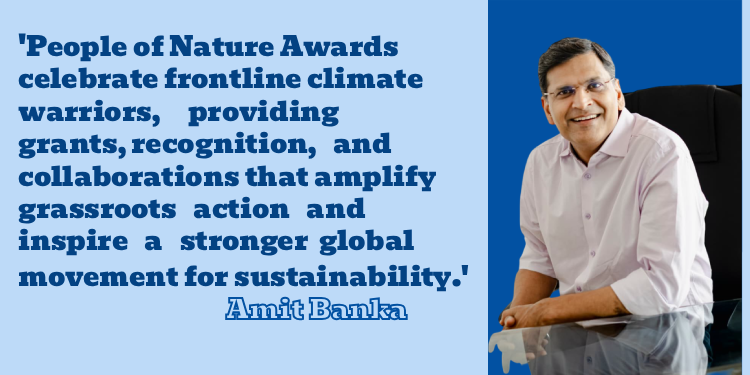
People of Nature Awards is one of the key initiatives, where the aim is to celebrate and support Frontline Climate Action by giving grants/prizes and providing support structures to those who are the primary caretakers of our environment.
We have been executing these awards for the past five years now, and have seen a very positive response. These awards also allow us to connect, collaborate, and co-create with other like-minded organisations.
Q. Are media and entertainment companies like broadcasters and OTT platforms doing enough in terms of content creation to shed light on the issue of climate change?
A lot of companies in India and abroad do have their sustainability goals, including media companies and others.
But when it comes to content creation, this issue still hasn’t become mainstream, leaving aside a few select media companies, climate change attribution is not really happening. The reason is often the nexus between government, media, and fossil fuels.
Q. Brands in categories like real estate and FMCG are increasingly using sustainability in their marketing messages. Is this often just a token gesture though? Does WeNaturalists sometimes help brands who want to get more active in conservation to boost their brand-building efforts?
More often than not, it’s a token gesture, sometimes greenwashing. The commitment to sustainability is not a priority for real estate and FMCG, as it often results in higher product costs.
However some sometimes customer demand and policy/regulations do force these brands to add marginal sustainability features in their products and services.
As WeNaturalists, we do support and try to partner with brands that genuinely want to invest in climate action. Brands can be our partners, supporters, sponsors, and even customers. We have different products and services like courses, our experiential trails, and People of Nature Awards to engage with brands in different capacities.
Q. What trends are being seen when it comes to climate startups?
The scenario of climate startups is different from one part of the world to another. In India, we see a majority of startups coming up in Green Energy, Energy Efficiency, to EVs, etc. Sustainable buildings is also a major area where there are innovations coming up.
A lot of start-up money is also impacted by Govt policies. This year’s Union Budget focussed a lot on Green Hydrogen, so we will soon see this sector opening up to innovations and entrepreneurship.