Novatr, which focusses on professional education for the Architecture, Engineering, and Construction (AEC) industry, had this year unveiled ‘The Civil Engineer’s Pursuit’. This is a campaign that shines a spotlight on the resilience, ambition, and untold stories of civil engineering professionals in India.
The campaign highlights a universal truth: civil engineers shape the world we live in, yet their own careers often struggle to move forward. ‘The Civil Engineer’s Pursuit’ campaign tells the story of a young civil engineer who works long hours on site, handles daily challenges, and still finds the time and motivation to learn new skills through Novatr’s BIM Program. His journey from hard-working site engineer to BIM Engineer becomes a symbol of both career growth and personal transformation.
The campaign’s core message, “Either Wait for Change or Build It,” expresses Novatr’s belief that progress doesn’t happen by chance; it is always built through learning, growth, and embracing future-ready skills.
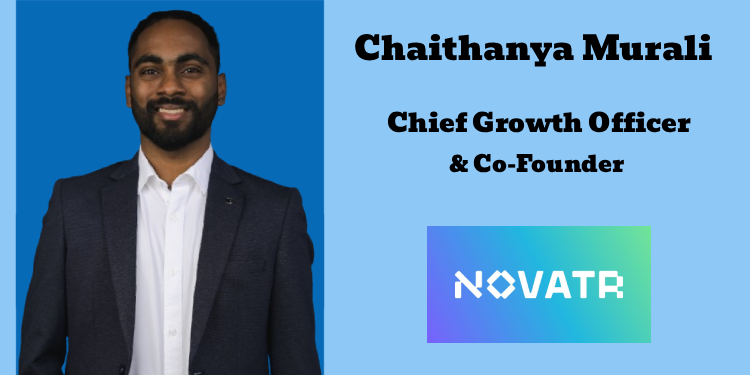
Medianews4u.com caught up with Chaithanya Murali Chief Growth Officer, co-founder Novatr
Q. The ed tech sector has seen a bubble and correction with some large players like Byjus and Whitehat Jr. going down. What are the learnings from this?
Honestly, the correction has been a reality check for all of us in ed-tech. It reminded us that this is fundamentally a trust business — not a pure sales business.
First, real skill outcomes matter.
At Novatr, we’ve always focused heavily on post-enrollment support and actual capability building. We track engagement, completion rates, and career outcomes closely because that’s what really drives long-term trust which builds the business in the long term.
Second, sustainable economics > aggressive growth.
It’s not just about booking revenue. It’s about onboarding learners responsibly, working with the right finance partners, and keeping clean, transparent systems. Many failures in the industry came from broken revenue realization models.
Third, diversified outreach with controlled CAC.
We’ve focussed on building a brand people relate to, but with strict discipline on marketing spends. A lot of our growth comes from relatable campaigns, organic reach, and strong word of mouth.
Overall, the sector has matured — and that’s a positive shift for anyone building with a long-term, outcome-focused approach.
Q. Novatr is targetting an ARR of 40 million dollars on 1 million dollars of funding. What tactics have led to this rapid growth?
A big part of our growth has come from building a capital-efficient engine where every rupee works extremely hard.
First, we went deep, not wide. Instead of becoming a typical ed-tech platform teaching everything to everyone, we picked the AEC industry and solved real, painful skill gaps in BIM and adjacent areas. That focus built trust, intent, and a willingness to pay for quality.
Second, we designed learning the way it actually works in the real world — strong mentors, live guidance, real projects, structured support. When people genuinely get skilled, they naturally talk about it, and that’s what kept our CAC stable even as we scaled.
Third, our GTM was simple and disciplined: sharp digital marketing, relatable brand campaigns, and a team that knows how to genuinely guide learners instead of “selling”. That helped us dominate India and start making inroads into the Middle East and US.
And finally, we kept our operations extremely lean and process-driven, ensuring that operational costs are in sync with the revenue getting generated.
Q. According to predictive analytics, where is the whitespace for growth in 2026 for Novatr?
Going by the trends and data, the biggest whitespace for us isn’t geography — it’s capability gaps in the AEC industry that no one is solving at scale yet.
Right now we operate primarily in BIM technology, but the industry is moving fast. Technologies like computational design, digital twins, AI-assisted design, sustainability, and Advanced construction management are becoming the new must-have skills. There’s a huge opportunity to build learning ecosystems around these emerging technologies and trends. .
The second whitespace is digital transformation of AEC companies. Most architecture and engineering firms want to move to modern digital workflows but don’t know where to start. They need structured assessments, onboarding, training, and continuous capability building. Today, this segment is wide open and massively underserved.
In short, the next wave of growth for Novatr is in becoming the partner that lifts entire AEC companies — not just individual learners — into the next generation of technology, workflows, and performance.
Q. Could you talk about the brainstorming with the creative agency that led to the The Civil Engineer’s Pursuit campaign?
The idea for The Civil Engineer’s Pursuit campaign emerged from a series of collaborative brainstorming sessions between our inhouse teams – marketing and brand teams. No outside agency was involved
During these discussions, we focused on a core insight: civil engineers often feel undervalued despite being central to shaping infrastructure and the built environment. We wanted to build a narrative that not only acknowledged their struggles but also highlighted their ambition, resilience, and passion for driving meaningful change.
Together, the teams explored stories from real professionals, common industry challenges, and the emotional journey of becoming a civil engineer.
This process helped us shape a campaign that celebrates their determination while also addressing the skill gaps and growth opportunities within the industry. The brand team played a key role in translating these insights into a compelling storyline and visual identity that resonates with both young engineers and senior professionals alike.
Q. What are the various legs of the campaign?
The campaign was designed as a multi-leg initiative to build awareness, spark emotion, and drive action. It included the following components:
1. Hero Film & Storytelling Assets – A central narrative film that captures the struggles, aspirations, and determination of civil engineers, supported by shorter cutdowns for social media.
2. Social Media & Community Engagement – Insight-driven posts, reels, and conversation starters aimed at sparking pride within the civil engineering community and building organic traction.
3. PR Outreach – Strategic media placements and storytelling to amplify the campaign’s message and elevate the conversation around civil engineering and digital upskilling on mainstream platforms.
4. Influencer & Creator Collaborations – Partnerships with civil engineering creators and professionals who could share authentic experiences and extend the campaign’s reach.
5. Email & CRM Communication – Targeted email journeys to engage students, early-career professionals, and existing leads, connecting the emotional narrative to clear upskilling opportunities.
Q. What other marketing campaigns and innovations can we expect as we head into 2026?
As we head into 2026, we have several exciting campaigns and innovations in the pipeline.
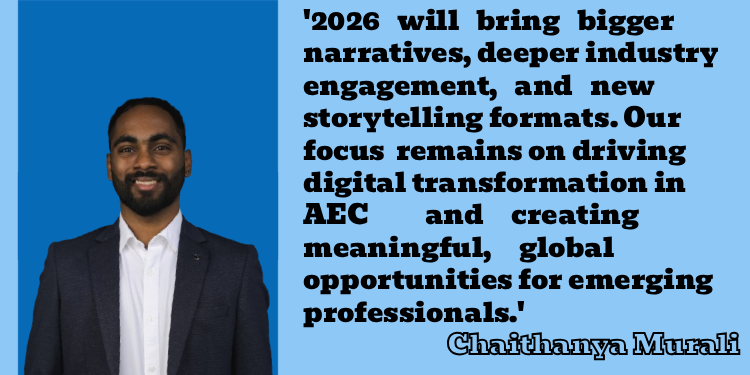
Our focus will continue to be on elevating the conversation around digital transformation in the AEC industry and creating meaningful opportunities for professionals to upskill.
While we can’t share specifics at the moment, we are working on initiatives that will deepen industry engagement, introduce new formats of learning storytelling, and expand our reach across key global markets.
What we can say is that 2026 will bring bigger narratives, stronger community-building efforts, and more impactful ways to support the next generation of AEC talent.
Q.Does the media mix for Novatr lean heavily towards digital? Or do traditional marketing avenues like TV, print, DOOH play a role?
At the moment, our media mix leans strongly toward digital.
Given our audience—young professionals, students, and early-career talent in the AEC industry—digital platforms allow us to reach them more precisely and engage them with measurable impact.
That said, we’re open to exploring traditional avenues like TV, print, and DOOH in the future as we scale, expand into new markets, and take on larger brand-building initiatives. Our approach will continue to evolve based on where our audience is most active and how we can deliver the strongest results.
Q. One trend in campaigns is the focus on it having a cinematic feel. Why is this important and how does having a cinematic feel enable the message to standout?
A cinematic approach helps transform a campaign from simple communication into an emotional experience.
In a crowded digital environment, audiences scroll past standard ads quickly. But cinematic storytelling—with its strong visuals, high production quality, and narrative depth—creates a moment that makes people pause, feel, and connect.
For a campaign like ours, this matters because we’re not just selling a course—we’re highlighting the purpose, passion, and struggles of civil engineers.
A cinematic feel elevates these stories, giving them the weight and respect they deserve. It allows us to show the intensity of their work, the challenges they overcome, and the pride they take in shaping the built world.
This level of storytelling makes the message more memorable, more relatable, and more shareable, helping it stand out in a competitive content landscape.
Q. Does word of mouth play an important role in growth for Novatr?
Yes, word of mouth plays a significant role in Novatr’s growth.
Because our programmes are intensive, career-focused, and built around real skill transformation, learners tend to share their experiences openly—with peers, colleagues, and within professional communities.
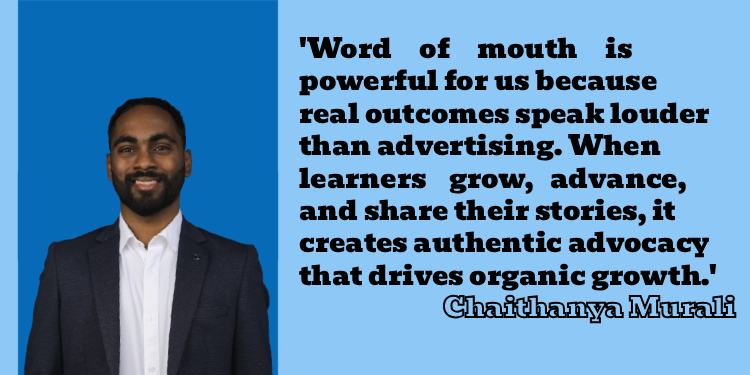
In the AEC industry, trust is built through real outcomes, not just marketing.
So when learners talk about promotions, better job opportunities, or the impact our programs have had on their careers, it creates authentic advocacy that drives organic growth. This peer-to-peer credibility often influences enrollment decisions more strongly than traditional advertising.
We see word of mouth not just as a growth channel, but as a reflection of the real value learners derive from Novatr.
Q. How is AI reshaping education and how is Novatr leveraging this?
AI is transforming education by making learning more personalised, interactive, and accessible. Instead of a one-size-fits-all model, AI enables real-time support, adaptive learning paths, and faster resolution of doubts—helping learners progress at their own pace with clarity and confidence.
At Novatr, we are actively leveraging AI to enhance the learning experience across multiple touchpoints. Our platform uses AI-driven assistants to help learners get instant, accurate answers to their queries, access relevant resources, and overcome roadblocks without waiting for human intervention.
This ensures faster doubt resolution and keeps learners continuously engaged in their workflow. We are also integrating AI tools into our course design and assignments, enabling learners to practice with the same technologies shaping the future of AEC workflows.
By combining expert-led instruction with AI-enabled support, Novatr ensures that learners gain both the foundational skills and the tech fluency required to succeed in an industry that is rapidly evolving.
Q. Could you talk about Novatr’s SEO strategy? Does Novatr use AI search engines in addition to Google?
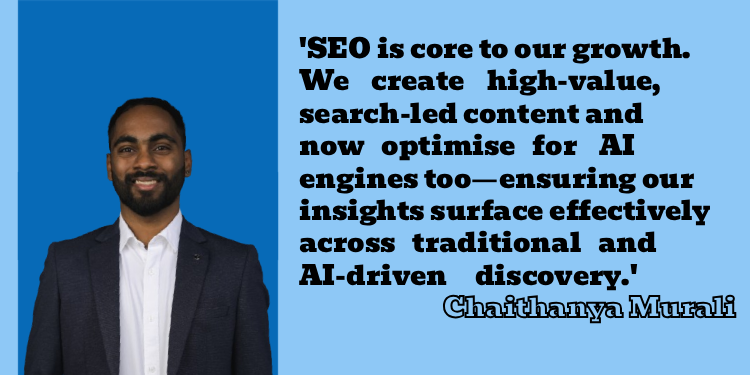
SEO is one of our core pillars of Novatr’s growth strategy.
We focus on building high-quality, educational content that aligns with what architects, civil engineers, and AEC professionals actively search for. Our approach includes:
• Deep keyword research around industry trends, software skills, and career pathways.
• High-value blogs, guides, and case studies that solve real learner queries.
• Technical SEO excellence across page performance, site structure, and user experience.
• Continuous optimisation based on Search Console insights and audience behaviour.
This long-term organic strategy has helped us build strong visibility across key AEC topics globally.
Regarding AI search engines:
Yes, we are actively adapting our SEO strategy to the evolving landscape of AI-driven search. While Google remains a major focus, we are also optimising content for AI search ecosystems—ensuring our content is structured, factual, and context-rich so it can be surfaced effectively by AI tools that summarise or recommend information.
Our goal is to be discoverable not just through traditional search engines, but also across the growing AI-assisted search experiences that learners are increasingly using.
Q. What role do leads on platforms like Meta play in growth?
Lead generation platforms play a crucial role in Novatr’s growth. They support us in two key ways:
1. Lead Generation:
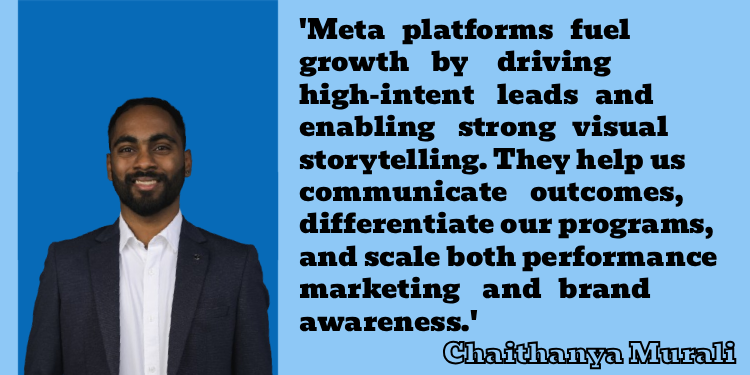
These platforms help us consistently reach high-intent learners across architecture, engineering, and design backgrounds. With strong targeting capabilities, they allow us to capture prospects who are actively exploring upskilling options, making them a major source of qualified leads for our courses.
2. Brand Awareness & USP Communication:
Beyond generating leads, these platforms act as powerful visual mediums where we can clearly communicate our course USPs, outcomes, and differentiators. Education-focused audiences prefer understanding what makes a program valuable—industry projects, mentorship, certifications, or career support—and the visual formats (videos, carousels, short-form content) allow us to convey this effectively at scale.
Together, these two functions make lead generation platforms an essential engine for both performance marketing and long-term brand building at Novatr.
Q. As AI leads to job losses, how crucial will technology-driven upskilling be in the coming five years?
AI is transforming work at every level, and in the next five years, technology-driven upskilling will become essential for every individual in the AEC industry—not just for those in technical roles. As automation streamlines repetitive tasks, professionals who understand BIM, computational design, AI-assisted tools, and digital workflows will stay relevant and competitive. Those who do not continuously upskill will face a growing risk of redundancy.
For individuals, learning new technologies will be the only way to secure long-term career growth. For companies, building a tech-enabled workforce will be critical to maintain efficiency and keep pace with the industry’s shift toward digital delivery.
Q. Apart from India, which are the other key markets for Novatr?
Novatr’s key markets beyond India include the Middle East, the US, the UK, Europe, and Southeast Asia.
These regions are rapidly accelerating their digital transformation in the built environment and have a strong demand for professionals skilled in BIM, parametric design, automation, and emerging construction technologies.