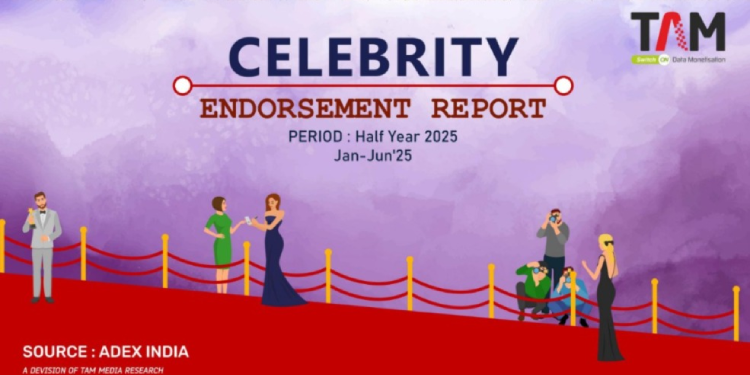
Mumbai: Celebrity endorsements has continued to play a significant role in India’s advertising landscape in the first half of 2025, with 29% of all TV ads featuring celebrities, according to the latest TAM AdEx Half-Yearly Celebrity Endorsement Report (Jan–Jun 2025).
The report highlights that film stars dominated with a 74% share of celebrity-led ad volumes, followed by sports personalities (19%) and television stars (7%). However, overall celebrity endorsements saw a 12% decline compared to H1 2023.
Key Findings:
- Top Sectors: Food & Beverages (23%), Personal Care/Personal Hygiene (17%), and Household Products (8%) together contributed to nearly half of all celebrity-led ads.
- Gender Split: Male celebrities dominated endorsements in Food & Beverages (63%), while female celebrities led in Personal Care/Personal Hygiene (58%).
- Categories: Toilet/Floor Cleaners (8%), Aerated Soft Drinks (6%), and Toilet Soaps (6%) topped the celebrity-endorsed ad categories, with the top 10 categories accounting for 40% of overall volumes.
- Most Visible Celebrities:
- *Shah Rukh Khan led with an average visibility of 27 hours per day, followed by M.S. Dhoni (22 hours) and Akshay Kumar (12 hours).
- *Other prominent names included Ranveer Singh, Amitabh Bachchan, Ananya Panday, Ranbir Kapoor, Anushka Sharma, Rahul Dravid, and Virat Kohli.
- Brand Endorsements: M.S. Dhoni endorsed the highest number of brands (43), followed by Shah Rukh Khan (35).
- Couple Endorsements: Deepika Padukone–Ranveer Singh, Anushka Sharma–Virat Kohli, and Akshay Kumar–Twinkle Khanna were the top celebrity couples, collectively driving over 40% of couple-led endorsements.
The report also noted that Ecom-Gaming emerged as the category endorsed by the maximum number of celebrities (38), underscoring the sector’s rising influence in Indian advertising.
Overall, the findings reaffirm the centrality of celebrities in shaping consumer recall and brand visibility, even as marketers face the challenge of balancing star power with sectoral shifts and evolving consumer expectations.