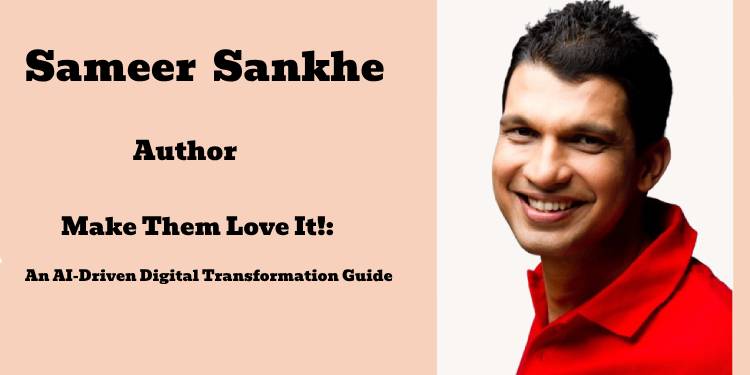
Targetting Indian businesses seeking to outpace the competition, Sameer Sankhe, a Chief Digital Officer and serial tech entrepreneur, unveils his new book, ‘MAKE THEM LOVE IT! An AI-Driven Digital Transformation Guide’.
The book challenges legacy organisations to break free from incremental automation and dare to launch the next disruptor from within.
Spanning personal war stories from India’s digital battlegrounds to real-world corporate shake ups, “MAKE THEM LOVE IT!” lays out a manifesto for harnessing bold innovation, customer obsession, and radical AI-led strategies to achieve a market-beating high growth path.
Medianews4u.com caught up with Sameer Sankhe, Author of Make Them Love It!: An AI-Driven Digital Transformation Guide
Q. What inspired you to write your third book on helping corporations use AI to transform?
Two things. First, I kept meeting CEOs who thought “digital transformation” meant buying a chatbot and calling it a day. After two decades in the trenches—from Salesforce to Tata Group to my current role building 3‑D maps—I knew the playbook was far richer and, frankly, more exciting. Writing forces me to be intentional in my own work, so I put those battle‑tested ideas down on paper and then decided to share them widely.
Second, AI’s cost curve has collapsed. A capability that once required a PhD team now sits in every browser tab. I wanted legacy companies to see that moment not as a threat but as the greatest green‑field opportunity since the internet boom.
Q. You read a lot about Silicon Valley during research. What can India learn from it?
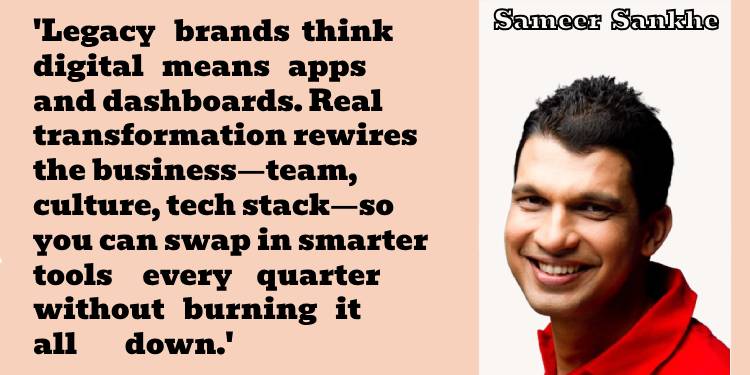
Valley founders have a reflex: fall in love with the problem, not the org chart. Nvidia didn’t out‑run Intel by making a slightly cheaper CPU; it re‑imagined the whole architecture for parallel computing and won the AI era before the rest of us saw it coming.
The Indian analogue is Asian Paints: four deliveries a day to 70,000 dealers, powered by a mainframe they bought in 1970—long before “analytics” became fashionable. So the lesson is: pair first‑principles daring with our unique context (cost‑efficient ops, frugal customers) and we can leapfrog rather than copy‑paste.
Q. Is the book meant to be an educational guide even for readers unfamiliar with AI?
Absolutely. The primary audience is India Inc.’s leadership, but I wrote it so an MBA student—or my non‑tech aunt—could follow the stories, frameworks and checklists.
The “Who?” section spells out that spectrum: CEOs, startup founders, investors and students all get a seat at the table.
Q. How did you come up with the title Make Them Love It!?
Because “like” is cheap, “love” compounds. Zappos flew a lost ring across the country; Rameshwaram Café keeps queues moving with piping‑hot dosa; Netflix’s algorithm makes you feel seen.
Every time a company chooses the more challenging road, customers become evangelists and marketing becomes free. The title is a reminder—and a dare—to shoot for that emotion, not the quarterly vanity metric.
Q. Your book says customer obsession isn’t optional. How has that helped giants like Apple, Amazon, Meta, Google, and TCS deliver unstoppable experiences?
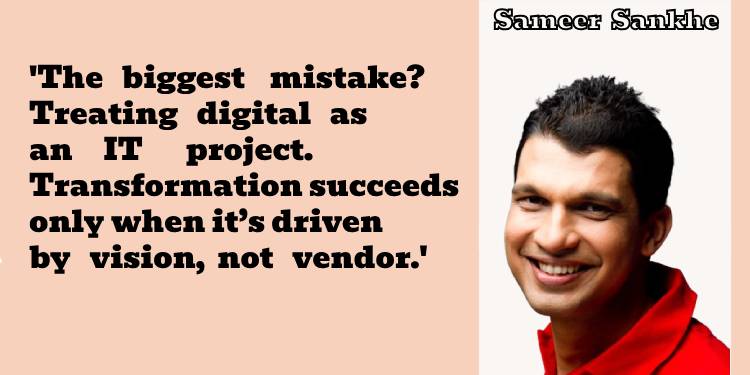
● Apple sweats unboxing and cross‑device hand‑offs so “it just works.”
● Amazon trades short‑term margins for one‑day delivery, then wins lifetime share‑of‑wallet.
● Google made discovery friction‑free; then used that same “one‑box” mindset to reinvent e‑mail and maps.
● Meta keeps removing posting friction so people create—and therefore stay—more.
● TCS uses its inside view of global clients to build platforms (e.g., BaNCS) that remove integration pain.
In every case, the flywheel starts with an over‑the‑top customer commitment and only later turns into margin, data or ecosystem power.
Q. Is Campa Cola a good example of shaking up “untouchable” incumbents like Pepsi and Coke?
Yes—if the relaunch goes beyond nostalgia. Reliance has distribution muscle and digital reach; combine that with a flavour tweak Indians genuinely prefer, price it to please the kirana store, and Campa can do to colas what Jio did to data.
But if it’s just a retro logo without a 10× better value prop, the giants will swat it away. So the jury’s out, but the ingredients are promising.
Q. What issues in the book are most valuable to investors?
Three lenses:
1. Moats in an AI world – proprietary data + first‑principles culture beat generic models every time.
2. Platform dynamics – value migrates to whoever unbundles, democratises and componentises a supply chain.
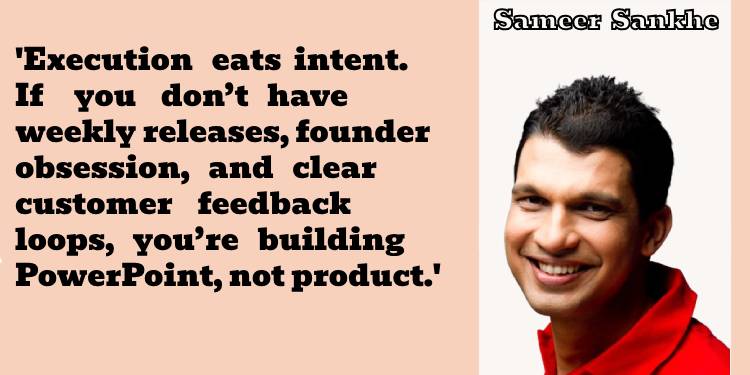
3. Execution signals – beware GE‑Predix‑style PowerPoints; look for founder‑level involvement and weekly release cadence.
If a company scores well on those axes, it is likely to outperform sector averages.
Q. What are the common pitfalls that legacy brands make during digital transformation?
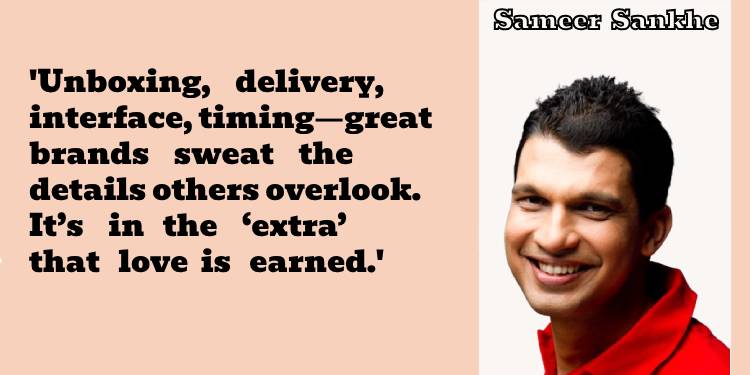
● Treating digital as an add‑on project run by consultants instead of a CEO‑level crusade.
● Optimising existing processes for Six Sigma efficiency while the market shifts under your feet—GE’s $4 billion lesson.
● Waiting for the “perfect” product instead of shipping, learning and iterating.
● Starving the effort with incremental budgets—legacy firms fight with pea‑shooters while startups show up with bazookas.
Q. AI changes at break‑neck speed. Is keeping up the biggest challenge?
Keeping up is table stakes; architecting for change is the real challenge.
The book urges leaders to design plug‑and‑play stacks so they can swap in cheaper, smarter models every few quarters without ripping out the plumbing. Media houses, banks, even map companies like ours need that modularity or they’ll fossilise.
Q. The media‑and‑entertainment sector is consolidating (think Jio‑Star). How can AI smooth that transition?
AI can:
● De‑duplicate vast libraries in days (metadata tagging, language detection).
● Predict churn when you merge streaming catalogs and tweak bundles before users bolt.
● Auto‑localise content—dubbing, subtitling, even dynamic ad placement—at near‑zero marginal cost.
Our chapter on Netflix shows how a data‑driven, personalised layer turned a DVD‑by‑mail firm into a global studio; the same principles apply to any post‑merger giant.
Q. How can AI help a startup build a product that is 10× better? Recent examples?
● Zerodha slashed brokerage fees to a flat ₹20 and built the minimalist Kite interface; AI now surfaces nudges like “your portfolio is 80 % in one stock” before the user realises the risk.
● Zepto uses demand‑forecasting models to guarantee 10‑minute grocery delivery in dense Indian cities.
● Rameshwaram Café—not tech on the surface—uses real‑time POS data to keep dosa batter fermenting just long enough for peak crispness, serving 7 500 orders a day from a ten‑by‑fifteen‑foot kitchen.
In every case AI removes friction or adds insight so the user feels the 10×.
Q. The book is seen as a work‑in‑progress. Will you update it in three years?
Definitely. AI years feel like dog years—one equals seven. My plan is an annual digital supplement (free PDF) summarising new patterns, then a full revised edition in about three years, keeping the frameworks but refreshing the case studies and numbers.
The Kindle version will update automatically; the hard‑copy folks get a QR code to the addenda.