In an era defined by rapid shifts in consumer behavior and tech-led disruption, market research is no longer a back-end function—it’s a strategic compass. At the forefront of this transformation is Hansa Research, India’s largest full-service insights agency, with a legacy spanning over four decades and operations in more than 100 countries.
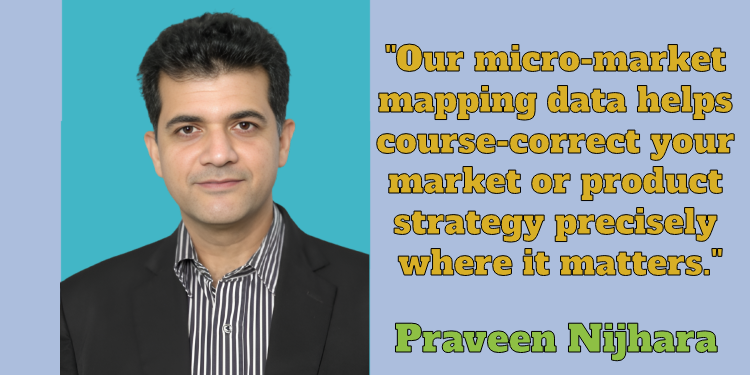
MediaNews4U spoke with Praveen Nijhara, CEO of Hansa Research, to explore how the company is redefining research through mobile-first surveys, AI-powered tools, and hyperlocal mapping. From Tier II–III markets to syndicated studies like IPLomania, Nijhara shares how brands can stay relevant, responsive, and rooted in real consumer insight.
Excerpts:
With over five decades of legacy, how has Hansa Research evolved its product and service offerings to stay ahead in a rapidly changing market landscape while balancing traditional research expertise with emerging tech-led methodologies?
Praveen Nijhara: Hansa Research is proud to be the largest Indian-owned market research company today. While some global players are larger in scale, we’ve built a legacy over the past four decades rooted in deep Indian market understanding and execution excellence. The real scale-up for us began with the Indian Readership Survey (IRS), which necessitated setting up field offices across 16+ state capitals, expanding us beyond our original presence in Mumbai and Delhi.
I joined the company in 2019, just before the pandemic, and in that initial year we saw very strong growth. Like most businesses, COVID did impact us, but post-pandemic, we bounced back and have continued to grow steadily. One of my key focuses since joining has been to diversify and future-proof our revenue streams.
To that end, we created dedicated verticals for sectors where we saw high potential—starting with automotive and then media, including OTT platforms like Netflix and Amazon Prime. In 2020, even amidst the pandemic, we launched our Customer Experience (CX) vertical. Today, CX is our largest and fastest-growing business line, and it’s been growing consistently year-on-year.
Alongside these sectoral expansions, we also ventured into international markets. Our first step was to establish operations in Bangladesh, where we’ve built a solid reputation and now receive direct briefs from clients. Following that, we expanded into the Middle East, setting up an office in Dubai. While we’ve begun projects in the UAE, the larger opportunity lies in Saudi Arabia, which is rapidly evolving and opening up. We’re in the early phases of understanding that market and also evaluating smaller markets in the region such as Oman, Qatar, and Kuwait, as well as parts of North Africa.
How is Hansa Research leveraging AI and automation to deliver faster, more meaningful insights, and how do these digital tools compare to traditional methods in terms of quality and depth?
Praveen Nijhara: Adopting technology today is not optional—it’s a necessity. At Hansa Research, we’ve embraced digital tools, AI, and automation to ensure we remain relevant and efficient in a fast-changing environment. That said, we are very conscious of preserving the rigor that traditional research brought, especially in a complex and diverse market like India. Traditional face-to-face methods allowed us to go deep into various population segments—including rural and niche urban cohorts—ensuring coverage and representation that digital-only methods often struggle with.
Online research, while faster and more scalable, poses limitations in sampling depth. You’re reliant on respondents choosing to participate, which can create biases or gaps—particularly when targeting specific sub-segments. In contrast, traditional methods allowed us to proactively seek out respondents and balance our samples better. That said, today’s clients often prioritise speed due to dynamic business environments. Many are willing to accept slightly less granularity in return for faster insights—sometimes overnight—via online panels or mobile surveys.
We’ve adapted accordingly. Our approach blends the best of both worlds—deploying tech for speed and scale while retaining rigorous data quality checks that we apply globally. Whether the data is collected in India, the US, UK, or APAC, we impose our in-house quality control protocols, even with outsourced partners. We’re very particular about data integrity because flawed data renders research meaningless.
We’re also leveraging advanced techniques like facial coding, eye tracking, and user experience (UX/UI) analytics. AI tools are helping us interpret emotional reactions, track attention spans, and process feedback in real-time. These methods enhance both the speed and accuracy of insights.
Many research agencies today claim to have access to millions of online panels in any given market, which they can quickly activate for various client research needs. In your view, how reliable and qualitative are these online panels? Do you believe they offer dependable insights?
Praveen Nijhara: The reliability of online panels entirely depends on how well they are managed and validated by the panel providers. While many panels in the market are of good quality, there are instances—often unintentional—where the panel data may not be entirely accurate. For example, a respondent listed as a male might actually be a female, or someone marked as aged 18–25 might, in reality, be over 40. These inaccuracies can affect the quality of insights if not properly checked.
That said, we believe most panel companies strive to maintain accuracy, and when managed responsibly, online panels can be extremely useful—especially for clients seeking quick answers to time-sensitive business problems. The ability to collect feedback and deliver insights within days, sometimes even within 24 hours, is a major advantage of digital panels.
At Hansa Research, we use panels extensively. We maintain our own validated panel—Hansa Cheetah—which we rely on for a significant portion of our client work. Every panelist on our platform is vetted and verified to ensure demographic authenticity, which adds time and cost but ensures data quality. As a result, our in-house panel is smaller but highly reliable.
Our own panel size stands at around 7 million respondents across India and global markets. That number can be scaled up further through partnerships with other panel providers. The reality is that no agency uses only its proprietary panel—there’s always collaboration in the ecosystem. We often provide respondents to other panel companies when they’re looking for specific demographics they can’t access on their own, and vice versa.
Ultimately, when panels are well-managed and validated, they can deliver dependable and actionable insights at a pace that traditional methods cannot match.
Can you share how mobile-first surveys and WhatsApp-based research are reshaping the way data is collected today?
Praveen Nijhara: Mobile-first surveys have become a standard approach in today’s research landscape. These are essentially surveys administered via mobile phones—typically through a link sent to the respondent, which opens a questionnaire that they can complete at their convenience. It’s a format that most people are familiar with—like the feedback links you receive after a car service. This method is particularly prevalent in the customer experience (CX) space, where fast and convenient feedback collection is essential, and we at Hansa Research use it extensively.
WhatsApp-based research is still relatively nascent but is gradually finding its footing, especially in qualitative research. One emerging use case involves creating WhatsApp groups with specific target audiences, where discussions around a product or service are facilitated, and organic feedback is gathered through real-time conversations. These discussions provide valuable insights, particularly during pre-launch or product-testing phases.
While WhatsApp surveys are not yet as widespread as mobile surveys, both channels represent a shift towards more conversational, real-time, and respondent-friendly research methods. We’re actively using both approaches where relevant, depending on the objectives and nature of the study.
What are some of the flagship syndicated studies Hansa Research conducts, and how do they influence decision-making across industries?
Praveen Nijhara: We conduct several syndicated studies across categories, each designed to offer actionable insights that directly influence strategic and tactical decision-making for our clients.
One of our most prominent studies is IPLomania, conducted annually during the Indian Premier League (IPL). Given the massive advertising spends during the tournament, the core objective of this study is to measure the effectiveness of brand visibility and recall. We interview viewers a week before the IPL begins and continue tracking them throughout the seven-week tournament and at its conclusion. This helps us assess changes in brand awareness and perception across various touchpoints—be it branding on stadiums, player jerseys, boundary ropes, or television ads. We’ve been running IPLomania for over 15 years, and it continues to be a valuable tool for brands to evaluate ROI on their IPL investments.
Another key study is Brand Endorser, which tracks the appeal, recognition, and fan following of over 400 celebrities, including Bollywood stars, regional film actors, sports personalities, and social media influencers. It helps brands choose the most suitable ambassador for their target audience and category. Often, clients come to us with a shortlist of celebrities, and using our data, we guide them to select the most effective match based on relevance, appeal, and alignment with their brand.
In the customer experience space, we’ve developed several syndicated studies tailored to specific sectors. One of our most impactful reports is in the life insurance category. It evaluates customer experiences across all key touchpoints—onboarding, premium payments, call centers, branch visits, and agent interactions. This study is so integral to client organizations that in some cases, its findings are linked to internal KPIs and even employee incentives. We’ve been publishing this report annually for the last three years, with the latest edition released in April.
We have similar studies for health insurance and have recently launched one for motor insurance. Additionally, we’ve conducted syndicated research in emerging sectors like OTT platforms and digital wallets, both of which were well-received in the market.
Why are Tier II and III markets becoming increasingly important for brands, and how is Hansa helping decode these segments?
Praveen Nijhara: Tier II and III markets are gaining prominence primarily because urban markets have become increasingly saturated. While urban consumers still hold strong purchasing power, there’s only so much incremental growth that brands can drive in these areas. As a result, companies are now actively turning their attention to smaller towns and rural areas to unlock the next wave of growth.
Markets like Ludhiana or Madurai are no longer seen as small—they’ve grown significantly. Today, brands are even exploring deeper markets like remote villages in Uttar Pradesh. The key driver here is untapped potential. As infrastructure improves and supply chains become more efficient, the ability to serve these markets has improved significantly, making them viable for both outreach and scale.
At Hansa Research, we have the capability to conduct fieldwork across the length and breadth of the country—including rural and remote locations. Whether it’s a small village in the North or South, we have the network and systems in place to execute research with depth and accuracy. Our reach and experience in these geographies help clients truly understand the aspirations, needs, and behavior of consumers in Tier II, III, and rural markets.
While brands must continue to invest in urban markets, real growth will increasingly come from these emerging segments—and we’re enabling that transition through ground-level insights and nationwide coverage.
How do you strike the right balance between quantitative scale and qualitative depth in your research approach?
Praveen Nijhara: The balance between quantitative and qualitative research depends entirely on the objective of the study. If a client wants to understand why something is happening—such as why consumers aren’t buying their product—they often begin with qualitative research. This could involve focus group discussions or in-depth interviews to uncover the motivations, perceptions, or barriers influencing consumer behavior. The goal here is to explore the “why” in detail—whether it’s a shift in consumer needs, competitive offerings, or other underlying reasons.
However, once those insights are gathered, clients often want to quantify them. That’s where quantitative research comes in—to assess the extent of the problem. For instance, if qualitative findings reveal five possible reasons for customer churn, quantitative research will help determine how prevalent each reason is across a larger consumer base. Is it 80% of consumers citing price? Or only 20% citing relevance?
In many cases, both approaches are used in tandem. Clients want a full picture—understanding both the underlying causes and how widespread they are. At Hansa Research, we tailor our methodology to meet that need, ensuring we deliver both strategic depth and statistically robust insights.
How has the role of research in brand and business decision-making evolved over the past decade, and are clients now more inclined to invest in long-term insights programs over one-off studies?
Praveen Nijhara: The role of research has certainly evolved, but the approach still depends heavily on the objective at hand. For tactical needs—like testing an advertisement before it goes on air—clients typically opt for one-off studies. These are specific, time-bound exercises meant to evaluate aspects such as message clarity, appeal, or emotional impact, especially before committing significant media spends.
On the other hand, there are strategic areas where long-term insights programs have become indispensable. Customer experience research and brand tracking are great examples. These are continuous studies that help companies monitor key metrics such as brand awareness, consideration, and performance against competition over time. Once initiated, these programs are rarely discontinued because they offer an ongoing pulse of market sentiment and effectiveness of marketing efforts.
So, in reality, both models coexist. Tactical research will always have its place, especially when it addresses specific decisions. However, there is a growing recognition of the value that consistent, long-term insights bring to brand strategy and customer-centricity.
More importantly, the relationship between clients and research firms is also maturing. While research providers have often been seen as external vendors, we’re increasingly being invited into internal discussions—not just to present findings, but to serve as the voice of the customer at the table. In such cases, we’re more than research suppliers; we become strategic partners, contributing meaningfully to long-term decision-making and planning.
How do newer, tech-enabled methodologies—like passive digital tracking or real-time dashboards—change the speed and quality of decision-making for clients?
Praveen Nijhara: Tech-enabled methodologies such as real-time dashboards and passive digital tracking are fundamentally transforming how quickly and effectively clients can make decisions. With real-time dashboards, data is continuously updated, allowing clients to monitor key metrics on demand. For example, we’ve had clients ask for their Net Promoter Score (NPS) at a specific time—say 10 a.m. the next morning—because they need it for a meeting. Thanks to back-end systems that are constantly collecting customer feedback and feeding it into the dashboard, they can access up-to-the-minute insights without waiting for traditional research cycles to conclude.
This immediacy eliminates the lag between data collection and decision-making. Clients no longer need to commission a study, wait for data analysis, and then receive a report. The entire process is streamlined and ongoing, which supports faster, more agile responses to market dynamics.
Passive digital tracking is another powerful tool, especially prevalent among online-first brands. It monitors user behavior without active input—tracking purchases, browsing patterns, repeat buying behavior, and more. Brands like Netflix use this approach to personalize experiences, learning over time what content a user prefers and tailoring recommendations accordingly.
This kind of behavioral data is highly valuable. It allows companies to create highly targeted and relevant offerings based on transaction history and user preferences. That’s also why we see brands increasingly trying to collect personal data such as mobile numbers, gender, age, and other demographic details. When combined with transactional insights, this data becomes a key enabler for customized marketing and product strategies.
While some may perceive this level of data tracking as intrusive, it is typically done with user consent and within privacy norms. Ultimately, these tech-enabled methodologies are making decision-making faster, more precise, and more customer-centric.
What are the biggest opportunities and challenges you foresee for market research firms in the next 3–5 years, and how is Hansa Research preparing to shape the future of insight generation both in India and globally?
Praveen Nijhara: One of the most significant shifts we’re witnessing—and will continue to see—is the rapid automation of research processes. AI and emerging technologies are increasingly taking over routine, operational tasks that were traditionally manual. This includes everything from survey scripting to sampling, data collection, analysis, and even basic report generation.
Today, advanced platforms allow clients to define their target audience—say, 60% male and 40% female respondents between 25–45 years who’ve purchased a specific product in the last month. The software can then design the questionnaire, deploy the survey to a pre-identified panel, gather responses, and deliver real-time insights via dashboards. This end-to-end automation significantly accelerates the research cycle and enhances efficiency.
However, while automation will handle the heavy lifting, human expertise remains indispensable—particularly when it comes to interpreting the data and providing business-contextual insights. Technology can generate the numbers, but understanding what those numbers mean in terms of business decisions still requires strategic thinking and domain knowledge.
In India, face-to-face surveys will likely continue for some time due to relatively low labor costs and the practical ease of in-person data collection in many regions. Unlike Western markets where high manpower costs are pushing research towards full automation, India will maintain a hybrid model for now.
We’re also seeing innovations like synthetic data gaining traction—where additional datasets are algorithmically generated based on a smaller real sample. For instance, conducting 100 actual interviews and then synthetically creating another 200 to simulate a 300-sample study. This can enhance speed and reduce costs without compromising representativeness.
Hansa’s Micromarket Mapping project covers over 637,000 micro units across India. How is this granular data transforming hyperlocal marketing and retail expansion strategies?
Praveen Nijhara: Our Micromarket Mapping initiative provides hyperlocal intelligence across 637,000 micro units in India, allowing brands to make data-led decisions with unmatched precision. To illustrate its impact, let’s consider a dairy brand that sells multiple variants of milk—regular, low-fat, and high-fat.
Now, through conventional wisdom or prior research, a company might assume that low-fat milk sells better in upmarket localities, where health consciousness tends to be higher. Using our micromarket data, they can validate this assumption—or challenge it—by overlaying their sales performance with demographic and socio-economic profiles at a ward level. For instance, a brand might expect robust sales of low-fat milk in premium areas of Mumbai, but upon comparing sales data with our mapping, they may discover that some high-profile neighborhoods actually show underperformance in this category.
This is where the real power of micromarket insights emerges. Our mapping doesn’t just cover Tier-1 cities like Mumbai or Delhi—it spans smaller cities like Surat, Varanasi, or Kolkata, where hyperlocal consumer behavior is often poorly understood. The report helps brands identify localities with high-potential consumer profiles and match that with actual sales performance. If the potential is high but sales are low, the brand can focus its efforts—whether through stronger marketing, improved distribution, or pricing strategies—on these high-opportunity zones.
The data is granular to the ward level, offering a detailed view of potential versus performance. This enables precise targeting, optimized resource allocation, and ultimately more efficient go-to-market strategies. It’s an invaluable tool for brands looking to scale intelligently, deepen penetration, and tailor offerings to specific consumer clusters across the country.
How do you ensure data privacy practice adopted by Hansa Research ?
Praveen Nijhara: At Hansa Research, data privacy is a critical priority, and we have robust protocols in place to safeguard respondent information across all our methodologies.
In face-to-face interviews, we may collect personal identifiers such as names and contact numbers. However, access to this data is strictly limited to only a select few within the system. The broader research and analytics teams work exclusively with anonymized datasets. They only receive response data—stripped of names, phone numbers, or any personally identifiable information—because their task is solely to analyze the findings, not to manage personal data.
In telephonic research, the client typically owns and manages the respondent database. In such cases, the data we receive is already anonymized, without any personal details. This ensures that the confidentiality of the respondent is protected right from the source.
Even in scenarios where personally identifiable data is captured, such as during in-person surveys, that information is kept isolated, secure, and inaccessible to anyone not directly involved in managing respondent coordination.
We follow strict internal data access controls and adhere to all industry and regulatory norms to ensure respondent privacy is never compromised. These practices help maintain the trust of both clients and consumers, which is fundamental to the integrity of our research.
Are you happy with the way the Budgets being allocated towards or engaging Research process of an organisation?
Praveen Nijhara: We’ve always maintained that deeper engagement with the research process significantly benefits brands—and we’re more than happy to support that journey. In terms of budgets, the picture is mixed. Some clients have sizeable research budgets and truly value insights. For them, research is a core component of decision-making and strategy.
However, there are many others who, in our view, would benefit from investing more in understanding their consumers. One of the common pitfalls is that brands often become deeply embedded in their own category and internal language. Over time, they start assuming that consumers understand their business as intimately as they do—which is rarely the case.
I recall a conversation with a telecom client that illustrates this well. They were convinced their new, simplified billing format was easy to comprehend. They’d even added an extra page to help users understand the structure. But consumer feedback told a different story—most people don’t have the time or inclination to read through detailed bills. They focus on the amount due and move on. That additional page? Largely ignored.
This kind of disconnect between internal assumptions and real consumer understanding can only be addressed through continuous consumer engagement—and that requires a commitment to research. Investing more in this area helps companies truly see things from the consumer’s perspective and avoid costly misalignments in communication or product design. So yes, increased budgetary focus and stronger engagement with research are both critical and, in many cases, under-leveraged.