Kofluence, an Ad-Tech influencer marketing platform, earlier this year unveiled the latest edition of its flagship annual publication, Decoding Influence: The 2025 Influencer Marketing Report.
Drawing insights from over 1,000 creators, marketers, and industry experts, the study offers a data-led study decoding the evolution of the country’s creator economy and the growing maturity of influencer marketing within digital AdEx.
Medianews4U.com caught up with Sohail Qadri Khan, VP – Business Development, Kofluence
Q. Which categories are growing their use of influencer marketing in 2025? Are there categories reducing usage? What trends are being seen?
The influencer marketing ecosystem is experiencing a fundamental realignment, with distinct patterns emerging across industry verticals. According to Kofluence’s Annual Research Report – Decoding Influence 2025, E-commerce continues to dominate the space, representing 23% of total influencer marketing spend in India.
This leadership position reflects the sector’s ability to leverage measurable ROI, trackable conversions, and the growing consumer appetite for content-driven discovery experiences.
FMCG brands, particularly in the beauty and personal care sector, are evolving beyond traditional awareness-focused campaigns and significantly raising their influencer marketing investments since the onset of this current fiscal year.
These brands now prioritise creator partnerships that educate consumers, demonstrate product efficacy, and maintain consistent brand narratives across Instagram and YouTube Shorts. The shift represents a strategic pivot toward outcome-driven influencer engagement.
The BFSI sector has emerged as a notable growth area, now accounting for 9% of influencer marketing investments. Financial services brands are deploying creator partnerships to build trust through financial literacy content, recognizing that credibility in this sector demands sustained, value-driven engagement rather than transactional promotional content.
Q. Is Kofluence tweaking its business model as a result? What goals have been set?
Kofluence was always focussed on catering to the needs of clients such as transparency, scale, diversity and innovation. Now in 2025, that alignment has evolved, as the platform has achieved a shift from campaign execution marketplace to an AI tech-enabled fully managed performance and creator commerce ecosystem.
AI is at the core of Kofluence. We have made significant investments in AI to optimise brand-creator matchmaking, automate video-content moderation at scale, and streamline campaign execution, which are particularly important when running large, complex influencer programs.
Strategically, the platform is focused first on activating creator-as-channel models with built-in attribution and long-term value. Second comes scaled campaign executions without losing hyperlocal personalizations, vernacular content or local cultural nuances, which is the core essence of Bharat.
We aim to position influencers as business drivers using a mix of effective story telling, organic brand integrations and outcome-based campaigns, especially for consumer-direct D2C, BFSI and personal care categories
At Kofluence, we reject templatisation. Every campaign is tailored to the brand’s essence, the creator’s voice, and the audience’s expectations. Our decisions are rooted in real-time market intelligence to help brands succeed in an ecosystem that values both relevance and reach.
Q. How is AI and GenAI transforming influencer marketing? What are the opportunities and risks?
Artificial intelligence is now an essential component of influencer marketing. For brands, AI enables better campaign optimisation, influencer identification, automated moderation and creative automation. According to data from Kofluence’s Annual Research Report – Decoding Influence 2025, 30% of marketers are actively using AI for creative generation, while an additional 25% are using AI for tracking performance and managing their digital ecosystem.
For creators, Generative AI allows for script writing assistance, auto-dubbing, background generation, and video editing. Meta’s efforts to allow language dubbing for Reels and AI avatars are still being tested, but they could change everything we know about content creation.
These capabilities shine a light on the possibilities ahead with workflow efficiencies, multilingual scaling, and personalization of content. However, the concern could be depending too heavily on AI, leading to generic, synthetic content that may undermine authentic connections. And in influencer marketing, where trust is the true currency, creators must strike the right balance between automation and authenticity.
Q. Is it a mistake that 24% of content creators don’t use AI?
Yes. The fact that almost one in four creators are avoiding AI tools is a loss in terms of efficiency and competitive advantage. Those creators likely experience longer content cycles, increased costs of production, and difficulty in scaling vernacular content.
With an increased demand on localised storytelling, quick content turnarounds, and results-driven formats, creators using AI will produce better business outcomes, and ultimately find more lucrative opportunities.
In a landscape that demands faster turnarounds, localized storytelling, and measurable outcomes, AI-enabled creators will not only be more efficient, they will also unlock more revenue opportunities. Embracing AI is no longer optional; it’s essential for long-term relevance and monetization.
Q. What role is vernacular or lo-fi content playing in targeting Bharat effectively? Should content be tailored for regional audiences?
Vernacular content is an essential requirement in 2025. With over 500 million users of regional language expected by 2025, companies that do the best are those who are producing platform-native, culture-driven narratives. Micro-influencers with 10K-100K followers will be more beneficial for hyperlocal outreach, specifically in Bharat.
Lo-fi content performs well because it is more relatable, spontaneous, and more genuine. The real point here is not just translating national campaigns into regional languages, but actually designing regional-first stories with local creators who understand sentiment, language nuances, and cultural context.
Q. Will Diwali continue to drive peak influencer activity? Could other times of year grow in importance?
Diwali is still the biggest point in the influencer marketing calendar with 42% of brands stating they increase their spend during the season. Cultural importance, and the way Diwali aligns with consumer sentiment continues to make it the most popular choice for high impact campaigns.
However, marketers are using an increasingly multi-peak calendar approach with the insight that influence can be effectively extended beyond just one festive window. Events such as Valentine’s Day, IPL, Independence Day, and brand-lead occasions are gaining importance for driving year-round engagement.
More importantly, marketers are increasingly recognising that “India is made up of many Indias.” The large cultural and language diversity across India, means brands must look beyond pan-India festivals, and identify region-specific opportunities to spend. For example, festivals such as Onam are driving significant influencer trends in the southern markets-simply providing even higher engagement at a more circular, culturally relevant level.
As the costs of Diwali placements rise, and audiences anticipate perennial relevance, brands are increasingly balancing a “seasonal cluster” of influencer budgets across national and regional moments to maintain continuous saliency.
Q. Is choosing between Evergreen and Shock Marketing a delicate balancing act?
Evergreen marketing is stable and trusted. Amul is not just a brand; they represent the epic success of consistent messaging within a cultural framework.
Shock marketing, while successful because of its viral nature and disruption, also carries the costs tied to reputation, trust and integrity; for instance Poonam Pandey cervical cancer campaign. They got attention and click-through rates for sure, but it resulted in tremendous backlash due to the trust and integrity violations.
Q. How are memes contributing to influencer marketing? Are they a passing trend?
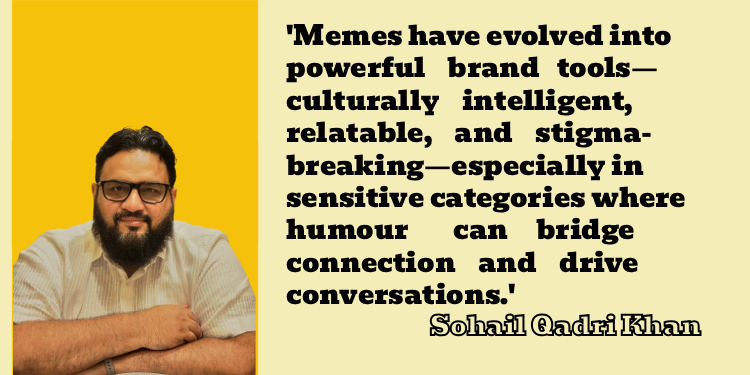
Memes have now found a place in a content strategy with longevity. They are no longer a passing internet trend; they have proven to be a cultural and conversational entry point for brands looking to embed themselves into culture, particularly when targeting Gen Z and young millennials.
As illustrated in Decoding Influence 2025, meme-vertising performs consistently well with higher engagement, and share-ability especially on social platforms like Instagram and X, where trends happen almost immediately. The power behind memes is their relatability, their ability to respond to current events or the social sentiment, and their ability to tell a brand’s story without overt prompts as an ad.
The best thing about memes is they can also work particularly well with categories that are difficult to work with in traditional formats, such as adult wellness and sexual health. This is especially true in these spaces where humour or self-awareness can eliminate stigma or discomfort, and memes are just the right conduit for connection.
Even cringe content can perform surprisingly well, as long as it is underpinned by self-aware humour and cultural intelligence. Knowing the line where entertainment ends and relevance starts is where brands achieve success.
Q. With short-form content saturation, is choosing the right platform like Instagram Reels vs. YouTube critical for brand recall?
Selecting the right platform, and the right content format, are now an essential consideration in campaign planning. Instagram accounts for 51% of total influencer spend, mainly because of its real-time discovery, virality, and especially the Reels content format.
YouTube accounts for 28% of total influencer spend, which offers depth and longevity. With better shelf life content, YouTube offers a content discovery through search which is better for education and storytelling.
The platform you choose depends on the intentionality of your campaign. Reels work best for visibility driven by impulse and trends, YouTube works better for consumption driven by intentionality. Brands need to align the content format with audience behavior and funnel goals.
Q. How big is the audience for long-form video, and what is its growth outlook?
Long-form video content still has a strong following, particularly for educators, wellness, financial, and tech sectors. Even though only 13% of creators actively utilise long-form video as a monetization tool, long-form content still attracts audiences who are willing to sit through the ads for content that resonates with them.
YouTube’s long-tail discovery, ad monetisation opportunities, and the increased migration of Shorts back to long-form video is giving creators an incentive to create video content that incorporates both of these formats. For long-form video, expect steady but sustainable growth, especially as creators layer in subscriptions, longer product demonstrations, and niche educational content.
The future of long-form video is clear. Long-form video may never scale quickly, however, it does develop a level of relationship that is deeper with the viewer; it is also more friendly for advertisers as it provides a larger canvas for the building narrative and playback of inclined and diverse messaging.