Saturday, July 25, 2026
MediaNews4U
  • Exclusive
  • Advertising
  • Media
    • Radio
    • Cable & DTH
    • Print
    • Digital Frontier
    • Gaming Nexus
  • Television
  • OTT
  • Ad-Tech
  • Marketing
  • Campaigns
  • Analysis
  • Opinion
    • Opinion
    • Think Through
    • Prescience 2023
    • Prescience 2024
  • People
  • Events
    • Leader Speak
    • STRAIGHT TALK
    • Gamechangers
    • Print & TV Summit
MediaNews4U
  • Exclusive
  • Advertising
  • Media
    • Radio
    • Cable & DTH
    • Print
    • Digital Frontier
    • Gaming Nexus
  • Television
  • OTT
  • Ad-Tech
  • Marketing
  • Campaigns
  • Analysis
  • Opinion
    • Opinion
    • Think Through
    • Prescience 2023
    • Prescience 2024
  • People
  • Events
    • Leader Speak
    • STRAIGHT TALK
    • Gamechangers
    • Print & TV Summit
MediaNews4U.com
Home Authors Corner

The Grok Deepfake Controversy and the New Reality of Personal Data in India

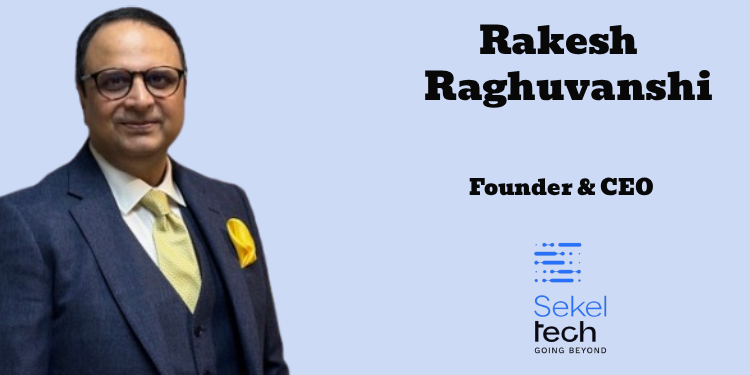
In this article, Rakesh Raghuvanshi, Founder & CEO, Sekel Tech, explains that generative AI turns personal data into transformable assets, making consent, regulation, and compliance insufficient unless organisations proactively design safeguards to prevent misuse and downstream harm.

by Guest Column
January 19, 2026
in Authors Corner
Reading Time: 3 mins read
A A
The Grok Deepfake Controversy and the New Reality of Personal Data in India
Share Share ShareShare

The recent controversy around Grok generating non-consensual and objectionable images has largely been framed as an artificial intelligence failure. In reality, it is far more accurately understood as a data failure. What the incident exposes is not merely a lapse in safeguards by one platform, but a fundamental shift in how personal data behaves once it enters generative AI systems.

For decades, personal data was treated as static. An image remained an image, a voice recording stayed a voice recording, and a message was confined to the context in which it was shared. Generative AI dismantles this assumption entirely. Once personal data is accessed by such systems, it becomes inherently transformable. Images can be altered, voices can be cloned, and fragments of conversations can be reassembled into entirely new narratives.

AI became a game changer not simply because it automated tasks, but because it radically altered what shared data could be turned into. A photograph uploaded for social interaction can now be transformed, edited, and republished in ways the individual never imagined or consented to. The consent that was implicitly assumed when a user shared a photograph on a social media platform cannot be presumed to extend to what that platform’s AI model may subsequently do with it. The Grok controversy makes one thing clear: consent for publication is not the same as consent for AI-driven transformation.

India’s Digital Personal Data Protection Act, which the country is preparing to operationalise, rests on several strong foundational principles, particularly purpose limitation and data minimisation. In simple terms, purpose limitation means personal data should be used only for the purpose for which it was collected, while data minimisation requires organisations to collect only what is strictly necessary. These principles were designed to ensure that entities receiving customer data, referred to in the law as Data Fiduciaries, do not misuse it.

The Grok incident, however, demonstrates how easily these principles can unravel when personal data is fed into AI systems without clear boundaries or controls. Even when the original data collection is lawful, downstream misuse can still result in real and lasting harm.

The deeper challenge is that regulation alone cannot keep pace with the speed at which generative AI evolves. Laws are inherently reactive. They come into force after patterns of misuse have already surfaced. AI systems, by contrast, can scale harm almost instantaneously. This creates a dangerous gap where compliance may exist on paper, yet risk remains very real in practice.

The widespread outrage around the incident is justified. But the solution, when viewed objectively, is not complicated. Companies must begin thinking proactively, anticipating potential misuse of AI and eliminating those possibilities as far as possible at the design stage itself.

Put simply, organisations that handle the personal data of individuals, designated as Data Principals under the Act, must think beyond secure storage and access control. What is required is proactive planning to ensure that AI tools cannot manipulate, expose, or repurpose personal data in ways that harm the Data Principal. This responsibility applies irrespective of whether the AI model is owned by the Data Fiduciary or sourced externally.

This obligation operates at multiple levels. Founders and business leaders must recognise that casually uploading customer data, employee information, or internal communications into public AI tools creates risks that are extremely difficult to reverse. Employees using AI as a productivity shortcut may unknowingly leak sensitive personal information. Parents sharing images of their children online may be creating permanent digital footprints long before a child can understand, let alone consent to, their consequences.

The Grok controversy shows how quickly these risks move from theoretical to tangible. What begins as a technical capability soon becomes a reputational, psychological, and legal problem for individuals who never agreed to be part of such experimentation. Once harmful outputs exist, takedowns and apologies do little to undo the damage.

The new reality for personal data in India is that privacy protection must begin before data ever reaches an AI system. As generative AI becomes deeply embedded in everyday digital life, incidents like Grok underline the need for a fundamental shift in how we think about data protection.

The responsibility of Data Fiduciaries does not end with lawful collection. That is merely the starting point. Beyond it lies an entirely new threat landscape, evolving by the minute, where data itself has become the primary target.

(Views are personal)
Tags: Rakesh RaghuvanshiSekel Tech

RECENT POSTS

Why the Future of Advertising Lies at the Intersection of Creativity, Commerce and AI
Authors Corner

Why the Future of Advertising Lies at the Intersection of Creativity, Commerce and AI

July 24, 2026
0

Advertising in 2026 is defined by a deeply connected ecosystem where creativity, commerce, and AI converge. The most enduring brands...

Read moreDetails
Fear of Missing Out (FOMO): A phenomenon that will force marketers to ditch the playbook
Authors Corner

Fear of Missing Out (FOMO): A phenomenon that will force marketers to ditch the playbook

July 24, 2026
0

The dynamic perspective of consumerism has been evolving since the time man could think, from cavemen foraging for food and...

Read moreDetails
Why Enterprises Are Rethinking Their Digital Marketing Strategy
Authors Corner

Building a Roadmap: How Marketers Should Prepare for AI Search

July 22, 2026
0

A few months ago, the founder of a mid-sized brand asked me a question that stopped our meeting cold: "We...

Read moreDetails
Why Discovery Failure Is the Hidden Problem in Streaming Monetization
Authors Corner

Why Discovery Failure Is the Hidden Problem in Streaming Monetization

July 21, 2026
0

The economics of streaming have quietly shifted. According to Comscore's 2025 State of Streaming report, the share of household viewing...

Read moreDetails
Indian Television Doesn’t Have an Audience Problem. It Has a Proof Problem
Authors Corner

Indian Television Doesn’t Have an Audience Problem. It Has a Proof Problem

July 20, 2026
0

A few weeks ago, this column looked at what happens when a country's television ratings system goes dark, who benefits...

Read moreDetails
AI Won’t Replace Media Professionals—But It Will Replace the Unprepared
Authors Corner

AI Won’t Replace Media Professionals—But It Will Replace the Unprepared

July 20, 2026
0

There are two conversations about Artificial Intelligence happening in the media industry today. One is driven by excitement. The other...

Read moreDetails

LATEST NEWS

Classic Marble Company unveils new brand identity, launches ‘Unearthing the Extraordinary’ campaign

Classic Marble Company unveils new brand identity, launches ‘Unearthing the Extraordinary’ campaign

July 24, 2026
Joyalukkas

Joyalukkas launches ‘Sell Old Gold. Secure Your Future.’ campaign to promote instant liquidity from idle jewellery

July 24, 2026

ANALYSIS

India’s Music
Analysis

India’s Music Consumption Soars as 96% Smartphone Users Tune In Daily: EY–IMI report

July 24, 2026
0

Mumbai: India’s paid music streaming market is poised for significant growth, with paid subscriptions expected to reach 28–30 million by...

PEOPLE

Experion Developers elevates Vaibhav Kumar Shivhare as COO- Operations
People

Experion Developers elevates Vaibhav Kumar Shivhare as COO- Operations

July 24, 2026
0

Gurugram: Experion Developers, one of India’s foremost real estate developers, has announced the elevation of Vaibhav Kumar Shivhare as COO-Operations,...

MARKETING

BKT
Marketing

BKT extends its long-term partnership with the Big Bash League and renews its agreement with Cricket Australia

July 24, 2026
0

Mumbai: Balkrishna Industries Ltd. (BKT), a multinational Off-Highway tyre manufacturer, will continue as naming rights partner of the Golden Cap...

Subscribe to Newsletters

ADVERTISING

Havas’ Maison BETC acquires Eyesight to strengthen luxury event and fashion show expertise
Advertising

Havas records 2.5% organic growth in H1 2026, confirms annual guidance

July 24, 2026
0

Mumbai: Global communications group Havas reported a solid financial performance for the first half of 2026, posting 2.5% organic net...

PRINT

Mathrubhumi Books launches special Ramayana collection ahead of Karkitakam month
Print

Mathrubhumi Books launches special Ramayana collection ahead of Karkitakam month

July 14, 2026
0

Kochi: Mathrubhumi Books has unveiled a specially curated collection of Ramayana publications ahead of Kerala's Malayalam month of Karkitakam, beginning...

AUTHOR'S CORNER

Why the Future of Advertising Lies at the Intersection of Creativity, Commerce and AI
Authors Corner

Why the Future of Advertising Lies at the Intersection of Creativity, Commerce and AI

July 24, 2026
0

Advertising in 2026 is defined by a deeply connected ecosystem where creativity, commerce, and AI converge. The most enduring brands...

UPLIFT MEDIANEWS4U DIGITAL PVT LTD
No. 194B , Aram Nagar 2, JP Road,
Versova, Andheri West
Mumbai - 400061

For editorial queries:
[email protected]
[email protected]

For business queries:
Smitha Sapaliga - +91-98337-15455
[email protected]

Recent News

India’s Music

India’s Music Consumption Soars as 96% Smartphone Users Tune In Daily: EY–IMI report

July 24, 2026
Classic Marble Company unveils new brand identity, launches ‘Unearthing the Extraordinary’ campaign

Classic Marble Company unveils new brand identity, launches ‘Unearthing the Extraordinary’ campaign

July 24, 2026
Joyalukkas

Joyalukkas launches ‘Sell Old Gold. Secure Your Future.’ campaign to promote instant liquidity from idle jewellery

July 24, 2026

Newsletter

Subscribe to Newsletters

Medianews4u.com © 2019 - 2025 All rights reserved.

  • The South Side Story 2023 Download Report
  • Goafest 2023: Day 3
  • Goafest 2023: Day 2
  • Goafest 2023: Day 1
  • Straight Talk Gallery 2022
  • The South Side Story 2022 Download Report
  • Focus 2022
  • Futurescope Conclave Gallery 2022
  • The South Side Story 2021 Download Report
  • FOCUS 2021
  • Exclusive
  • Exclusive
  • Advertising
  • Media
    • Radio
    • Cable & DTH
    • Print
    • Digital Frontier
    • Gaming Nexus
  • Television
  • OTT
  • Ad-Tech
  • Marketing
  • Campaigns
  • Analysis
  • Opinion
    • Opinion
    • Think Through
    • Prescience 2023
    • Prescience 2024
  • People
  • Events
    • Leader Speak
    • STRAIGHT TALK
    • Gamechangers
    • Print & TV Summit

Medianews4u.com © 2019 - 2025 All rights reserved.