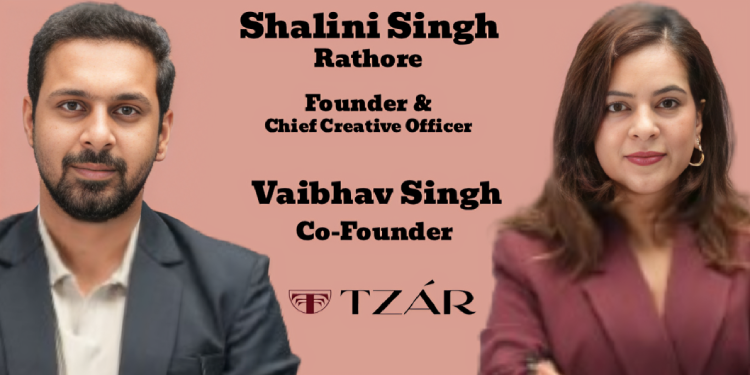
TZÁR is a new men’s lifestyle brand built for those who believe style speaks softly but leaves a lasting impression.
The brand was put together by Shalini and Vaibhav Singh Rathore.
TZÁR marries timeless design, sustainable craftsmanship, and quiet confidence in a first collection that speaks volumes without being loud. The debut collection, “The Quiet Edit”, spans tailored shirts, jackets, and artisan leather accessories … each piece engineered to age with the wearer, not the calendar.
Why this matters — and why now:
· The India menswear market is already worth around $ 20.4 billion in 2024 and is projected to climb with a CAGR of 7.4% through 2033.
· Meanwhile, India’s luxury fashion segment is nearing $ 9.4 billion in 2024, and is expected to hit $ 15.1 billion by 2033.
· Digital fashion commerce is booming — the online fashion retail market in India is forecast to expand by $36.01 billion from 2025–2029, at a CAGR of 22.2%.
Men’s wear is an underserved growth frontier, and consumers are leaning into brands that deliver both substance and soul.
Medianews4u.com caught up with Shalini Singh Rathore, Founder & Chief Creative Officer and Vaibhav Singh, Co-Founder, TZÁR
Q. The Indian menswear market is projected to climb with a CAGR of 7.4% through 2033. What is the impact that TZÁR is looking to make?
Shalini: The projected 7.4% CAGR for the Indian menswear market through 2033 is the undeniable economic backdrop, yet for me, the founding of TZÁR was fundamentally driven by the Longevity Theory the conviction that true luxury is defined by a piece’s lifespan, not its fleeting trendiness.
While global economies like the US, Europe, and China face headwinds, India’s resilience as the fastest-growing major economy globally presents a singular window of opportunity for brands built on enduring quality. I saw a vacuum where the discerning, globally aware Indian man was ready to move beyond the flash of imported brands, seeking a label that truly reflected his ‘Intelligent Timelessness.’
Our core impact, therefore, is two-fold and deeply personal: First, to establish the definitive vocabulary for ‘Quiet Luxury’ in India. I founded TZÁR to be the anti-thesis of disposable fashion, prioritising architectural design and uncompromising material integrity because I believe the future of luxury is in enduring value, not fleeting trends. As they always say that price and cost are two different theories and this now the consumer understands very well. They are ready to pay the price only when they think the product is worth its cost.
This commitment is concretely embodied in TZÁR CARE, a critical pillar that solidifies our promise that our products are investments. It is the practical application of the Longevity Theory, addressing the core deficiency in the luxury market where brand commitment often ends once the transaction is complete.
By the year 2026, we project the full rollout of our Post-Sales Repair and Restoration Service, which will provide meticulous repair, re-patination, and reconditioning for our premium goods. This strategic service will dramatically increase the actual lifespan of a TZÁR piece, decisively positioning us as a brand committed to circularity, sustainability, and unparalleled customer lifetime value within the Indian luxury space.
Finally, this strategy serves a national purpose: to elevate the ‘Made-in-India’ narrative. Leveraging our incredible local craftsmanship and merging it with a minimalist, international aesthetic is a conscious act to prove that world-class luxury, quality, and global design prowess can be successfully incubated and exported right here in India for all wardrobe essentials that you need to get through a day with ease and style.
By integrating the Longevity Theory into both our design and business model, we are not just selling premium clothing; we are powerfully reinforcing the narrative of India as a global economic and cultural powerhouse for the next decade, grounded in responsible, enduring value.
Ultimately, my goal is to ensure that a decade from now, our customer can still say they own their favourite TZÁR piece and perhaps save themselves the trouble of having to buy another suit for their second wedding.
Q. What goals have been set in the coming three years and what is gameplan to get there?
Vaibhav: The economic landscape is undeniably shifting globally, but the fuel for TZÁR is sheer, sometimes chaotic, passion and deep-rooted experience. It’s important to emphasize that our strategy is a living, breathing document because as founders, we learn and grow every day, often battling the internal, problem-based tug-of-war between high-level ambition one day I’m sketching out a flagship store in London or Times Square, the next I’m stressing over the supply chain and deciding we need to build a factory in Indore, lol it’s never dull!
Yet, every decision we make is ultimately filtered through a commitment to the Customer First Approach and the non-negotiable pursuit of Excellence in Quality and Design. This is where the wisdom comes in: the commercial mastery of my father-in-law, who built a phenomenal Rs. 5000 crore empire in the last decade, and the heart-and-soul integrity of my own father, who showed me the powerful story of ‘village to success’ and made me capable of this journey.
Our three-year game plan, therefore, is straightforward, albeit a bit wittily executed:
1. Customer Doubling: Our immediate goal of Market Penetration doubling our high-net-worth customer base by Year 2 is achieved by getting our product directly into people’s hands. We’re moving beyond flat screen awareness by securing presence in curated multi-designer stores and hosting exclusive meet-and-greets and events, because we want people to feel the leather, touch the craftsmanship, and understand the difference.
Furthermore, we will run curated influencer campaigns targeting thought-leaders and domain experts, not just those with high follower counts ensuring brand awareness spreads organically and authentically. It’s the equivalent of sending a laser-guided message to the right person, rather than carpet-bombing the entire city with noise.
2. Perfection as Standard: Our commitment to Service Excellence and the full rollout of TZÁR CARE Post-Sales Repair and Restoration Service by Q4 2026 isn’t just business; it’s the physical manifestation of our Longevity Theory. If our clothing is an investment, we’re the fund managers ensuring its value never depreciates.
3. Global Standing: Finally, in Year three, we initiate Brand Globalisation to prove that world-class luxury and quality can be born right here in India. We will establish a global market one impeccably tailored shirt at a time, without ever having to raise our voice.
Ultimately, we are building a legacy that will last, ensuring our customers feel so confident and well-served that they’ll own their favourite TZÁR piece for decades and perhaps save themselves the trouble of having to buy another suit for their second wedding!
Q. Consumers are leaning into brands that deliver both substance and soul. What is the big challenge in catering to these needs?
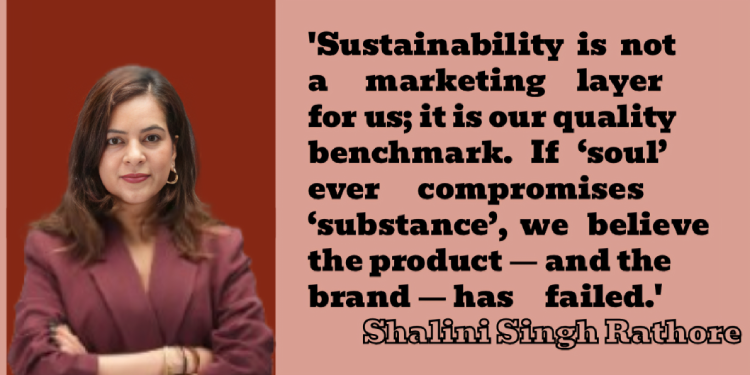
Shalini: The biggest, most existential challenge in catering to the modern consumer’s demand for both substance (uncompromising quality) and soul (ethical purpose) is not a marketing problem it is navigating the impossible, often emotionally exhausting mandate of Perfect Execution Under Constant Public Scrutiny. This isn’t just business; it’s a moral crucible that demands continuous, costly commitment, and that is where most traditional businesses fail.
At TZÁR, we embrace this challenge recognising that the consumer no longer trusts the narrative they demand the data. This conviction forces us to adopt the principle that Sustainability is the Quality Benchmark, and this is where the fun begins. We don’t just use eco-friendly materials to tick a box; we require them to be functionally superior to traditional options, demanding they align with our Longevity Theory.
This means our R&D teams are essentially chained to solving complex material science problems be it innovating in non-toxic leather finishing or developing custom-milled fabrics just to meet the baseline demand that our product not only saves the planet but lasts forever and looks amazing doing it. It’s an exhausting, highly technical mandate, but we recognize if the “soul” compromises the “substance,” we have failed entirely!
To earn trust in this highly skeptical environment, we deploy Transparency as the Trust Benchmark. We’ve stopped trying to hide anything, because our savvy, globally-exposed customer base now acts as a distributed global auditing firm and they are relentless! This radical, open-book honesty is the highest expression of our brand’s Soul, as it eliminates the consumer’s need to chase hidden information, transforming scrutiny into trust.
It’s a bold, slightly terrifying strategy, but we’ve realised the easiest, most peaceful path to profitability is simply to be unimpeachably ethical and meticulously high-quality. This integrated approach where operational excellence is the ethical purpose is the only witty answer we have to the consumer’s deep demand: proving that the soul we claim is genuinely, physically embedded in the substance they receive.
Q. Are access, variety and relevance the keys to success?
Shalini: For the premium contemporary segment, success is not a byproduct of broad market penetration, but rather a result of meticulously calibrated access, variety, and relevance. TZÁR defines Access through a hybrid model of “digital ubiquity and selective physical presence.” This ensures the brand remains easily discoverable and frictionless on high-end online platforms while maintaining a physical footprint that prioritises an immersive, high-touch brand experience over mass availability. Instead of being everywhere, we choose to be exactly where our client feels most inspired.
Our approach to Variety rejects the chaotic breadth of fast fashion in favor of “curated depth.” By offering an expertly edited range of versatile staples, we empower the modern man to build a sustainable, modular wardrobe. This focus on “multiple ways to wear a few perfect items” shifts the consumer mindset toward investment pieces that decrease in per-wear cost over time, effectively merging personal style with environmental consciousness.
Finally, Relevance is detached from fleeting seasonal cycles and anchored in a timeless, modern fit. TZÁR designs for the “9-to-9” lifestyle, creating garments that transition seamlessly from a professional digital meeting to an evening social setting. By focusing on hero pieces and accent accessories that speak volumes through their presence alone, we ensure that relevance is found in the garment’s ability to adapt to the wearer’s life, rather than forcing the wearer to adapt to a trend.
Q. Who is the TG and key markets being targetted in the first year?
Vaibhav: TZÁR is strategically positioned to capture the burgeoning “Quiet Luxury” segment within the Indian menswear market, targeting a sophisticated demographic of men aged 25–45. This “Conscious Achiever” includes tech founders, creative directors, and corporate leaders who reject the transient nature of fast fashion and loud branding in favor of understated power and artisanal craftsmanship.
By offering high-quality, minimalist essentials that transition seamlessly from the boardroom to social settings, TZÁR appeals to the discriminating consumer who seeks a “Made in India” alternative to global luxury giants like Loro Piana.
In its inaugural year, the brand will execute a “Tiers & Clusters” market entry strategy, prioritising high-consumption urban hubs where its target group is most densely concentrated. The primary focus will be on the “Luxury Trinity” of Mumbai, Delhi NCR, and Bengaluru, tapping into the financial, political, and tech-driven wealth of these regions. Secondary expansion will target aspirational markets like Hyderabad, Chandigarh, and Pune, where there is a significant appetite for premium designer wear but a lack of physical accessibility to niche luxury brands.
To bridge the gap between digital discovery and physical luxury, TZÁR’s distribution will rely on a robust Direct-to-Consumer (D2C) website supplemented by partnerships with curated premium platforms like Tata CLiQ Luxury and Ajio Luxe. This omnichannel approach ensures a pan-India reach while maintaining the brand’s exclusive aura.
By focussing the first year on the “The Quiet Edit” collection and building a community around the philosophy of “Confidence over Conspicuousness,” TZÁR aims to establish itself as the definitive voice for modern, refined minimalism in India.
Q. Will an omnichannel retail approach be adopted? Kindly elaborate.
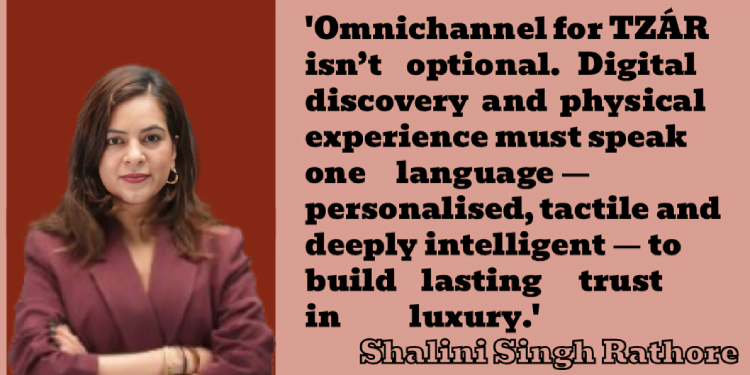
Shalini : In the modern luxury landscape, the boundary between the digital screen and the physical storefront has effectively vanished. For a premium D2C brand like TZÁR, adopting an omnichannel retail approach is no longer a strategic choice but is a foundational necessity.
Unlike traditional multi-channel retailing, where platforms often operate in silos, TZÁR is committed to a unified ecosystem where every touchpoint informs the next, ensuring the brand experience remains seamless, sophisticated, and deeply personalized.
At the heart of this strategy lies a robust Digital Foundation. The TZÁR D2C website and mobile application serve as the brand’s primary storytelling hubs. Utilizing AI-driven data, these platforms offer personalised recommendations and comprehensive styling advice, acting as a digital concierge for the modern man.
However, recognizing that premium fashion is inherently tactile, TZÁR will supplement this digital core with Physical Experience Zones. These selective flagship stores and pop-ups are designed for total brand immersion; they provide a space where customers can feel the superior fabric quality of “The Quiet Edit,” verify fit accuracy, and engage in high-touch styling sessions that build long-term trust.
The true power of this approach, however, lies in Seamless Integration. TZÁR’s infrastructure is built on real-time data flow between the website, CRM, and Point-of-Sale (POS) systems. This allows for a frictionless customer journey: a client might discover a blazer on Instagram, verify its availability at the Delhi flagship via the website, and choose to “Buy Online, Pick Up In-Store” (BOPIS).
Following the visit, the in-store fit data automatically updates their digital profile, triggering a personalized follow-up with curated suggestions for complementary pieces. This synchronized cycle ensures that whether a customer is clicking a link or walking through a gallery-style boutique, the voice of TZÁR remains singular and focused on their individual needs.
Q. Is Gen Z pushing innovation in the menswear category as they like to experiment with styles?
Shalini: In the evolving landscape of global fashion, Gen Z has emerged as the single most influential catalyst for innovation. Far from being passive consumers, this generation is actively dismantling centuries-old dress codes and forcing a total recalibration of the menswear category.
For a brand like TZÁR, Gen Z represents more than just a demographic shift; they represent a fundamental change in the “why” and “how” of clothing, pushing boundaries in both aesthetic expression and corporate responsibility.
The most visible impact of this shift is found in Style Innovation. Gen Z has successfully blurred the lines between streetwear and formalwear, creating a new vernacular of “fluid tailoring.” They are the primary drivers behind the normalization of gender-neutral cuts, vibrant color palettes, and bold, architectural silhouettes that prioritise self-expression over social conformity.
This demand for versatility forces brands to innovate at the design level, creating pieces that are modular enough to transition from high-fashion experimentalism to refined minimalist staples.
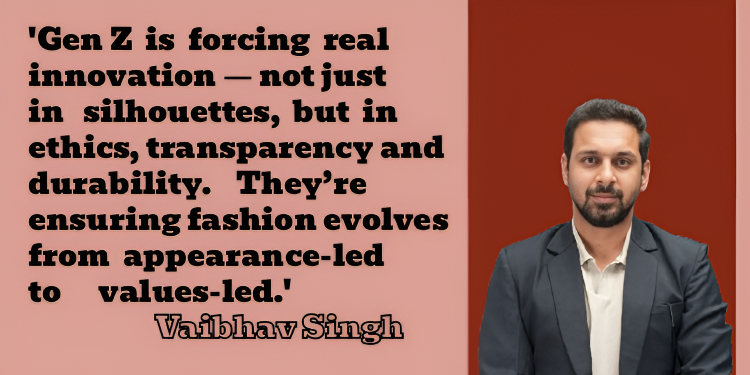
Vaibhav: However, I would like to add that the deeper transformation lies in Value Innovation. More than any generation before them, Gen Z uses purchasing power as a tool for advocacy, demanding absolute transparency, ethical production, and radical sustainability.
This “demand for soul” has forced an industry-wide pivot toward supply chain innovation. To satisfy this cohort, brands must move beyond surface-level aesthetics and invest in ethical sourcing, product durability through “slow fashion” principles, and authentic digital communication. For TZÁR, Gen Z is the primary force ensuring that innovation is not just seen in the mirror, but felt in the integrity of the brand’s DNA.
Q. Could you talk about marketing campaigns and innovations that will be rolled out in 2026?
Shalini : In 2026, TZÁR is set to transition from a disruptive newcomer to a definitive leader in the “Quiet Luxury” space. Our strategy for the year is built upon a single, uncompromising pillar: The Art of Understatement.
This philosophy will guide not only our aesthetic but also our technological integration and community-building efforts. By blending high-touch human storytelling with high-tech digital precision, TZÁR aims to redefine the relationship between the modern man and his wardrobe.
We begin the year with a content-led campaign designed to demystify the “Capsule Wardrobe.” Rather than focusing on volume, “The Quiet Edit” highlights versatility. Through high-fidelity video tutorials, we will demonstrate how a single TZÁR essential such as our signature Lyocell shirt and our leather jackets, can be seamlessly styled for a high-stakes boardroom meeting, a casual weekend brunch, and an evening gallery opening.
These tutorials serve a dual purpose: they provide genuine styling value to our customers while using macro-cinematography to showcase the intricate fabric weaves and artisanal craftsmanship that are often lost in standard e-commerce photography.
The greatest barrier to premium online fashion has always been the uncertainty of fit. In 2026, TZÁR will implement a suite of AI-driven sizing tools to eliminate this friction. Our D2C platform will feature virtual try-on technology that allows customers to see how garments drape on a 3D avatar calibrated to their specific measurements.
Complementing this, an AI-powered recommendation engine will analyze historical data and individual body types to provide precise sizing advice, significantly reducing return rates and building the “digital trust” necessary for luxury-tier purchasing.
True luxury is not just about what you wear, but the conversations you lead. 2026 marks the launch of the “TZÁR Collective” a curated inner circle of thought-leaders, architects, tech-entrepreneurs, and creative directors. Moving away from the traditional “celebrity ambassador” model, the Collective focuses on authentic influence.
This group will lead a series of “Quiet Dialogues” intimate salons and digital forums focused on mindful consumption, modern masculinity, and the intersection of design and lifestyle. By fostering a community of like-minded professionals, TZÁR evolves from a clothing brand into a cultural movement for those who believe that confidence doesn’t need to shout to be heard.
Q. Will the media mix lean heavily towards digital? Or will traditional mediums like print, TV be relevant?
Vaibhav: In a modern attention economy, a brand’s presence must be as multifaceted as the consumers it serves, which is why TZÁR’s media strategy is built on a “Digital-First, but Print-Relevant” philosophy.
This balanced approach is designed to meet the target group exactly where they live, work, and seek inspiration by allocating resources across a specific split between digital agility and traditional prestige. By maintaining this hybrid presence, the brand ensures it captures both immediate engagement and long-term authority within the luxury market.
Digital media serves as the primary engine of this strategy, accounting for 80% of the mix and driven directly by the sophisticated consumption habits of the target audience.
This heavy digital lean allows for a high-velocity ecosystem that includes social commerce, targetted performance marketing, and high-quality, long-form content on owned channels like blogs and YouTube. This ensures the brand remains agile and capable of driving immediate conversion while building a deeper narrative around its core values.
While digital drives volume, traditional media remains the cornerstone of brand legacy, representing 20% of the total mix. TZÁR recognises that for the premium consumer, high-end magazines and business newspapers provide essential validation and context that digital platforms often lack.
This investment in premium print is crucial for building trust and aspiration, cementing the brand’s status as a permanent fixture in the luxury landscape rather than a fleeting digital trend. As the brand matures, it will eventually expand into targeted OTT and Connected TV (CTV) placements rather than linear broadcast to maintain the precision of digital targeting on the big screen.
Q. Will a hyperlocal approach be key given the diversity of the country?
Shalini: A hyperlocal strategy is indispensable for TZÁR, focusing on the nuances of styling context, community building, and linguistic inclusivity to address India’s vast cultural and climatic diversity. The brand recognizes that premium menswear is not a “one size fits all” category; the aesthetic and functional needs of a consumer vary significantly by region.
For instance, the way a transitional jacket is styled and marketed in the humid, coastal climate of Mumbai focusses on breathability and layering for air-conditioned environments, whereas in the sharper winters of Delhi, the same piece is positioned for its thermal efficiency and architectural silhouette.
To reflect these differences, TZÁR’s visual merchandising and digital content will be tailored to specific regional contexts, ensuring that local social norms and professional dress codes are respected and reflected.
Community engagement further reinforces this localized approach by moving away from generic pan-India celebrity endorsements in favor of hyperlocal collaborations. TZÁR will partner with micro-influencers and regional thought leaders—architects, entrepreneurs, and artists—who hold genuine influence within their specific urban clusters.
These “local personalities” act as trusted voices, bridging the gap between a national brand and a local community. Additionally, TZÁR’s event strategy focuses on intimate, high-touch experiences like “The Quiet Dialogues” held in local heritage venues or contemporary galleries, ensuring the brand becomes a physical part of the city’s cultural fabric.
Vaibhav: For us linguistic inclusivity serves as the final layer of this hyperlocal foundation. While English remains the primary language for the brand’s “Quiet Luxury” narrative, TZÁR will integrate regional languages into its customer support and specific marketing assets to eliminate barriers and foster deeper emotional connections.
This might include localised ad copy for specific festivals or regional dialects in customer service interactions to ensure every touchpoint feels personal and respectful of the customer’s background.
By marrying global sensibilities with these granular local insights, TZÁR ensures that its message of “Understated Power” resonates authentically across every corner of the country.
Q. Could you shed light on TZAR’s influencer marketing strategy to build local relevance?
Shalini : TZÁR’s influencer marketing strategy marks a definitive departure from traditional one-off paid promotions, focusing instead on long-term partnerships with “Thought Leaders” and “Style Advocates” who embody the brand’s core values.
By prioritising advocacy over mere awareness, the brand will align with subject matter experts such as architects, designers, and entrepreneurs whose personal reputations for minimalism, quality, and intelligence mirror the TZÁR ethos.
This strategy is further localized by leveraging city-specific micro and nano-influencers who possess high credibility within their niche communities. Through the “How I Wear TZÁR in [My City]” content series, these “Quiet Edit” collaborators will showcase the brand’s products within the authentic context of their daily professional and social lives.
This approach ensures that every engagement is perceived not as a standard product placement, but as a genuine endorsement of craftsmanship and style, effectively making the brand both locally relevant and aspirationally grounded.
Q. How important will word of mouth be in growing the business?
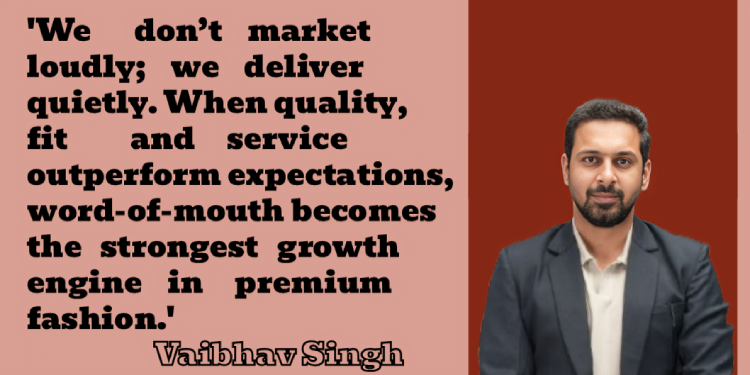
Vaibhav: Word-of-mouth (WoM) serves as the ultimate growth metric for TZÁR, acting as a powerful engine for organic customer acquisition that far outweighs the impact of traditional advertising in the premium fashion sector.
Recognising that a brand built on “Quiet Luxury” relies heavily on trust and peer validation, TZÁR views WoM as directly proportional to the delta between customer expectations and the actual delivery of product and service. By prioritising exceptional fabric quality, a flawless fit, and a “best-in-class” service model including personalised communication and frictionless exchanges the brand aims to consistently exceed expectations.
This focus on high-performance delivery is designed to convert every satisfied customer into an active advocate, driving a high Net Promoter Score (NPS) that is essential for maintaining a healthy ratio of Lifetime Value (LTV) to Customer Acquisition Cost (CAC).
Q. Could you talk about the role that AI is playing across the company in areas like finding the right price, making the products feel aspirational and in the debut collection ‘The Quiet Edit’?
Vaibhav: AI serves as the invisible engine driving intelligence across TZÁR’s value chain, proving that “Quiet Luxury” doesn’t have to mean “Quiet Technology.” Rather than obsessing over manual competitor tracking, we use AI to refine our internal creative process, utilising machine learning to stress-test the longevity of our designs.
In the high-stakes game of pricing, we deploy Predictive AI to analyze real-time demand and inventory levels, ensuring our price tags are as smart as our tailoring. It allows us to optimise margins without ever looking like we’re trying too hard, while simultaneously slashing overstock waste to keep our sustainability credentials as clean as our silhouettes.
Shalini: To keep the brand feeling aspirational rather than invasive, our AI-powered recommendation engines act like a digital Savile Row tailor, surfacing context-specific pieces that make the customer feel seen, not just “targetted.” It turns the digital storefront into a hyper-personalised concierge service, where the algorithm understands your style better than your significant other might.
Even for our debut collection, “The Quiet Edit,” we didn’t just rely on creative intuition; we used AI for Generative Design and trend validation. By feeding historical data and architectural patterns into our models, we confirmed that our silhouettes would remain timeless rather than becoming “last season” by next Tuesday.
Beyond the design table, AI is our most efficient production manager. We use AI-generated photography and virtual fashion models to streamline our photoshoots, allowing us to visualise how fabrics drape in infinite lighting conditions without the carbon footprint of a global location shoot.
On the backend, AI-driven Management Planning systems handle the heavy lifting of logistics and resource allocation, predicting supply chain bottlenecks before they happen.
This fusion of human vision and machine precision means we aren’t just guessing what the modern man wants we’re delivering it with mathematical certainty and a heavy dose of soul. After all, in 2026, the only thing more stylish than a perfectly cut blazer is the data-driven supply chain that put it in your closet.