This year ClanConnect, an influencer marketing platform, announced the launch of its creator-first DM automation feature, now live on both its web platform and the Clan for Creators mobile app. The tool enables creators to instantly automate replies to comments and direct messages, helping them manage high engagement without missing brand or audience opportunities.
Designed specifically for Indian creators, the feature addresses a key challenge—handling a surge of enquiries during viral posts, reels, and live sessions. By linking automated responses directly to posts, keywords, and engagement behaviour, creators can respond contextually to requests for links, prices, details, or collaborations, without manual follow-ups. The setup is simple and requires no technical expertise.
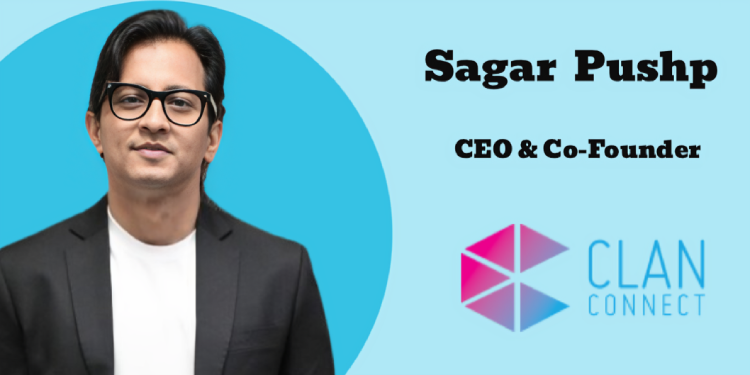
The DM automation feature is currently available free until the 31st, after which ClanConnect will introduce pocket-friendly subscription plans that scale with creator growth. Sagar Pushp, co-founder, CEO, ClanConnect, said, “Creators should never lose opportunities because they were offline or overwhelmed.
This feature gives them time, freedom, control, and a system that works quietly in the background—democratising access to growth for creators of all sizes.”
With this launch, ClanConnect strengthens its creator-first product roadmap, focused on building practical, accessible tools that help creators grow sustainably. The DM automation feature is now available on the Clan for Creators app and the ClanConnect web platform.
Medianews4u.com caught up with Sagar Pushp, co-founder, CEO ClanConnect
Q. What role will influencer marketing play in the media mix in 2026?
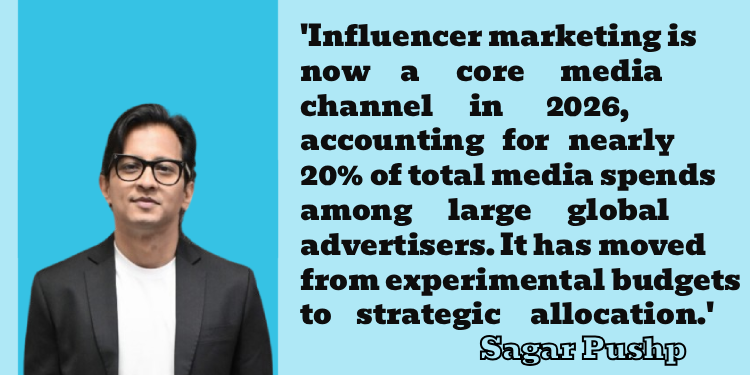
Influencer marketing has solidified its position as a core media channel in 2026. Among global brands allocating over $50 billion in historical marketing spend, social media and influencer marketing now account for 18%-20% of all media spending.
Q. Which categories do you expect to step up their usage of influencer marketing?
While e-commerce, FMCG, and fashion will continue to dominate influencer marketing spends, BFSI is emerging as the next major growth category.
Q. Could you talk about how influencer marketing will evolve in 2026: from discovery-led campaigns to always-on, full-funnel, performance-driven creator strategies?
The fundamental business model of influencer marketing is changing. The industry is witnessing a deliberate shift from upper-funnel, awareness-focused campaigns to outcome-driven, full-funnel strategies that span discovery, consideration, conversion, and retention.
Brands will focus on driving user engagement down the funnel and focus a lot on full funnel sales based influencer marketing campaigns.
Q. What must brands prepare for as creator-led marketing moves into its next phase?
The transition demands operational restructuring, not just budget reallocation. Brands must prepare for four critical shifts:
Shift from transactional to relational partnerships. Long-term partnerships are replacing one-off posts as the default model.
Embrace creators as creative collaborators and advisors. Traditional influencer marketing treated creators as paid distribution channels with rigid creative briefs. In 2026, creators are influencing campaign direction, content strategy, and product positioning.
Move beyond fragmented tools to integrated platforms. Brands are consolidating influencer marketing tech stacks from multiple point solutions (discovery, outreach, payment, analytics) into unified platforms. This consolidation improves speed, transparency, and ROI by eliminating data silos and enabling real-time optimisation.
Prioritise community-driven engagement over viral metrics. Consumer attention spans are shortening, and audiences are fatiguing with overt marketing. Brands must invest in community building and leverage creators’ loyal followers for authentic content distribution.
Q. Will data intelligence, automation, and the rapid professionalisation of the creator economy lead to better outcomes in 2026 for both brands and creators?
Yes, it will deliver because, data intelligence and automation helps in the following:
■ Data-backed identification of high-performing creator profiles
■ Nuanced creator-role matching (e.g., awareness vs conversion strength)
■ Continuous performance monitoring with mid-campaign optimisation
■ Automated budget shifts and content triggers, with strategy escalated to humans
■ AI-powered discovery is now industry standard, replacing manual shortlisting.
Q. Could you shed light on the rise of accountable influence: measuring trust, authenticity, and long-term creator value beyond vanity metrics? Is measurable ROI a concern for brands when you talk to them?
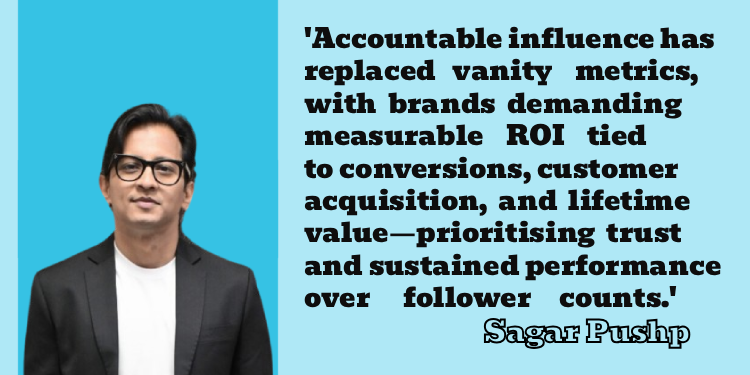
Accountable influence—measured beyond vanity metrics—has become the new standard for evaluating creators. The focus has decisively shifted from follower counts to trust, authenticity, and long-term value creation.
Why trust matters: creators perceived as authentic consistently outperform inflated or inauthentic profiles, driving significantly higher conversion efficiency and customer lifetime value, even with smaller audiences. As a result, brands are no longer asking who has the biggest reach, but who can deliver consistent outcomes over time.
Today, brand conversations revolve around performance fundamentals:
● Which creators convert reliably?
● Who builds sustained trust with their audience?
● Who deserves long-term investment?
Measurable ROI is now a core expectation. Brands increasingly demand clear links between creator activity and business outcomes—customer acquisition, attributed revenue, and lifetime value uplift.
What once felt premature is now standard practice, underscoring a broader industry shift toward accountability, rigor, and performance-driven influence.
Q. How are tech-enabled creator marketplaces improving speed, transparency, and ROI for brands?
Technology-enabled creator marketplaces are materially improving campaign execution speed, platform transparency, and ROI measurement. Emerging platforms are consolidating fragmented workflows and reducing transaction friction between brands and creators.
Platforms like ClanConnect exemplify the shift toward execution-first, creator-aware marketplaces. ClanConnect focuses on reducing end-to-end friction by combining creator discovery with workflow automation across outreach, approvals, and campaign tracking,helping brands move faster without sacrificing control or insight.
On the creator side, features such as transparent deliverables, clearer payment structures, and simplified brand communication are designed to reduce uncertainty and time loss, especially for mid- and long-tail creators. The result is a marketplace model that prioritizes speed with accountability and scale without dehumanising creator relationships, aligning ROI goals for brands with predictable, fair earnings for creators.
Q. Will brands look at doing annual deals with creators as opposed to just a one time activity?
Yes—brands are definitively moving toward annual and multi-month creator partnerships over one-time activations. This shift is driven by economics, audience psychology, and performance data.
ClanConnect has seen brands prefer multi-platform or recurring engagements, which improve content consistency, creator familiarity with the brand, and overall ROI.
Q. Will nano and micro influencers grow faster than macro influencers?
Yes—especially in performance-led and trust-sensitive categories, nano and micro influencers are seeing faster growth than macro creators. Campaigns consistently show that smaller creators deliver higher engagement efficiency, stronger community interaction, and lower acquisition costs, while macro influencers continue to play an important role for scale, visibility, and launch moments.
The market is increasingly recognising that influence is not evenly distributed by reach. Smaller creators often outperform larger accounts on trust, relevance, and conversion impact, making them better suited for consideration- and conversion-stage objectives. This shift is being reinforced by Gen Z audiences, who place greater trust in creators they perceive as relatable and embedded within their communities rather than celebrity-led endorsements.
Q. What are ClanConnect’s goals for 2026?
In 2026, ClanConnect’s focus is on scaling both creator access and brand impact.
- From a technology standpoint, ClanConnect aims to significantly expand its reach through the newly launched Clan for Creators app, enabling creators across India and global markets to access easy, cost-effective tools that simplify collaboration with brands and help maximise earning potential. The goal is to lower entry barriers for creators while professionalising how they engage with brand partnerships.
- From a business perspective, ClanConnect plans to more than triple annual revenues by deepening relationships with brands and scaling its content-first, creator collaboration models. These models are designed to deliver stronger ROI, higher engagement quality, and enhanced brand recall—positioning creators not just as media placements, but as long-term growth partners for brands.
Q. Are Gen Z and Gen Alpha forcing brands to rethink influence?
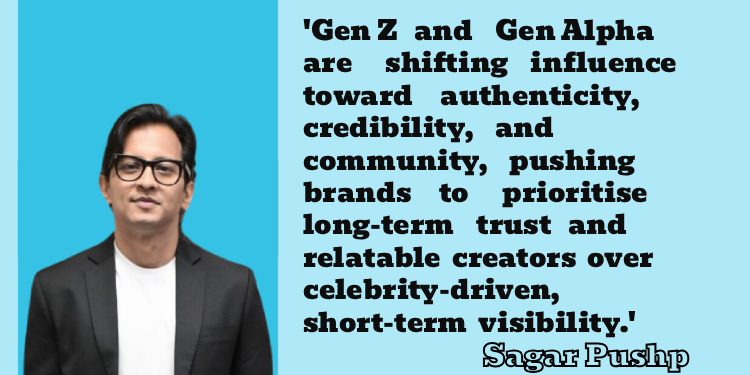
Generational shifts are forcing brands to rethink influence, ROI, and reputation at scale. Gen Z and Gen Alpha value authenticity over aspiration and expect brands to demonstrate real values, pushing marketing away from campaign-led bursts toward ongoing creator relationships.
Gen Z places greater trust in relatable, community-driven creators than celebrity endorsements, using creators as validation, not just discovery. Gen Alpha takes this further, favouring short-form, participatory content and rejecting hard-sell or trend-chasing tactics in favour of authenticity and purpose.
Together, these generations are shifting brand strategy toward credibility over reach, consistency over virality, and long-term trust over short-term attention.
Q. Will micrograms be used as a format in 2026?
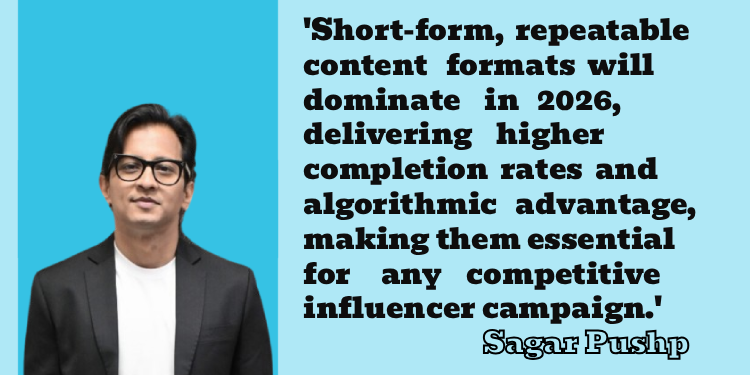
ClanConnect sees strong adoption of bite-sized, repeatable formats that compound impact over time rather than relying on one-off hero content. Platforms like Instagram and YouTube continue to prioritise short-form video, with brands using it for demonstrations, tutorials, education, and behind-the-scenes storytelling.
In an attention-scarce, mobile-first environment, short-form content delivers value quickly, earns higher completion and sharing, and performs better within platform algorithms. In practical terms, brands running influencer campaigns without a short-form video component are no longer competing in the primary communication channel of their audience.
Q. How will real-time analytics shape smarter decisions?
Real-time analytics are shifting influencer marketing from post-campaign reporting to in-campaign decision-making. Live performance signals allow brands to reallocate budgets mid-flight, identify breakout creators early, and refine briefs based on real audience response rather than assumptions.
Instead of waiting for end-of-campaign learnings, brands can course-correct while impact is still compounding. ClanConnect’s approach is built around these faster insight loops, enabling smarter optimisation in real time, not retrospective analysis after outcomes are already locked in.
Q. Why are brands moving away from fragmented tools?
Brands are definitively moving from fragmented point solutions to integrated creator marketing technology stacks. This consolidation is driven by operational friction, data fragmentation, and the need for cross-campaign optimisation.
Brands now want integrated InfluencerTech stacks—discovery, outreach, tracking, and reporting in one place. ClanConnect fits into this shift by simplifying execution while maintaining strategic flexibility.
Q. How will AI impact creator-led marketing in 2026?
In 2026, AI’s role in creator-led marketing is less about replacing creators and more about professionalising the ecosystem at scale. The real impact of AI lies in improving decision quality, not increasing content volume.
AI is most effective when it supports smarter creator–brand matching, surfaces early performance signals, and automates repetitive workflows such as approvals, scheduling, and reporting—while clearly escalating creative and strategic decisions back to humans. The strongest models are human-in-the-loop, where AI handles optimisation and pattern recognition, and people lead creativity, relationships, and long-term strategy.
ClanConnect’s approach reflects this balance: using AI to add structure and speed, while preserving the human elements that make creator-led marketing authentic, trusted, and effective.