Folk Frequency is a cultural intelligence studio that translates audience behaviour into strategic frameworks for brands and agencies.
Folk Frequency has come out with an Inside IPL Report
- Match-time is a food ritual for more than half. 56% say they say they planned something special (ordered in or went out mainly because of the match). Another 80% select chips/ namkeen as a companion, and 26% prefer beer.
- Multi-screen and chat are core to the experience: 43.5% say they either watched while using their phone a lot, or the match was in the background while they did other things. 67% are engaged in online conversation during matches (either actively messaging or at least reading memes/messages.
- 82% say memorable matches linger at least a few hours or affect mood into the next day or longer. Only 18% say they move on quickly.
- 90% describe themselves as either “hardcore” or “serious but not obsessive.” Only 10% call themselves primarily “casual / meme fans.”
- 64.5% say it’s at least “somewhat / kind of” true that in tense matches they are glued to their phone even around family/partner. 61% say people close to them complain about how absorbed they get in cricket. 48% say they at least somewhat feel guilty about how much time cricket takes from other things.
Medianews4u.com caught up with Gayatri Sapru Founder Folk Frequency and an Independent Anthropologist
Q. Who is the IPL’s core TG according to research done? Is Gen Z very important?
IPL’s core is 18–40, but Gen Z is anything but casual, they’re driving the meme cycles and shaping the cultural conversation. Our research found strong youth viewership well beyond metros, with Tier 2 and 3 towns featuring heavily, suggesting the tournament’s youth appeal is a genuinely national phenomenon.
 Q. Do women watch the IPL much more than other forms of cricket and sports?
Yes, and IPL’s format and team narratives make it the entry point for audiences who wouldn’t follow other formats. IPL is a household viewing experience , brands briefing only to a male cricket fan are missing the co-viewing audience entirely.
Q. We have the T20 cricket World Cup currently going on. Is viewer fatigue going to be an issue as a result this year?
IPL is fairly insulated from this, 93% of fans plan their viewing in advance, treating the tournament more like a festival than a casual sports event.
That level of intentional investment is hard to fatigue out of. The risk is more for brands showing up with generic cricket creative than for the audience itself.
Q. Over the years how has the IPL evolved to become more of a community event?
The community has moved from public to private. 96% watch at home, but 67% are simultaneously in live WhatsApp and meme conversations during the match.
It’s a distributed watch party: physically intimate, digitally massive.
Q. As a result what is the opportunity for brands to engage with consumers in a meaningful manner in categories like Q-commerce, e-commerce, snacks?
56% of IPL viewers plan a food occasion specifically around the match, and 80% reach for chips or namkeen as a default companion.
The ritual is consistent and surprisingly unbranded — no one has clearly claimed the match-night ordering window the way it deserves to be owned.
 Q. Is live commerce the next big opportunity?
The behaviour is there, fans are on their phones, in buying mood, emotionally primed. But attention across a match night isn’t uniform.
The brands that crack live commerce will be the ones who understand the rhythm of a match, not just the reach numbers.
Q. Does AR/VR/MR solve ad irritation?
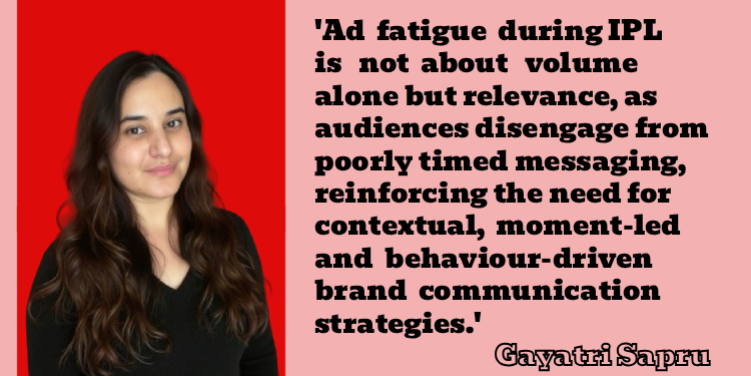
No — it’s a relevance problem, not a format problem. 60% of viewers feel there are too many ads, and 44% switch to their phone the moment the ad break starts.
A more immersive ad at the wrong moment is still the wrong moment.
Q. What will Folk Frequency be doing with brands?
Beyond the report, we’re running curated fan rooms to give brands direct access to real audience perspectives, and creative and fan engagement war rooms through the season for brands who want to stay sharp and reactive as the tournament unfolds.
Q. Could you talk about the IPL’s importance for alcohol brands?
IPL is one of the most valuable properties in the calendar precisely because of the restrictions. 26% of viewers self-report beer as a match companion — but through our qualitative immersions we can confidently say the real number is likely significantly higher, particularly in urban markets and among viewers living away from home where the social constraints around drinking are lower.
The cultural association between cricket and beer exists independent of media spend, and smart activations around IPL are essentially harvesting an affinity that didn’t need to be built.
 Q. What would like brands do when it comes to on-ground Stadium innovations?
The underused opportunity is the moments between balls: timeouts, drinks breaks, innings change where crowd attention is high but unfocussed.
The brands thinking about the at-home viewer watching stadium coverage, not just fans physically present, will extract significantly more value.