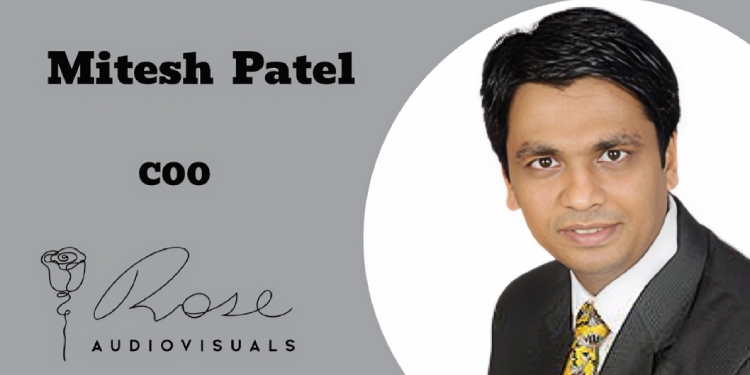
Medianews4u.com caught up with Mitesh Patel COO Rose Audio Visuals
The conversation revolves around evolving operational strategies in the television and content production ecosystem.
A Chartered Accountant by qualification and a media industry leader with over 18 years of experience, Mitesh brings deep expertise across finance, operations, governance, and business strategy within television, OTT, and digital content businesses. At Rose Audio Visuals, he works closely with creative, production, and commercial teams to build scalable and future-ready media operations, with a strong focus on aligning creative ambition with long-term commercial sustainability.
The company currently has two television shows on air, Itti Si Khushi and Jaane Anjaane Hum Mile, reflecting its continued presence in the broadcast entertainment space while strengthening internal systems for growth across platforms.
Q. What are the company’s current strategic priorities as the content ecosystem evolves?
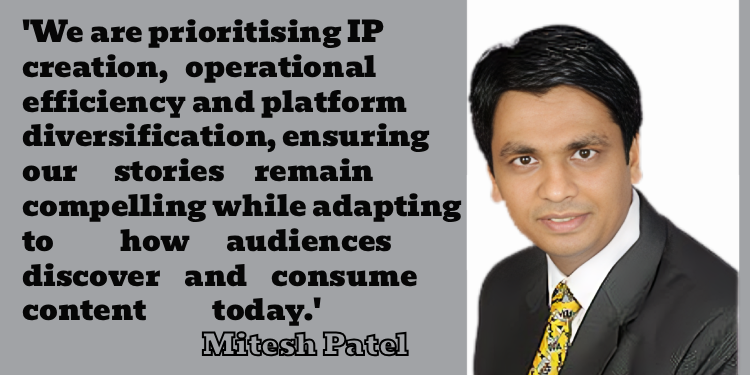
At its core, our priority remains the same i.e. to tell compelling stories that connect with audiences. What is evolving is the ecosystem around us. Television continues to be an incredibly powerful medium in India, but today audiences are consuming content across multiple platforms, including OTT and digital.
At Rose Audio Visuals, we are therefore focusing on three key areas. First, building strong intellectual property by developing stories that have long-term value and can travel across platforms and markets. Second, maintaining operational excellence so that we continue to deliver high-quality content reliably for our partners. And third, expanding our reach by working across different platforms and languages, because the future of content in India is clearly multi-platform and multilingual.
Ultimately, our goal is to stay rooted in strong storytelling while evolving with how audiences discover and consume content today.
 Q. With shows like ‘Itti Si Khushi’ and ‘Jaane Anjaane Hum Mile’ currently on air, how is Rose balancing creative storytelling with operational efficiency?
In daily television, creativity and discipline have to go hand in hand. Strong storytelling is obviously at the heart of what we do, but it also requires a very structured production ecosystem to sustain it.
At Rose, we have built clear processes and workflows that allow our teams to operate efficiently without losing sight of the creative vision. A large part of that comes from experience our teams have worked extensively on daily shows and understand the rhythm of production, from scripting and pre-production to shoot schedules and delivery timelines.
That balance between creativity and production process is what helps us maintain consistency and quality across shows that are on air every day.
Q. What differentiates Rose Audio Visuals in a highly competitive production landscape today?
At Rose, our ability to combine cost efficiency with scale, credibility, and consistent delivery. We specialise in producing large-scale content while maintaining very reasonable commercial structures for broadcasters and platforms. Having been part of industry for more than 20 years, we have built long-standing relationships based on trust, reliability, and our ability to consistently meet delivery timelines without compromising on storytelling quality.
In today’s highly competitive landscape, reliability and execution matter as much as creativity. Our strength lies in delivering high-quality content at scale within disciplined budgets, supported by strong production processes and governance.
Q. How is the company preparing itself for multi-platform growth across television, OTT, and digital formats?
Each platform has its own storytelling rhythm and audience expectation. Our approach is therefore to build a development strategy that recognises these differences. We are strengthening our internal development teams so that we can support growth across television, OTT and digital formats. This includes investing more time in early-stage development, exploring new storytelling formats and building concepts that can travel across audiences and markets.
We are also expanding into regional markets, which are becoming increasingly important in India’s content landscape. By building a strong development pipeline, we aim to create stories that remain flexible across platforms while staying rooted in powerful storytelling.
Q. What goals have been set for 2026? What is the game plan to get there?
Our goal for 2026 is to deepen our presence across multiple markets while expanding the range of formats we work in. We aim to broaden our portfolio across television, OTT and digital platforms.
A key part of this strategy is strengthening our regional footprint. Last year we launched our Telugu vertical, which is an important step towards building a truly multilingual content portfolio. Regional storytelling is becoming increasingly significant, and we see strong potential for stories that resonate locally while also appealing to wider audiences.
At the same time, we are exploring selective opportunities in non-fiction formats, vertical dramas and branded content. These formats allow us to engage with audiences in new ways while building a more diversified content slate.
 Q. The company has primarily focussed on fiction and scripted content. It now sees potential in unscripted formats. Is this where the whitespace for growth lies?
Fiction has been our core strength, and it will continue to remain so. However, we do see interesting opportunities in unscripted and format-driven content.
Audience consumption habits are evolving, and platforms are increasingly looking for fresh, engaging unscripted concepts which are commercially viable for them. While we will approach this space selectively, it certainly represents a potential area for growth.
Q. TV ad revenue is going to continue to struggle in 2026. OTT platforms are commissioning fewer shows. Is the environment as a result very challenging for Rose Audio Visual?
The environment is definitely becoming more selective, but I wouldn’t necessarily describe it as challenging in a negative way. If anything, the industry is becoming more disciplined.
Broadcasters and platforms are now far more focussed on content that truly connects with audiences and delivers value. The earlier phase where large volumes of content were being commissioned is slowly shifting towards more carefully curated programming.
For production houses like ours, this actually creates a different kind of opportunity. When the focus shifts to quality, reliability and disciplined execution, experience becomes even more valuable. Platforms are looking for partners who understand both the creative and commercial realities of content production.
Q. When you talk to platforms what are they looking for?
Platforms today are looking for clarity of storytelling, strong audience connect, and financial discipline. Unlike a few years ago, where experimentation was very high, platforms now prefer concepts that have a clear positioning and defined audience segment. They want stories that can sustain engagement, travel across markets, and ideally have the potential to scale across seasons or formats.
Equally important is execution credibility. Platforms want to work with partners who can deliver high-quality content on time and within agreed budgets, because operational certainty has become extremely important in today’s environment.
Q. Is the challenge the content industry is facing not declining attention span but that most of the time content is not worth the time of the consumer?
I don’t think audiences have lost their attention span. If anything, audiences today are still very willing to spend time on content when the storytelling truly engages them. If you look globally, people continue to watch long-form series, documentaries, and even very long films. What has really changed is that audiences today have endless choices. Because of that, they are much more selective about what they spend their time on.
So in my view, the real challenge for the industry is not attention span, but making content that feels relevant and worth the viewer’s time. When a story genuinely connects with people, audiences are more than willing to stay with it.
 Q. How is the company building operational efficiency in daily television production environments?
Daily television production requires a very structured approach, its like a factory every process is very critical from broad story till master delivery.
At Rose, our teams have significant experience in content production, so there is a strong discipline around scheduling, resource planning, and coordination between the writing, direction, and production teams.
Over the years, we have refined these processes so that production timelines remain predictable while the creative teams still have the flexibility they need to tell the story well. When the systems are thoughtfully designed and the teams are aligned, efficiency tends to follow naturally.
Q. How do you strike a balance between managing cost structures while maintaining creative quality?
The key is planning and clarity at the development stage. When a project is well designed creatively with clear character arcs, story tracks, and production design, cost structures can be planned far more efficiently. Problems usually arise when creative and production planning happen in isolation.
At Rose, we encourage strong collaboration between creative team and production management from the earliest stage of development. This allows us to maintain high production values while ensuring that budgets remain disciplined and sustainable.
Q. Could you shed light on the challenge of financial discipline and governance in the content businesses?
Content creation is, by nature, a very creative and dynamic environment. But behind that creativity, strong financial discipline and governance are absolutely essential for the business to remain sustainable.
Producing content involves large teams, complex schedules and multiple stakeholders, so maintaining financial oversight becomes very important. Without the right systems in place, it can quickly become difficult to manage projects efficiently.
At Rose, we place a lot of emphasis on structured budgeting, close cost monitoring and transparent reporting processes. These systems help ensure that projects stay on track while allowing the creative teams to focus on storytelling. Ultimately, good governance protects both the creative side of the business and the long-term health of the company.
Q. What trends are being seen in terms of the evolving economics of television versus OTT and digital platforms?
Television continues to remain a very strong economic model in India, largely because of its scale and the reach it offers advertisers. It still has the ability to deliver consistent viewership across millions of households, which makes it an important part of the content ecosystem.
OTT platforms operate quite differently. Their commissioning strategies tend to be more selective and their cost structures are very different from television. Instead of high volumes of programming, OTT platforms generally focus on premium storytelling, distinctive formats and projects that can stand out in a crowded content landscape.
Going forward, the industry is likely to move towards a balanced ecosystem where television provides scale and consistency, while OTT and digital platforms provide creative experimentation and global reach.
Q. Could you share leadership lessons from managing complex creative organisations?
One of the biggest leadership lessons in creative organisations is learning how to balance structure with creative freedom.
At Rose, we are fortunate that Goldie Behl leads the core of business i.e. creative side of the business and brings a very strong storytelling perspective. Creative teams often push boundaries and sometimes get carried away with ideas, which is a natural part of the creative process. My role, coming from the operations and finance side, is often to bring a reality check before decisions are finalised.
That balance between creative ambition and operational discipline is very important. When both perspectives work together the creative vision and the practical execution, it helps the organisation stay aligned while still producing content that is both compelling and sustainable.
 Q. Micro Dramas are growing in consumption. Are there plans to enter this area?
Micro dramas are an interesting emerging format, particularly because they are designed for mobile-first consumption and shorter attention windows.
While our primary focus continues to be long-form storytelling. These formats open up interesting opportunities in terms of digital distribution and experimentation with new storytelling styles
Keeping this in mind, we have already set up dedicated teams to develop and produce micro dramas, and we are actively working on projects in this space. Our approach is to explore the format thoughtfully while maintaining the same storytelling quality and production discipline that Rose is known for.