Lenexis Foodworks-owned Desi Chinese QSR chain Chinese Wok earlier this year consolidated its creative, social, and media mandate with Havas Creative India and Arena Media (Havas Media Network India), as the brand accelerates national scale-up plans and transitions toward a platform-led marketing model.
The move comes at a time when Chinese Wok has crossed 260 outlets and is targeting 500 stores across Tier 1, 2 and 3 markets. The company said a unified, integrated approach across brand, digital, and in-store communication will be critical to sustaining consistency and cultural relevance as it expands geographically.
Under the mandate, the Havas agencies will jointly oversee brand strategy and campaigns, social and content ecosystem development, digital performance marketing, media planning and buying, and integrated orchestration across ATL, digital, and retail touchpoints.
The partnership signals a shift in Chinese Wok’s marketing architecture—from episodic campaigns toward always-on, platform-driven brand building. The brand is simultaneously sharpening its youth-focused positioning and scaling proprietary cultural properties such as Wok FM, Crush Hour, and content collaborations designed to deepen Gen Z engagement.
MediaNews4U.com caught up with Vikas Iyer, Head of Marketing, Lenexis Foodworks
Q. What is the strategy going to be to scale Lenexis Foodworks in 2026? Does the whitespace for growth lie in adding more brands according to predictive analytics?
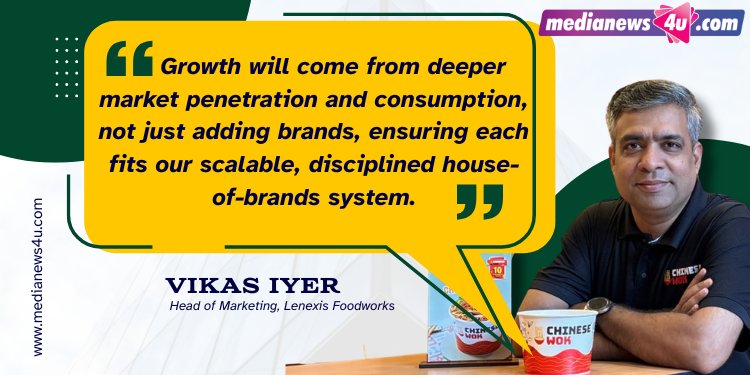
Our strategy for 2026 is anchored on scaling the brands we already operate while strengthening the operating backbone that powers them. At Lenexis, we are building a disciplined house of brands where each brand has a clearly defined role in a category. Chinese Wok leads the Desi Chinese QSR space, Big Bowl is building leadership in the bowl format category, and The Momo Co. operates as a specialist within the momo segment.
Growth will largely come from expanding footprint, increasing consumption frequency and strengthening brand salience rather than simply adding new brands. While we continue to evaluate whitespace opportunities through data and consumer insights, any new addition must fit into our scalable operating system.
Q. Chinese Wok has crossed 260 outlets and is targeting 500 stores across Tier 1, 2 and 3 markets. Are consumer expectations uniform across markets or are there differences?
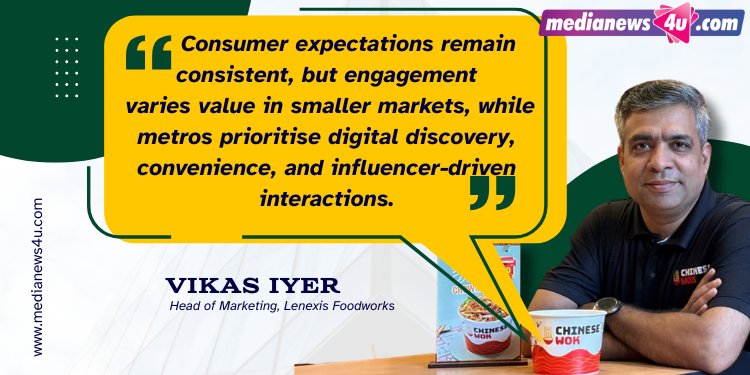
The core expectation from the brand remains consistent across markets, which is bold flavour, affordability and convenience. However, there are subtle differences in how consumers engage with the brand. In Tier 2 and Tier 3 markets, consumers respond strongly to value led bundles, family consumption occasions and regional language storytelling.
In metro markets, digital discovery, influencer engagement and convenience driven ordering behaviour play a bigger role. Our approach is to keep the brand soul consistent while adapting the cultural expression locally through language, occasions and community engagement.
Q. Chinese Wok accounts for over half the revenue for Lenexis Foodworks. Will that contribution continue in the coming three years?
Chinese Wok will continue to remain the flagship growth engine for the Lenexis portfolio. Today, Chinese Wok contributes roughly 70% of overall revenues, with Big Bowl contributing around 27% and The Momo Co. accounting for the balance.
As Chinese Wok expands its footprint and further strengthens its leadership in the Desi Chinese category, we expect its contribution to remain in a similar range over the next three years, with a marginal uptick driven by the increasing share of dine-in alongside delivery growth.
At the same time, Big Bowl is scaling rapidly and is within reach of the ₹150 crore ARR milestone, which will steadily strengthen its share of the portfolio over time. Our long-term vision remains to build multiple strong brands within the ecosystem, each leading its respective category.
Q. How important is absolute leadership in each category for profitability in the coming three years?
Category leadership plays a critical role in building strong brand recall, pricing power and consumer trust. When a brand becomes synonymous with a category, it naturally benefits from higher organic demand, stronger consideration and repeat consumption. Our focus is on building each brand within clearly defined category lanes. This clarity helps improve unit economics, supply chain efficiency and marketing effectiveness across the portfolio.
Q. What mandate has been given to Havas Creative India and Arena Media? Why were they chosen?
Havas Creative India and Arena Media have been appointed as integrated partners across creative, social and digital media for our flagship brand Chinese Wok. Their mandate includes creative strategy, campaign development, building the social ecosystem, digital performance marketing and media planning.
The objective is to move towards a platform led marketing system instead of fragmented standalone campaigns. They were chosen because of their integrated capabilities across creative, media and digital, along with their cultural fluency with younger audiences. Our first collaboration on the Fries category launch campaign has already demonstrated this capability.
Q. What advantages does a unified and integrated approach across brand, digital and in store communication offer?
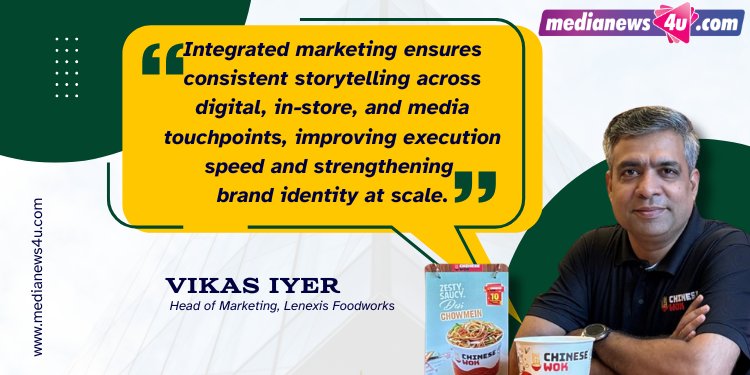
As brands scale nationally, fragmentation across touchpoints can dilute brand identity over time. An integrated approach ensures consistency in storytelling across digital, in store environments, delivery platforms and media channels.
It allows us to connect culture, creativity and commerce in a seamless way. It also improves the speed of execution, which is important in a fast moving category like QSR where trends and consumer conversations evolve quickly.
Q. What role will AI play in enabling creativity, culture and commerce to work together?
AI is already playing an important role in enabling more data led decision making and media optimisation. It helps us analyse consumer behaviour patterns, localise creative expressions and track campaign performance with greater precision.
Platforms like Wok FM also use AI as a core element in how content is developed and distributed. Over time, AI could also support areas such as menu optimisation, store expansion decisions and sharper consumer segmentation.
Q. Chinese Wok turned Valentine’s Day into a Gen Z craving culture moment with ‘Crush Hour’. How did the brainstorming happen and how important is Gen Z as a target group?
Crush Hour emerged from a simple cultural insight that Valentine’s Day today is not limited to couples. It is equally about crushes, friendships and shared moments. Instead of positioning the brand around romance, we framed it around cravings and playful social interactions. Gen Z is an extremely important audience for Chinese Wok because they are digitally native, socially expressive and culturally driven.
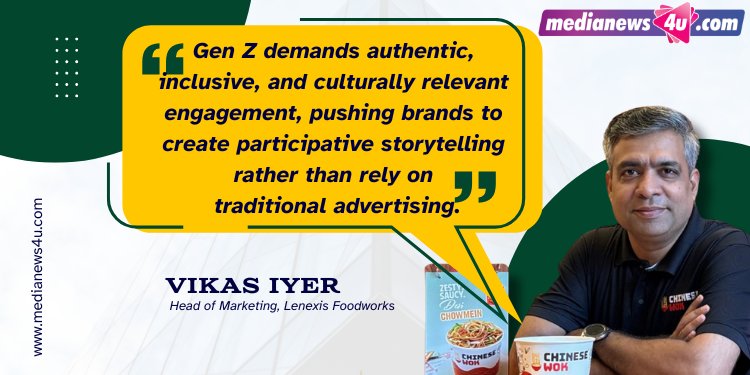
They value authenticity and inclusivity and expect brands to participate in conversations rather than interrupt them. Crush Hour reinforced that expectation and showed that young audiences respond strongly when brands reflect real moments and real people.
Q. Are Gen Z consumers rewriting the marketing playbook in the QSR category?
Gen Z consumers expect brands to be authentic, culturally aware and conversational. As a result, traditional one-way advertising is giving way to participative storytelling and community engagement.
For QSR brands like ours, this means creating platforms and cultural properties that consumers can interact with rather than relying only on advertising campaigns. The focus is increasingly on building relevance in culture and conversations.
Q. What is the plan to scale cultural properties like Wok FM and Crush Hour? What role will AI play here?
Cultural IPs like Wok FM and Crush Hour are designed as repeatable platforms rather than one time campaigns. They allow us to build long term engagement with young consumers across multiple touchpoints including in store, digital and social environments.
AI can support this by helping us understand content performance, audience preferences and engagement patterns. This allows us to iterate faster and create more relevant storytelling while ensuring consistency across different editions and formats.
Q. What trends do you expect to see in the cloud kitchen category in 2026?
Convenience led consumption will continue to drive growth in the cloud kitchen category. Consumers increasingly prefer format led meals such as bowls, combos and comfort foods that travel well for delivery.
Menu innovation and regional adaptation will also play a role as brands cater to diverse markets. At the same time, technology led optimisation of delivery operations will become more important for improving efficiency and customer experience.
Q. What marketing activities and innovations can we expect to promote these brands? Will QR codes play a role?
Our marketing approach will continue to combine digital storytelling, influencer collaborations and occasion led campaigns.
Packaging is an important consumer touchpoint and QR based interactions can help bridge the gap between offline and online engagement. These interactions can drive discovery, participation and deeper engagement with the brand ecosystem.
Q. How will the social media strategy evolve in 2026?
Social media is increasingly moving towards short form and creator led storytelling. Our focus will be on creating shareable and culturally relevant content that travels organically across platforms.
At the same time, social platforms are becoming closely integrated with discovery and commerce, which means our strategy will connect storytelling with actual consumption opportunities.
Q. AI is impacting search marketing significantly. How is Lenexis Foodworks adapting beyond keywords?
Search behaviour is evolving from being keyword led to more intent driven discovery. While we are still in the early stages of this shift, our strategy focuses on building stronger content relevance, improving platform visibility and using contextual targetting.
AI tools across social media and OTT ecosystems help us understand consumer intent signals better, enabling more precise and efficient marketing decisions.