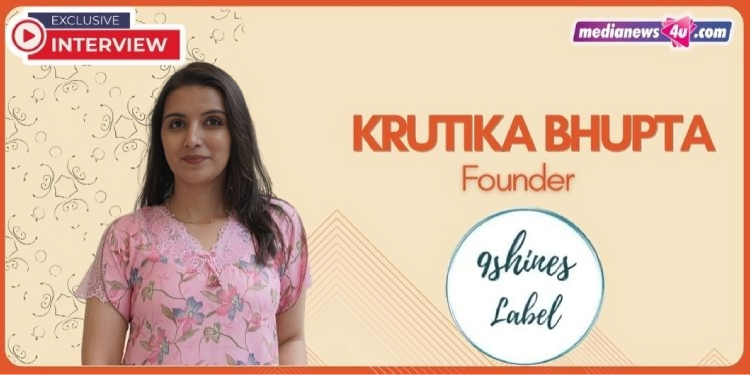
9shines Label is an Indian nightwear and loungewear brand founded by Krutika Bhupta. The brand creates comfortable and thoughtfully designed pieces that blend traditional craftsmanship with modern everyday wear. Known for breathable fabrics and handcrafted Batik prints, 9shines focusses on responsible and sustainable production.
Medianews4u.com caught up with 9shines Label Founder Krutika Bhupta
Q. What was the gap in the market that led to the decision to bring fashion to nightwear in 2016?
In 2016, nightwear in India sat at two extremes. One end focused only on utility with basic designs. The other leaned toward occasion wear that felt impractical for daily use. There was very little in between. Women spent most of their time at home wearing nighties, yet the category ignored style, fit, and self-expression.
The gap was clear. Comfort existed. Fashion existed. They rarely came together in nightwear. 9shines started by treating the nighty as everyday clothing that deserved the same thought as daywear.
Q. In growing from a maternity-focused niche to a loungewear brand what have been the key learnings?
The biggest learning was that comfort needs change across life stages, but the desire to feel good stays constant. Maternity taught us how deeply women value thoughtful details like fabric softness, fit flexibility, and functionality.
As we expanded, we carried that learning into non-maternity styles. Another learning was focus. We did not chase every loungewear trend. We stayed rooted in nighties and built depth instead of width. That clarity helped scale without losing trust.
Q. As a female entrepreneur, was skepticism to execute an issue when approaching investors?
Yes. Questions around scalability and execution came up often. The skepticism was not always stated directly, but it showed up in how cautiously the business was evaluated.
The response was consistency. Strong unit economics, repeat customers, and clear growth metrics spoke louder than pitch decks. Over time, results reduced doubt more effectively than explanations.
Q. Is an invisible structure of exclusion a challenge for women entrepreneurs today? Is the situation improving?
The structure exists. It shows up in access to networks, capital conversations, and informal decision spaces. Progress is happening, but it is uneven.
More women founders are visible now, which helps normalise ambition. Improvement comes when women are seen not as exceptions but as standard operators building durable businesses.
Q. For a female entrepreneur to succeed is having a lot of resilience non-negotiable?
Resilience is essential. Building a brand means handling uncertainty, slow wins, and long feedback cycles.
For women, this often includes managing expectations from multiple directions at the same time. Resilience allows you to stay steady without hardening. That balance matters.
Q. Are there any female entrepreneurs that you have drawn inspiration from? The fashion category has a lot of women entrepreneurs like Hailey Bieber.
Inspiration often comes from women who build quietly and consistently. Founders who stay close to their customer, protect product quality, and scale with discipline.
In fashion and consumer brands, many women have shown that focus and restraint can coexist with ambition. The common thread is clarity of purpose rather than celebrity.
Q. Do many people hold the assumption that women are capable of creating but not scaling?
That assumption exists. Creativity is often attributed to women, while scale is treated as a separate skill set ( Hard, ruthless decisions)/
In reality, scale comes from systems, patience, and decision discipline. These are learned capabilities. Many women founders build strong foundations first, which actually supports long-term scale.
Q. Do we need mentorship programmes for female entrepreneurs?
Yes, with intent and relevance. Mentorship works when it is practical and experience-based.
Access to founders who have built through similar constraints helps shorten learning curves. The value lies less in motivation and more in decision clarity.
Q. How do you juggle work life balance so that the family gets enough attention? In the initial four years how challenging was this area?
The first four years were intense. Boundaries were fluid and days were long. Over time, structure became necessary. Clear priorities, realistic schedules, and letting go of perfection helped.
Balance is not static. It changes with business stages and family needs. The goal has been presence rather than equal time.
Q. For 2026 what goals have been set for 9shines Label and what is the gameplan to get there?
For 2026, the goal for 9shines Label is global expansion with stronger product depth. We are focusing on the UAE and US markets, where there is strong demand — especially among the Indian diaspora — for comfortable, high-quality nightwear rooted in familiarity and tradition.
At the same time, we are moving toward premiumisation. This includes increasing the use of cotton and linen, reducing polyester, and launching elevated collections for a more refined audience. After the strong response to our hand-block Batik collection in 2025, we plan to expand our heritage line with Chikankari and Kalamkari.
Alongside this, We have launched Highgarden. Highgarden is a sleepwear brand built on the belief that when you sleep better, you live better.
With premium-finish pyjama sets crafted in the softest fabrics and thoughtful prints, each collection is designed to support a woman through three transformative stages — her first period, pregnancy and postpartum, and premenopause to menopause — delivering the right comfort for every change her body goes through.
Q. What marketing campaigns and innovations can we expect in the coming months?
In the coming months, our marketing will become more purpose-driven and customer-led, with a strong focus on product education around fabric, fit, and body comfort.
We are currently developing a special edition sleepwear line for women aged 45–55, especially those experiencing premenopause and menopause. This phase brings significant physical changes, so we are innovating with temperature-regulating fabrics, itch-free materials, breathable constructions, and fuss-free silhouettes that adapt to the body rather than restrict it.
At the same time, we’ve introduced Highgarden, a sleepwear brand built around three key life stages — menarche, pregnancy, and menopause. Each stage demands a different kind of comfort, and our design approach reflects that. The goal is not trend-driven launches, but meaningful innovation that supports women through real transitions.
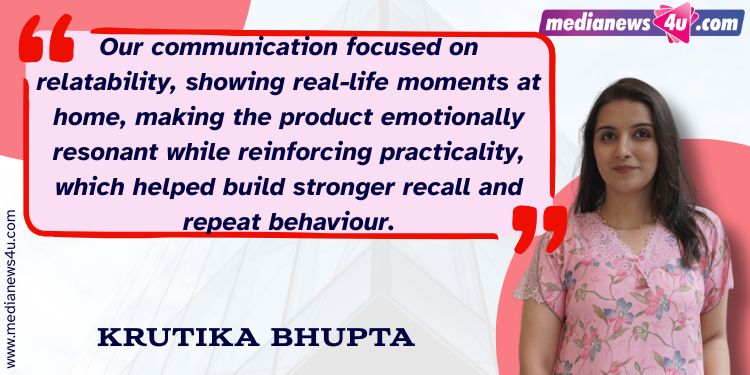
Q. Has word of mouth been crucial in growing the business over the years?
Yes. Word of mouth has been foundational. Nightwear is personal, and recommendations carry weight.
Many customers come through family, gifting, and repeat buying. That trust has grown through consistent quality and service rather than aggressive promotion.