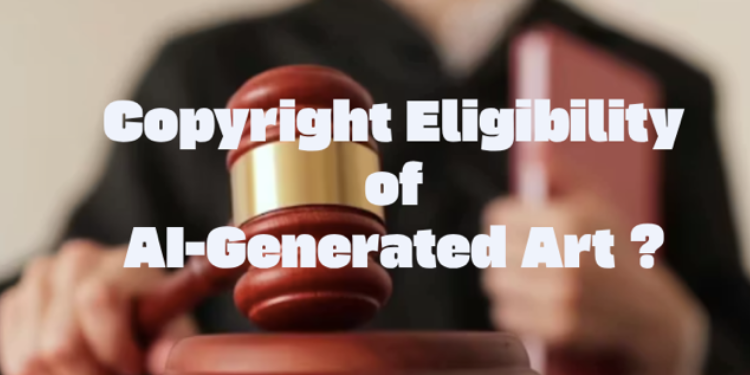
New Delhi: In a case that could shape the future of intellectual property rights in India’s fast-evolving artificial intelligence ecosystem, the Delhi High Court has raised a fundamental legal question: can an artwork generated entirely by artificial intelligence be granted copyright protection under Indian law, or is such protection reserved strictly for works created by natural persons?
The query arose during the hearing of a petition filed by American inventor and researcher Stephen L. Thaler, who is seeking copyright registration for an AI-generated artwork titled ‘A Recent Entrance to Paradise’. The work, according to Thaler, was autonomously created by his AI system DABUS (Device for the Autonomous Bootstrapping of Unified Sentence), without any direct human creative input.
At the heart of the dispute lies the interpretation of the Copyright Act, 1957, which governs intellectual property protection in India. While the Act recognises “computer-generated works” under Section 2(d)(vi), it does not explicitly address authorship in cases where no human intervention is involved. Thaler has argued that the provision should extend to AI-generated artistic works, positioning the creator of the system as the rightful author.
However, the Copyright Office has taken a more conservative stance. In July 2023, the Registrar of Copyrights asked Thaler to identify a “natural person” as the author of the artwork, suggesting that his application be amended accordingly. Thaler rejected this position, maintaining that the work was independently generated by DABUS and should be evaluated within the existing statutory framework.
Court Pushes for Time-Bound Decision Amid Regulatory Vacuum
Taking note of prolonged delays in the administrative process, Justice Tushar Rao Gedela directed the Copyright Office to decide Thaler’s application within eight weeks. The court’s intervention follows a four-year period of inaction, during which no final determination was made despite multiple submissions and a scheduled hearing.
Legal experts argue that the case exposes a significant grey area in India’s copyright regime. While the law acknowledges machine-assisted creation, it stops short of clarifying ownership in fully autonomous outputs. This ambiguity is increasingly relevant as generative AI systems gain sophistication and commercial traction across industries, from media and entertainment to design and advertising.
Counsel representing Thaler contended that the case presents an opportunity for Indian law to evolve in step with technological advancements. They emphasised that the absence of explicit provisions for non-human authorship risks creating uncertainty for innovators and businesses investing in AI-driven creativity.
Implications for India’s AI and Creative Economy
The outcome of this case could have far-reaching implications for India’s digital economy. If AI-generated works are denied copyright protection in the absence of human authorship, it may limit the commercialisation potential of autonomous creative systems. Conversely, recognising such works could open the door to new ownership models, potentially assigning rights to AI developers, users, or even the systems themselves.
The case also aligns India with a growing global debate. Jurisdictions such as the United States and the United Kingdom have grappled with similar questions, often leaning towards requiring human authorship for copyright eligibility. India’s eventual stance could influence its competitiveness in AI innovation and its attractiveness as a destination for intellectual property-driven investments.
For now, all eyes are on the Copyright Office’s forthcoming decision, which is expected to provide the first substantive regulatory guidance in India on the copyright status of AI-generated art.