In a world where consumers lose sleep over life’s big worries but rarely question what goes into their daily meals, FirstClub, a grocery platform, is challenging the status quo with its new brand campaign, ‘If It’s Not Good, It’s Not Here’. At the heart of this campaign lies a powerful and timely insight: we consciously navigate major life decisions but often overlook the quality of food that we consume on a daily basis. FirstClub aims to change this by encouraging consumers to be more intentional, aware, and uncompromising about everyday food choices.
The newly launched brand film takes a distinctive storytelling approach, placing children at the forefront to reflect innocence, honesty, and unfiltered truth. Through their perspective, the film raises important questions about food quality, ingredients, and the silent compromises consumers unknowingly make. The campaign effectively highlights the urgency of making better choices, not just for ourselves, but for the next generation.
FirstClub’s core philosophy goes beyond conventional brand claims. Anchored in a strong quality-first approach, the brand actively eliminates harmful ingredients and upholds rigorous quality checks across its product offerings. The campaign reinforces this commitment; if a product does not meet FirstClub’s quality standards, it simply does not make it to the platform.
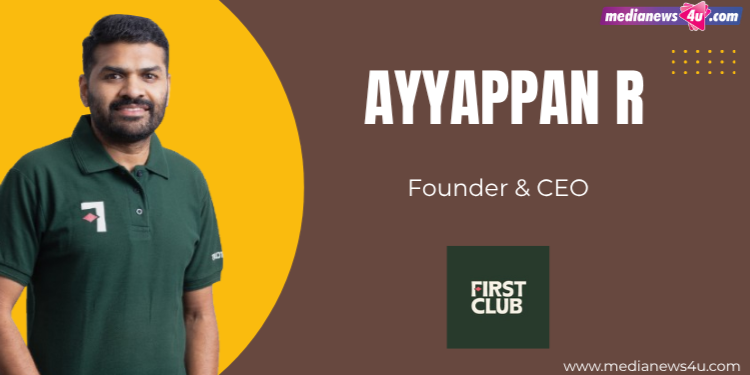
Medianews4u.com caught up with Ayyappan R, Founder and CEO, FirstClub Technology Private Limited
Q. FirstClub positions itself as India’s first rapid delivery platform to ban more than 200 ingredients, including artificial preservatives, colours, benzoates, and more. How has that helped it standout in the Q-commerce market?
Most players in Q-commerce are optimising for speed and assortment, while we chose to optimise for quality and trust.
Banning 200+ ingredients isn’t a marketing line for us, it’s a product decision. We believe that with increasing awareness among consumers on what they consume, the path we have taken will become the default path in the decades to come.
Our guiding philosophy is “If it’s not good for our families, we wouldn’t serve it to yours”.
It forces discipline across sourcing, partnerships, and what we say no to. In a market where everything is available instantly, we’ve built an application where everything available is intentional.
That’s exactly what sets us apart.
Q. Many expect the Q-commerce space to see a shakeout. What are your views?
We don’t see ourselves only as a quick commerce platform. We see ourselves as the Better for you retailer in India where no one else is offering what we are able to consistently offer.
Companies that are built purely on convenience will find it hard to sustain. The ones that stand for something deeper, whether that’s quality, supply chain strength, or customer trust, will endure.
We’ve built FirstClub assuming that future, and that’s why our customers keep coming back to us.
Q. For 2026 what goals have been set and what is the game plan to get there?
2026 for us is about scaling our execution across categories and cities.
We want to become the most trusted place to buy everyday food in the cities we operate in. That means:
● Expanding categories
● Expanding thoughtfully into new geographies
● Increasing share of wallet through strong retention and love for the brand
● Expanding into new categories
The game plan is simple: earn trust consistently, and growth becomes a byproduct.
Q. Is predictive analytics going to play an increasingly important role in identifying market Gaps?
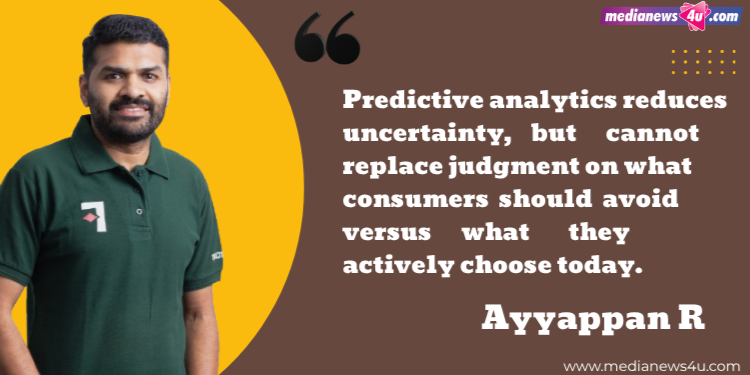
Predictive analytics will definitely play a role, but it won’t replace conviction.
Data can tell you what people are buying. It rarely tells you what they shouldn’t be buying or what they’d choose if they were more aware.
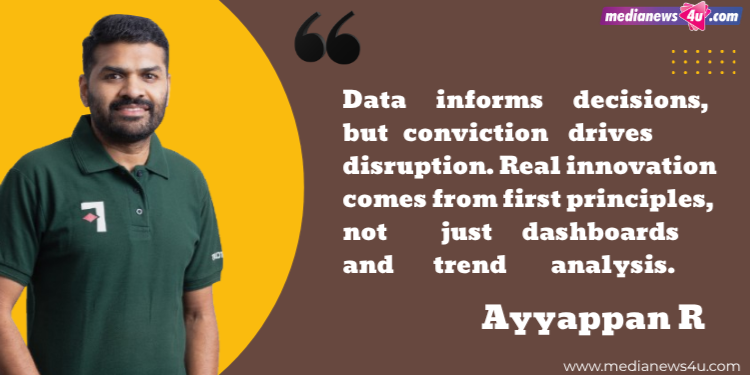
At FirstClub, we use data to sharpen decisions, but the big bets (like banning ingredients) come from first principles, not dashboards.
Q. Are Gen Z and Gen Alpha more mindful of high quality food, healthy ingredients compared with their parents?
They’re definitely more aware, but also more conflicted.
Gen Z has access to more information than any before it, but they’re also exposed to more marketing and misinformation. So while intent is higher, clarity is lower.
That’s where brands like ours come in, to simplify choices, not complicate them further.
While we thought that our proposition will strike a chord with parents and families, we have also seen massive traction among Gen Zs as well, since they seem to be lot more discerning with what they consume
Q. Could you shed light on the insight that quality food is overlooked that led to FirstClub’s launching its latest brand film campaign titled “If It’s Not Good, It’s Not Here”?
The core insight was simple: people worry deeply about what’s new and unknown, but overlook what’s everyday and familiar.
Parents will debate things like artificial intelligence, screen time, or future risks, but rarely question what’s inside the food their kids are consuming daily.
That contradiction became the heart of the film.
Q. How effective will placing children at the forefront be in highlighting the gap between perceived food choices and actual quality?
Because it removes abstraction.
When you talk about “ingredients” or “preservatives,” it feels distant. When you show a child consuming those things, it becomes immediate and real.
Children also act as a mirror. They expose the gap between what we believe we’re doing right, and what we’re actually doing.
Q. What are the various legs of the campaign going to be? Will traditional and digital media be equally important?
This is a digital-first campaign. We have gone live on all social media platforms. We are not planning to take this to traditional media just yet.
Q. Will FirstClub leverage the creator economy by working with lifestyle influencers to get the message across?
Yes, but very selectively.
We’re not looking for volume, we’re looking for alignment. Creators who genuinely care about food, parenting, or lifestyle choices will be a natural fit. We work with mom creators, fitness enthusiasts, people who care about what they eat, regional creators and so many more.
The idea is to spark conversations, not endorsements.
Q. Besides this campaign what other tactics and innovations can one expect the company to adopt to challenge narratives in the food space? Will celebrities be roped in at some point?
You’ll see us continue to challenge the category at a product level, not just communication.
That means:
● More transparency in sourcing
● Stronger quality benchmarks
● New ways to help customers make better decisions
As for celebrities: we’re not against it, but it has to add credibility, not just visibility. The brand should always remain the hero.
Q. How is the company using advances in AR, VR, MR to create compelling storytelling?
Emerging tech is interesting, but we’re mindful of not using it just for novelty.
If AR or immersive formats can help customers better understand what goes into their food or how products are sourced, we’ll explore it. But clarity will always matter more than spectacle.
Q. FirstClub is moving beyond marketing promises by actively eliminating harmful ingredients and enforcing strict quality checks. Will this help build trust that will lead to repeat orders?
Absolutely, but only if customers experience the difference.
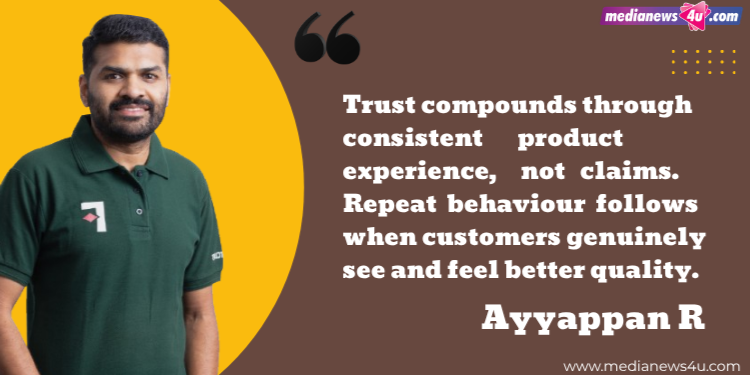
Trust isn’t built through claims, it’s built through consistency. When customers repeatedly receive products that meet a higher standard, trust compounds, and that naturally drives repeat behaviour.
And we have seen this already happen where our retentions are better than any benchmarks in India.
Q. How important is it to reimagine everyday staples not as commodities but as conscious choices?
It’s critical.
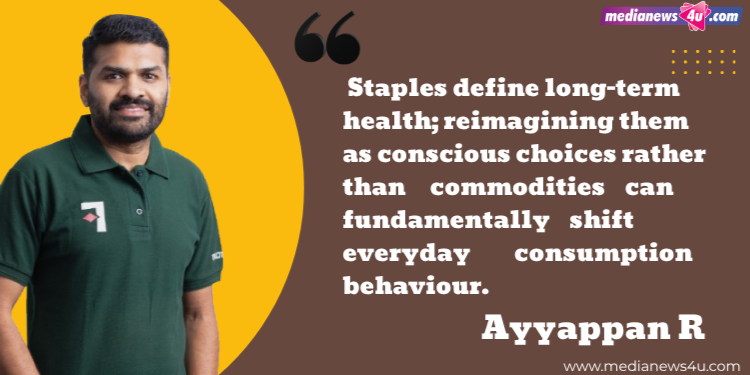
Staples are consumed daily, which means even small compromises in quality add up over time. Yet they’re the least questioned. Regular attas are usually machine milled that remove a lot of the nutritional value from it, which is why we have only stone-ground attas.
We have made pesticide residue free Rice and Dals very affordable – at prices of conventional staples. We are all about making better quality affordable.
Even wood-cold pressed oils that are of great quality are available at prices that doesn’t hurt your pockets.
If we can get people to think more consciously about the most basic items in their kitchen, we’ve already changed behaviour in a meaningful way.
Q. How will FirstClub approach B2B marketing through a presence at retail, events, organising seminars, workshops to strengthen relationships with producers, manufacturers?
We don’t see B2B as a distribution play; it’s about working with partners who are fundamentally aligned with our standards.
We work closely with producers and manufacturers who share our philosophy on quality. That relationship is built through:
● Direct engagement
● Knowledge sharing
● Clear standards and expectations
Over time, we do see value in events, workshops, and community-building within the ecosystem, but the foundation will always be shared intent.