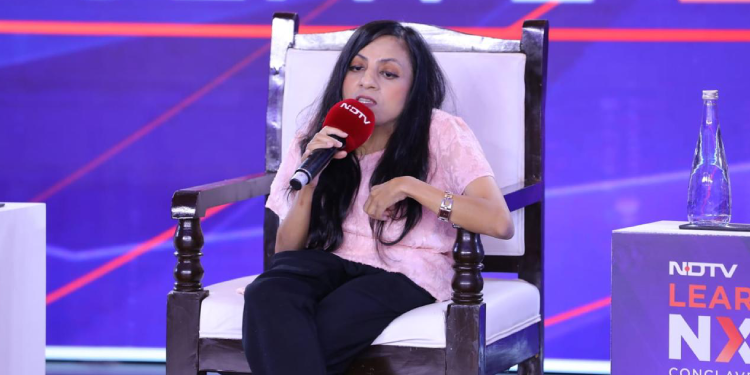
New Delhi: India’s official count of school children identified as having disabilities stands at 0.89 percent. Ira Singhal, Deputy Secretary in the Department of School Education and Literacy at the Ministry of Education, said at the NDTV LearnNXT Conclave 2026 today that the number is not credible. The ministry is now moving to mandate disability screening for every single child enrolled in the country’s school system, backed by a sensitisation course that one crore teachers will be required to complete online.
The interventions represent an acknowledgement that India’s inclusion infrastructure for children with disabilities has been present largely on paper. Accessibility codes, Block Resource Centres, IEPs, and support staff all exist in policy. The gap, as Singhal described it, is implementation, and beneath that, a more fundamental problem of mindset. “We have a list of schools with ramps. We have a list of schools with accessible toilets. But we don’t have a school which has actually followed the whole of the accessibility code.”
The accessibility code for educational institutions came into force in 2024. Singhal said the code had not been meaningfully implemented across schools, and attributed this to the way disability inclusion has been framed, as a charitable act rather than a structural obligation. Until that framing changes, she argued, schools will continue to do the minimum.
The economic argument she made was direct. A person who is excluded from earning does not contribute to the extent they could, and simultaneously draws on the resources of others in the household and in society. Singhal used a household analogy to make the point: if only one member of a four-person family earns, the average family income reflects that constraint. The moment others contribute, even partially and to the extent of their own potential, the household income rises and the single earner is relieved of decisions they were making on behalf of everyone else.
The scale of what the ministry is mandating is significant. Every teacher in the country will be required to take an online sensitisation course designed by the ministry. After completing it, teachers will be responsible for screening every child in their class for disabilities. Where a disability or special need is identified, an Individualised Education Plan will be drawn up for the child, and the child’s progress will be measured against that plan. Children will also be connected to Block Resource Centres, where therapists and special educators are meant to be available, along with educational support to prevent dropouts.
Singhal acknowledged that Block Resource Centres, which are supposed to exist in every educational block across the country, have not functioned at the level they were intended to. The reason she gave was demand: parents, families, and communities have not pressed for these services, and so the centres have not built out the capacity they should have. The ministry’s current effort is directed at creating the awareness that drives that demand. “We don’t have so many therapists because people don’t think that these services are required. Awareness is needed for this.”
One aspect of the ministry’s approach that Singhal specifically flagged is the reach of sensitisation beyond classroom teachers. The programme will extend to every person who comes into contact with a child in a school environment, including ayas, guards, and administrative staff. Modules have been created for non-teaching staff, and training on making schools physically accessible will be part of that process.
The ministry also said that skill training elements tailored to the abilities of children with disabilities will be incorporated into the system, with the stated focus on what a child can do rather than on what they cannot. The framing across the ministry’s stated approach is one of ability, not limitation, though the real test will be in how consistently that framing holds through execution at the block and school level. “The focus is on ability and on ensuring that every person in the system is aware of the possibilities of this child and not the limitations of this child.”
-Based on Press Release