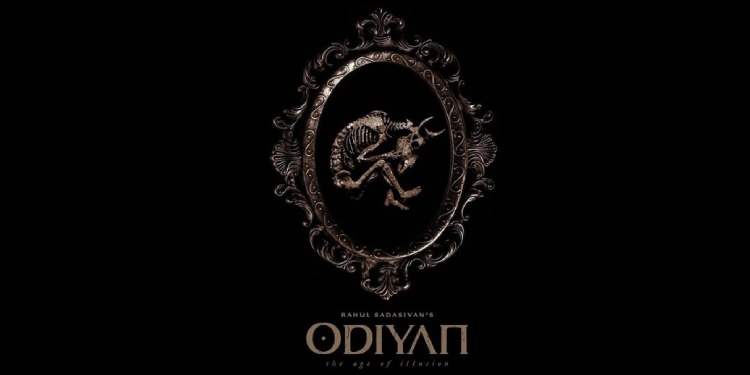
When Karan Johar announced Dharma Productions’ first-ever Malayalam film, the industry reaction naturally centred on the star power involved. Odiyan: The Age of Illusion brings together Prithviraj Sukumaran, Manju Warrier, filmmaker Rahul Sadasivan, and a producer roster that includes Karan Johar, Adar Poonawalla, Apoorva Mehta, and Supriya Menon.
But beneath the casting and the cinematic excitement lies a larger business story.
Dharma Productions’ entry into Malayalam cinema is not merely an expansion into another language market. It is a reflection of a broader shift in how capital is beginning to flow across India’s entertainment landscape.
For years, Malayalam cinema has quietly built a reputation as one of the country’s most efficient content ecosystems. While larger industries often relied on escalating budgets and star-driven economics, Kerala’s film industry consistently demonstrated that strong storytelling, cultural authenticity, and disciplined spending could generate disproportionate returns.
Dharma’s move can be read as an acknowledgement of that reality.
At a time when studios and investors are increasingly scrutinising return on investment, Malayalam cinema offers something highly attractive: proven storytelling capabilities combined with comparatively efficient production economics. In an industry searching for sustainable growth models, that proposition is difficult to ignore.
The choice of project further reinforces this strategy.
Rather than adapting a proven commercial template, the producers have backed a story deeply rooted in Kerala’s cultural and mythological heritage. Set in 19th-century Kerala, Odiyan: The Age of Illusion draws from regional folklore and centres around the legend of a shape-shifter, with acclaimed filmmaker Rahul Sadasivan at the helm.
Sadasivan has already demonstrated through films such as Bhoothakaalam and Bramayugam that audiences increasingly value distinctive, culturally grounded storytelling. Instead of diluting local identity for broader appeal, the project appears to embrace specificity as its competitive advantage.
This is where the economics become particularly interesting.
The old assumption in Indian cinema was that regional stories needed to be modified to attract national audiences. The new playbook is increasingly proving the opposite. Authentic local narratives, when paired with the right talent, production quality, and distribution infrastructure, can travel further than generic stories designed to appeal to everyone.
By combining Malayalam cinema’s storytelling strengths with Dharma’s distribution and marketing capabilities, the project creates a bridge between regional authenticity and national monetisation.
The casting of Prithviraj Sukumaran and Manju Warrier further expands the opportunity. While the story remains firmly rooted in Kerala, the film is being positioned for a wider audience, with the potential to reach viewers across multiple language markets.
This reflects a larger trend reshaping Indian entertainment: the collapse of traditional boundaries between “regional” and “national” cinema.
In many ways, the announcement also illustrates how India’s media business is evolving. The winners of the next decade may not necessarily be those spending the most money, but those identifying underpriced creative ecosystems and pairing them with scalable distribution.
Karan Johar’s announcement may have introduced Odiyan: The Age of Illusion as Dharma Productions’ first Malayalam venture. Viewed through a business lens, however, it represents something larger—a strategic bet that culturally rich intellectual property, backed by disciplined capital and national distribution, could become one of the most valuable assets in Indian cinema.
The smartest money in entertainment is no longer chasing scale for its own sake. It is increasingly chasing authenticity, because authenticity has become one of the industry’s most scalable products.