New Delhi: The Centre has reiterated that social media platforms and other digital intermediaries could lose the legal immunity available under the Information Technology Act if they fail to comply with their obligations under the Information Technology (Intermediary Guidelines and Digital Media Ethics Code) Rules, 2021.
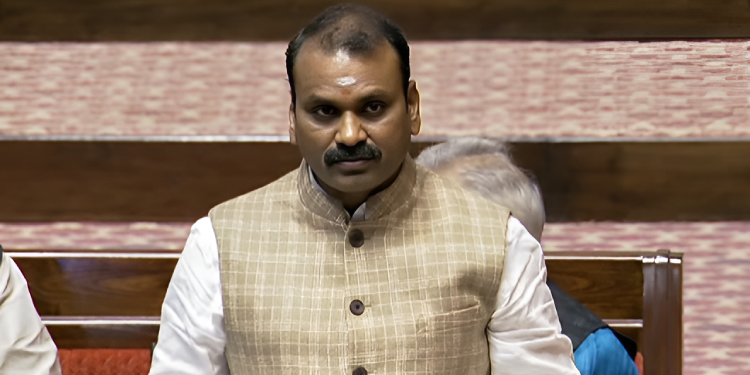
In a written reply to the Lok Sabha on Tuesday, Minister of State for Information and Broadcasting and Parliamentary Affairs L. Murugan said the government’s approach is aimed at fostering an “open, safe, trusted and accountable” internet while curbing the spread of unlawful, obscene and harmful content online.
Murugan stated that the Information Technology Act, 2000, together with the IT Rules, 2021, establishes the legal framework governing online intermediaries and prescribes due diligence requirements for social media platforms and other digital service providers.
Under these rules, intermediaries are expected to take reasonable measures to ensure that users do not upload or circulate content that is obscene, pornographic, paedophilic, harmful to children, invasive of privacy, abusive towards women, or otherwise in violation of Indian law.
The minister cautioned that platforms failing to fulfil these statutory responsibilities would forfeit the safe harbour protection provided under Section 79 of the IT Act, exposing them to legal action for third-party content hosted on their services.
The government also highlighted the amendments to the IT Rules notified on February 10, 2026, which introduced additional safeguards to tackle synthetically generated information (SGI), including AI-generated content and deepfakes.
Under the revised framework, intermediaries and significant social media platforms are required to deploy appropriate technical safeguards to prevent the creation and dissemination of unlawful AI-generated material, including content that is misleading, obscene, impersonates individuals or poses risks to children. Platforms are also obligated to report offences to the appropriate authorities wherever mandated under laws such as the Bharatiya Nagarik Suraksha Sanhita, 2023, and the Protection of Children from Sexual Offences (POCSO) Act, 2012.
As part of its broader cyber safety efforts, the government said citizens can report cyber offences through the National Cyber Crime Reporting Portal (NCRP), which allows anonymous reporting of crimes against women and children. The portal also features a “Report and Check Suspect” module that enables users to flag suspicious websites, social media URLs, WhatsApp numbers, Telegram accounts, phone numbers, email IDs, SMS headers and deepfake content.
Murugan informed Parliament that the Centre has released Rs 132.93 crore under the Cyber Crime Prevention against Women and Children (CCPWC) Scheme to states and Union Territories for strengthening cyber crime investigation capabilities. The funding has supported the establishment of cyber forensic-cum-training laboratories, recruitment of junior cyber consultants and specialised training programmes for police personnel, prosecutors and judicial officers.
According to the minister, cyber forensic-cum-training laboratories have now been established in 33 states and Union Territories, while more than 24,600 law enforcement officials, prosecutors and judicial officers have received training in cyber crime investigation, digital forensics and cyber awareness.
The government also noted that the Indian Cyber Crime Coordination Centre (I4C) has conducted cyber hygiene awareness programmes for over two lakh volunteers associated with the National Cadet Corps (NCC), National Service Scheme (NSS) and Nehru Yuva Kendra Sangathan (NYKS). In addition, the agency has published dedicated cyber safety handbooks for students and women.
The Centre further said it continues to implement the Information Security Education and Awareness (ISEA) project to strengthen information security skills, build cyber security capacity and promote digital safety awareness across the country.