Kantar BrandZ’s Top 100 Most Valuable Indian Brands have reached a combined value of $523.5 billion in 2025, accounting for approximately 13% of the nation’s GDP, according to a report published earlier this year.
This year’s ranking expanded to include 100 brands, with total brand value rising 6% year-on-year and 34 brands increasing their value. These results underscore the increasing significance of brand value in India’s economic story, with further opportunities to grow through global expansion.
HFDC Bank once again became India’s most valuable brand, up 18% to nearly $45 billion, As India’s largest private bank, HDFC Bank has seen its brand value increase by 377% since the first BrandZ India Report released in 2014. Its growth has been driven by continuous innovation and investment in new technology to enhance the customer experience, including the launch of Vigil Aunty, its superhero-style persona designed to educate users about financial fraud. With a strong commitment to digital banking, HDFC Bank continues to set the standard for brand leadership in India.
Completing the Top 5 are: Tata Consultancy Services (No.2; $44.2 billion), Airtel (No.3; $41.1 billion), Infosys (No.4; $25.5 billion) and ICICI Bank (No.5; $20.6 billion). India’s Top 10 most valuable brands contribute almost half (47%) of the ranking’s total value.
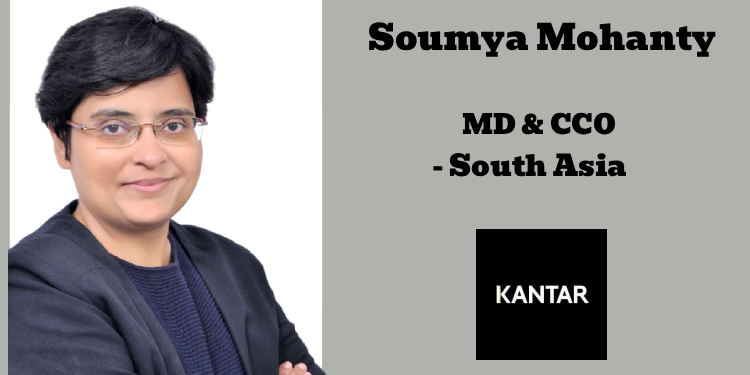
MediaNews4u caught up with Soumya Mohanty, MD & CCO- South Asia, Kantar
Q. Is meaningful difference the key thing that separates a brand from a commodity?
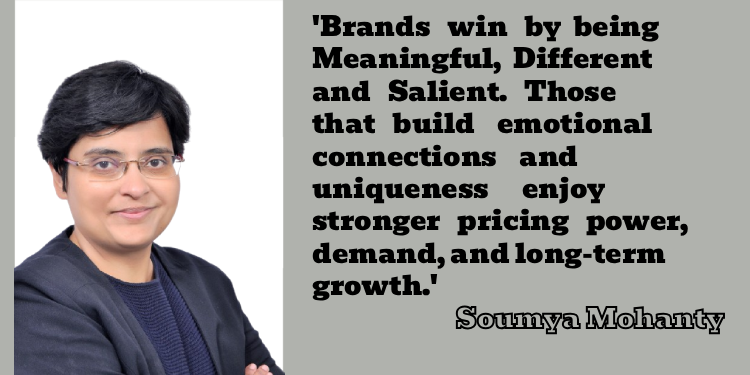
That’s correct. The Meaningful Different Salient (MDS) framework shows that brands outperform commodities because they create functional and emotional connections (Meaningful), offer something unique (Different), and come to mind easily (Salient). Brands with strong Meaningful Difference deliver higher pricing power, demand power, and future growth.
Kantar’s Meaningful Different Salient (MDS) framework is externally validated and certified by the Marketing Accountability Standards Board (MASB), reinforcing its credibility as a proven measure of brand strength.
 Q. Brands have to be rooted in their core proposition and at the same time they need to challenge themselves. How difficult is it to navigate this balance?
It’s challenging because consistency builds trust, while innovation drives relevance. Kantar’s Blueprint for Brand Growth advises three accelerators:
- Predispose more people to choose your brand
- Be more present where decisions are made
- Find new spaces to grow
- Brands that balance these outperform peers. Those that fail to innovate risk becoming irrelevant, as seen in brands like Kodak or Blackberry.
More recent examples of brands that are consistent and still innovative include Pantagonia or even closer home is Tanishq – stayed true to jewelry heritage while expanding into omnichannel retail and personalized designs, sustaining premium positioning.
Q. Indian brands have very little overseas contribution. What is the reason for this?
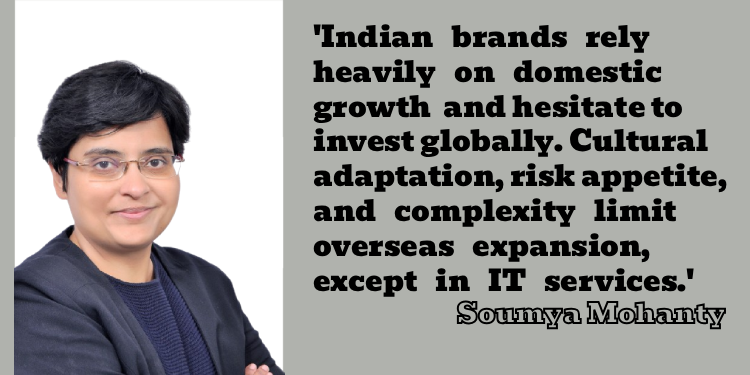
Indian brands remain domestically focused, with only 23% of Top 100 brand value from international markets, compared to 50% for UK brands and 84% for French brands. Reasons include:
- Comfort in domestic growth
- Investment & risk appetite in building brands beyond south Asian diaspora
- Operational complexity and cultural adaptation challenges
Exceptions: IT services (TCS, Infosys) where we have natural benefit of labor arbitrage
Q. Which categories are laggards and should be doing a better job of brand building?
FMCG categories, particularly Food & Beverages, Personal Care, and Home Care are currently the biggest brand-building laggards. They’re showing flat to negative year-on-year value growth and weak scores on “Difference,” which means consumers don’t clearly see what makes these brands unique.
This leaves them especially vulnerable to private-label competition and fast-moving D2C challengers that are innovating and differentiating faster.
 Q. When you look at the categories that fared best like auto, travel services—is one reason a strong focus on hyper-personalisation and hyper-localisation?
Automotive (+24%) and Travel Services (+46%) are riding a wave of strong consumer demand, and yes, hyper-personalisation and hyper-localisation play a role.
But the bigger force is the booming ‘experience economy’. Indians are travelling more, upgrading more, and actively choosing brands that make their journeys smoother. Players like IndiGo and Taj have refined experiences to match regional needs and digital habits, while auto brands have accelerated innovation with EVs and new-age SUV variants. The result: double-digit brand value growth driven by relevance, experience, and smart localisation.
Q. How is AI helping with brand building? Is AI blurring the lines between brand building and performance marketing?
AI is transforming brand building by enabling-
- Hyper-personalised advertising at scale
- Rapid product innovation using trend analysis
- Real-time media optimization
What is needed is to ensure that the core brand proposition is consistent and culturally rooted. And we are not hyper focused on bottom funnel. India has demand to be created which needs top of funnel strategy. Kantar is helping brands bridge this gap between brand building and performance marketing.
Q. What can Indian brands learn from global brands in leveraging technology?
Global leaders use tech for:
- AI-driven creative ideation and localization (e.g. Coca-Cola’s Holidays are Coming AI campaign)
- Predictive analytics for media planning
- Data-driven product development
Indian brands need to move beyond basic digital presence to integrated tech ecosystems for innovation and consumer engagement.
Q. 31% of top brands still have untapped potential to deepen consumer relevance and distinctiveness. What should they focus on?
To unlock this potential, brands need to start with the consumer and build Meaningful Difference. That means:
1. Understand what will build meaning
- Go beyond functional benefits to create emotional connections.
- Ask: What role does my brand play in people’s lives?
- For a food brand, identify micro-moments like snacking on-the-go or family mealtime and design experiences around them.
- For a skincare brand, craft a story that resonates with aspirations- such as confidence or self-care rituals.
- For a nutrition brand, embed yourself in daily habits and routines that consumers value for health and wellbeing.
2. Differentiate with clarity
- Offer something others don’t- whether through innovation, design, or purpose.
3. Activate the Blueprint for Growth
Kantar’s framework highlights three accelerators:
- Predispose more people to choose your brand (through relevance and trust).
- Be more present where decisions are made (omnichannel, digital-first).
- Find new spaces to grow (adjacent categories, premium formats).
 Q. The Media and entertainment sector is seeing consolidation. What is the impact that this is having on brand building?
Consolidation means fewer, larger players controlling reach and pricing, but it also enables integrated campaigns across platforms and screens. Brands must recognise that each platform plays a different role in the funnel, requiring contextual creativity. OTT now mirrors linear TV with ad breaks, creating space for storytelling, while user-generated content adds intimacy but needs monitoring for consistency. Tools like Kantar LINK AI and Context Lab help test creative quickly and ensure ads perform in the right environment.
Q. What are the learnings from HDFC Bank on persistence and strategic agility?
HDFC Bank’s ascent to becoming India’s most valuable brand ($44.9B) is a masterclass in consistency and agility. The bank has steadily built trust over decades, while simultaneously moving fast on digital innovation- from 30-minute auto loans to seamless app journeys. Its distinctive brand assets, like the “Vigil Aunty” persona, reinforce memorability and confidence at scale.
It’s the combination of persistent delivery on core banking and nimble adoption of new technology that keeps HDFC Bank ahead of the pack.
Q. Could you contrast rescuing a company versus scaling a behemoth (Steve Jobs versus Tim Cook at Apple)?
- Rescue phase (Jobs): Focussed on radical simplification, core product excellence, and restoring consumer trust.
- Scale phase (Cook): Challenges include global expansion, supply chain complexity, and innovation at scale (AI, services).
Both require Meaningful Difference.
Q. In B2B categories, are we seeing more innovation in brand building?
B2B brands are beginning to experiment with more modern brand-building, but the shift is still too slow. To truly stand out, they need to go beyond price-led communication and invest in trust, expertise, and clear differentiation- the fundamentals that separate leaders from the rest in B2B.
 Q. What are the Key trends expected for 2026 in brand building?
- AI Mainstreamed in Creative & Media: Generative AI is becoming a standard tool across advertising and media, reinventing how brands reach and influence consumers.
- The Anxious Consumer Seeks Familiarity: In an uncertain world, consumers gravitate to the comfort of familiar brands, nostalgic experiences, and trust-based choices.
- Premiumisation Reaches New Markets: Aspiration is driving premium demand in non-traditional segments (like rural areas), challenging the old “urban = premium, rural = cheap” paradigm.
- Experience Economy on the Rise: Spending on experiences – travel, leisure, lifestyle – is surging as consumers prioritize living in the moment and “escaping” over material goods.