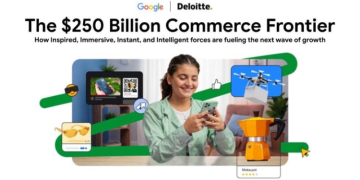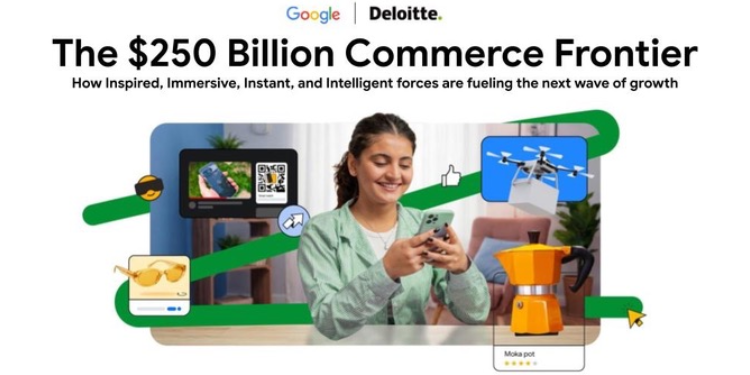
Bengaluru: India’s e-commerce ecosystem is on track for transformative growth, projected to reach $250 billion by 2030, according to a joint report by Google and Deloitte titled ‘The $250 Billion Commerce Frontier’. The market, currently valued at $90 billion, is entering a new phase defined by AI-led, immersive, and hyper-personalized shopping experiences.
The report highlights a structural shift in consumer behavior, with over 150 million new shoppers expected to join the digital economy and per capita spending set to double. A key driver of this growth will be India’s 220-million-strong Gen Z cohort, projected to account for 45% of online spending by 2030.

Roma Datta Chobey, Managing Director – Connected Consumer Commerce, Google India, said, “This is a pivotal moment for Indian commerce driven by a fundamental shift in how India shops. Consumers today demand experiences inspired by storytelling, powered by AI and immersive technologies, and anchored by instant fulfillment. At Google, we are committed to empowering this ecosystem through intelligence and trust. From our virtual try on tool and shopping features in AI Mode and now, Gemini app to creators driving commerce on YouTube, we are streamlining the journey from brainstorming to browsing to final purchase. Central to this evolution is our focus on agentic AI, where we are building tools to benefit both consumers and brands. We are excited to partner with the ecosystem to drive this new standard of commerce, leveraging AI to turn the ‘love for the find’ into a personalized, seamless reality for every consumer.”

Anand Ramanathan, Partner & Consumer Industry Leader – South Asia, Deloitte, added, “India’s e-commerce landscape is entering a structurally different phase, moving from mass marketing to an era of algorithmic intimacy, where demand is not just predicted but synthesized in real time. A new cohort of digital-first consumers, led by Gen Z, is driving this shift, valuing authenticity alongside speed and relevance. This is accelerating the rise of generative commerce, where consumers can describe a need and AI curates or even creates solutions instantly. We are also beginning to see the emergence of curation-as-a-service, with AI-led journeys reshaping discovery, decision-making and fulfilment. For businesses, the opportunity lies in combining intelligent technology, creator ecosystems and agile supply chains to drive deeper engagement, higher wallet share and sustainable growth.”
The report outlines four key forces—Inspired, Intelligent, Instant, and Immersive—that are expected to contribute $100 billion to overall commerce growth.
Creator-led commerce is set to emerge as a powerful growth engine, with influencers projected to drive 30% of total retail spend by 2030. Platforms like YouTube are accelerating this shift, onboarding Tira to its Shopping Affiliate Program, alongside existing partners such as Flipkart, Myntra, Nykaa, and Purplle.
Quick commerce is also expected to scale rapidly into a $50 billion market, with its user base doubling to 70 million. Notably, Tier 2 and smaller cities are projected to contribute 30% of the market, while non-food categories such as beauty, fashion, and electronics will account for 45% of total spend.
Artificial intelligence is poised to act as a key profitability driver, with the potential to boost retail margins by 30–35% through hyper-personalization and operational efficiencies. Google has further strengthened its AI commerce play with new shopping features in the Gemini app and a major upgrade to shopping in AI Mode within Search, aimed at delivering more conversational and seamless user experiences.
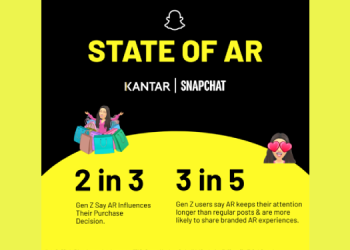
Additionally, immersive technologies such as augmented reality and virtual try-ons are reshaping retail engagement, with one in three Indian shoppers already preferring virtual trials. These innovations are expected to drive up to 20% revenue uplift for retailers, as consumers increasingly seek unified, cross-channel shopping journeys.
The report, developed in collaboration with Kantar, underscores how the convergence of AI, creator ecosystems, and immersive technologies will redefine India’s retail landscape, enabling brands to deliver more personalized, efficient, and scalable consumer experiences.