Finding a good hair clinic sounds simple until you’re actually trying to do it. There are dozens of options in every city, each promising results, and it’s hard to tell which ones are genuinely equipped to help and which ones are just well-marketed. If you’re dealing with hair loss, the clinic you choose can either address the real problem or just delay it.
What Most People Get Wrong When Searching for a Hair Clinic
The most common mistake is treating hair loss like a cosmetic problem from the start. People search for the nearest clinic, book a consultation based on the website’s look, and end up with a treatment plan that focuses on appearance rather than cause. Hair loss in most cases — especially in men and women under 45 — has internal triggers. Hormonal imbalances, nutritional deficiencies, thyroid dysfunction, chronic stress, and scalp health all play a role. A clinic that skips this diagnostic layer isn’t really treating hair loss. It’s managing the symptom.
Before you even start calling clinics, it helps to understand what kind of hair loss you’re dealing with. Is it at the temples and crown? Is it diffuse thinning across the scalp? Does it come with itching, dandruff, or an oily scalp? These details matter and should inform who you see.
What a Good Hair Clinic Actually Does
A good hair clinic functions more like a diagnostic center than a beauty service. The first consultation should involve a detailed history — not just how long you’ve been losing hair, but your diet, sleep, stress levels, any recent illnesses, medications, and family history. They should ideally run blood tests to check for iron, vitamin D, B12, thyroid hormones, and androgens before recommending anything.
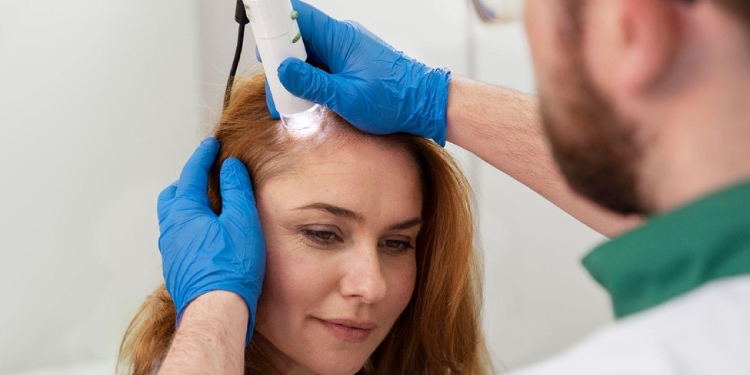
Some clinics use trichoscopy, which is a magnified examination of the scalp and hair follicles. This helps identify whether follicles are miniaturizing (a sign of androgenetic alopecia), inflamed, or clogged. This kind of assessment tells you something real. A consultation that skips this and goes straight to suggesting a hair transplant or expensive topical products should raise a flag.
How to Evaluate a Clinic Before You Visit
Doing a bit of research before booking saves a lot of time and money. Here’s what to look for:
- Check if the clinic has a qualified dermatologist or trichologist on staff, not just aestheticians or technicians
- Look for clinics that mention blood tests or diagnostic workups in their process
- Read reviews carefully — look for patterns, not just star ratings
- Be cautious of clinics that lead with transplants before ruling out treatable causes
- Ask directly: what does the first consultation involve?
If you’re in a metro city or even a smaller town, it’s worth searching for Traya offline store near me to find evidence-based hair care options that combine diagnostics with a treatment approach that goes beyond surface-level solutions.
Red Flags to Watch Out For
Not every clinic operating in the hair care space has your best interest at focus. Some warning signs worth taking seriously:
- Promises of results within weeks with no medical basis
- No questions about your health history during the first visit
- Pushing expensive treatments in the first appointment before running tests
- No follow-up structure or progress tracking built into the plan
- Discounts or packages that create urgency before diagnosis is complete
Hair loss is rarely straightforward, and anyone who tells you otherwise in the first fifteen minutes probably hasn’t looked closely enough.
Understanding the Type of Hair Loss You Have
This step is genuinely important and often skipped. The treatment for telogen effluvium (sudden shedding triggered by stress or illness) is completely different from the treatment for androgenetic alopecia. A good clinic won’t use a one-size-fits-all protocol. If you’re a man with a receding hairline or thinning at the crown, it’s worth taking time to Understand Male Pattern Baldness before walking into any consultation, so you can ask the right questions and recognize whether the clinic’s approach makes sense for your specific condition.
Some treatment approaches, like Traya, are built around identifying root causes first — using a combination of dermatology, nutrition, and Ayurveda — rather than jumping to interventions. Understanding this kind of model helps you evaluate what you’re being offered elsewhere.
Final Thoughts
Choosing a hair clinic isn’t about finding the most advertised one or the one closest to you. It’s about finding a place that’s willing to ask the right questions before offering answers. Hair loss that’s caught early and treated with the right diagnosis almost always responds better. Give the process the time it deserves, come prepared with your own observations, and don’t settle for a consultation that feels rushed or generic. Your hair loss has a reason — the right clinic will help you find it.