Monday, January 19, 2026
MediaNews4U
  • Exclusive
  • Advertising
  • Media
    • Radio
    • Cable & DTH
    • Print
    • Digital Frontier
    • Gaming Nexus
  • Television
  • OTT
  • Ad-Tech
  • Marketing
  • Campaigns
  • Analysis
  • Opinion
    • Opinion
    • Think Through
    • Prescience 2023
    • Prescience 2024
  • People
  • Events
    • Leader Speak
    • STRAIGHT TALK
    • Gamechangers
    • Print & TV Summit
MediaNews4U
  • Exclusive
  • Advertising
  • Media
    • Radio
    • Cable & DTH
    • Print
    • Digital Frontier
    • Gaming Nexus
  • Television
  • OTT
  • Ad-Tech
  • Marketing
  • Campaigns
  • Analysis
  • Opinion
    • Opinion
    • Think Through
    • Prescience 2023
    • Prescience 2024
  • People
  • Events
    • Leader Speak
    • STRAIGHT TALK
    • Gamechangers
    • Print & TV Summit
MediaNews4U.com
Home Authors Corner

The Future of Regional Digital Growth: Why Tier-II & Tier-III Markets Are India’s Biggest Untapped Opportunity

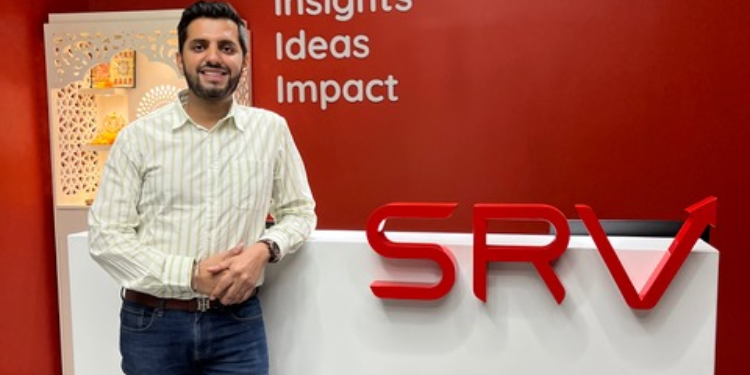
In this article, Chaitanya Sharma, Director—Digital Marketing & Growth, SRV Media explains that Tier-II and Tier-III cities are India’s next digital growth epicentres, driven by connectivity, vernacular content, rising incomes, and regional entrepreneurship, shaping the country’s future consumer and business landscape.

by MN4U Bureau
December 11, 2025
in Authors Corner
Reading Time: 4 mins read
A A
The Future of Regional Digital Growth: Why Tier-II & Tier-III Markets Are India’s  Biggest Untapped Opportunity
Share Share ShareShare

The digital transformation of India began with a simple but powerful shift: smartphones became affordable, data costs dropped dramatically, and telecom networks expanded far beyond major metros. As players like Airtel, Jio, and other broadband providers pushed deeper into smaller towns, Tier-II and Tier-III cities underwent a connectivity revolution that quietly changed the national digital landscape. What started as basic mobile access has evolved into a full-fledged digital lifestyle, reshaping everything from commerce and communication to education and healthcare.

This evolution is strengthened by the Digital India mission and has ensured that the benefits of technology are no longer concentrated in Mumbai, Delhi, or Bengaluru. Today, India’s smaller cities account for over 45% of the urban population and contribute nearly 40% to the country’s GDP, making them the new centres of digital growth and economic momentum.

The rollout of high-speed internet and digital infrastructure fundamentally transformed these
emerging regions.

  • BharatNet’s fibre-optic network and the rapid spread of 4G and 5G have closed large sections of the urban–rural digital divide.
  • India crossed 1.19 billion internet subscriptions by March 2024, recording a 28.54% year-on-year growth.
  • Internet penetration in states like Uttar Pradesh and Bihar has risen to over 45%, enabling widespread access to digital services.

Together, these advancements laid the groundwork for digital consumption, online entrepreneurship, and new-age services to flourish beyond the metros. Once connectivity strengthened, Tier-II and Tier-III cities quickly became India’s most dynamic digital markets.

E-commerce has grown at unprecedented speed, with 60% of new online shoppers since 2020 coming from non-metro regions. With digital payments becoming the default payment method leading to 59–77% growth in online transactions. India’s e-commerce sector—projected to reach USD 170–190 billion by 2030—owes much of its expansion to consumers from these cities.

The UPI revolution further accelerated this momentum. UPI processed 20.47B transactions in Nov 2025 (682M daily) normalising digital payments in kiranas nationwide

Most importantly, rising incomes and digital exposure have inspired a new wave of aspirations.
Families in Tier-II and Tier-III cities now demand premium experiences, faster deliveries, better service, and personalised online interactions—developing consumption patterns similar to metros within a shorter time frame.

The digital shift has sparked significant economic activity in smaller cities. MSMEs, which make up 51% of India’s total enterprises and contribute 40% to GDP, are adopting digital tools at record speed. Their transition to online payments, marketing, logistics tech, and automated tools is strengthening local economies. Over 50% of DPIIT’s 1.15 lakh+ startups are now from Tier-II/III cities, creating millions of jobs in fintech/agritech. These ecosystems are becoming fertile grounds for innovation across fintech, agritech, healthtech, and D2C brands. Tech hiring in these regions grew 50% in early 2025, even as hiring slowed in major metros. Global companies, including Apple, are increasingly tapping into talent pools from these emerging tech clusters. With operating costs that are 25–35% lower than metros, these regions are becoming ideal hubs for expansion for tech, BFSI, logistics, manufacturing, and digital-first brands.

Students increasingly rely on online courses, mock tests, specialised tutors, and skill-based platforms. With 98% of Indian users consuming content in regional languages, vernacular edtech platforms have become deeply influential, improving access, comprehension, and engagement across non-metro India.

Telemedicine, e-pharmacies, and remote consultations have become essential in regions where physical access to healthcare is limited. For many families, online platforms now serve as their first point of medical advice, reducing travel, cost, and wait times while expanding the reach of quality care.

Smart TV adoption has risen by 54%, and OTT platforms, short-video apps, and social commerce have surged—fuelled by regional creators and local-language content. Digital entertainment, shopping, payments, and communication now define everyday routines across Tier-II and Tier-III cities.

India’s digital boom has unlocked a powerful regional digital culture defined by vernacular
content, hyperlocal creators, and community-driven engagement. With 98% of users
consuming content in Indian languages, Tier-II and Tier-III audiences now shape mainstream
digital behaviour. Local creators on platforms like ShareChat, Moj, Instagram, and YouTube
drive deeper trust and influence than metro-based voices. Hyperlocal WhatsApp and Telegram
groups fuel discovery, recommendations, and customer decisions.

Despite impressive progress, several barriers still prevent full-scale digital inclusion. 630 million Indians remain offline, mostly due to lack of awareness rather than connectivity deficiencies. Cybersecurity risks and misinformation disproportionately impact first-time digital users. Digital literacy programs remain fragmented and inconsistent, leading to uneven skill adoption. Device affordability continues to limit deeper digital penetration for many low-income households.

Addressing these gaps requires focused interventions such as public Wi-Fi networks, targeted awareness campaigns, vernacular digital safety education, AI-driven onboarding for new users, and community-level training programs.

Investment trends make it clear where India’s next decade of growth will come from. Venture capital funding in non-metros rose from ₹375 billion in 2021 to ₹1.13 trillion in 2023—a threefold increase driven by rising digital adoption and entrepreneurial confidence. Retail leasing doubled in Tier-II and Tier-III cities in Q3 2025, signalling the rise of a strong “phygital” (physical + digital) model that blends offline retail with digital payments, e-commerce logistics, and omni-channel shopping behaviour. Consumer demand, improved digital infrastructure, and the availability of skilled talent have made these cities central to India’s long-term digital roadmap.

For brands and leaders, the message is clear:

Success in the coming decade depends on building localised, vernacular-first, community-driven digital strategies rooted in the unique aspirations of these markets.

The next chapter of India’s digital story will not be written in its metros alone. It will be shaped in the streets of Indore, the markets of Jaipur, the tech corridors of Coimbatore, and the entrepreneurship hubs of Lucknow. Tier-II and Tier-III cities are no longer emerging markets—they are the epicentre of India’s next trillion-rupee digital opportunity. The businesses that are adapting to this shift by embracing various regional insights, cultural differences, and inclusive digital strategies, will be the ones who define India’s digital future.

(Views are personal)
Tags: Chaitanya Sharmadigital consumptiononline entrepreneurshipSRV Media

RECENT POSTS

How AI-Led Ad Targeting Is Helping D2C Brands Cut CAC and Boost Reach
Authors Corner

How AI-Led Ad Targeting Is Helping D2C Brands Cut CAC and Boost Reach

January 16, 2026
0

The D2C (direct-to-consumer) marketing strategy is completely transformed by AI-driven ad targeting that relies on machine learning to scrutinize enormous...

Read moreDetails
Why Music Is Not Free — And Why That’s a Good Thing
Authors Corner

Why Music Is Not Free — And Why That’s a Good Thing

January 14, 2026
0

For over a decade, the internet has trained us to believe that music is abundant, frictionless, and free. A tap,...

Read moreDetails
PR Trends to look out for in 2026
Authors Corner

PR Trends to look out for in 2026

January 13, 2026
0

As we wrap up yet another exciting and dynamic year and gear up to enter 2026, let’s see how the...

Read moreDetails
How AI Is Revolutionizing Performance Marketing
Authors Corner

How AI Is Revolutionizing Performance Marketing

January 13, 2026
0

Performance marketing emphasises more on results, measurable outcomes, optimized spending, and scaling. Over time, however, the increase in complexity surrounding...

Read moreDetails
The Moment of Truth: The Invisible Force Behind Great Campaigns
Authors Corner

The Moment of Truth: The Invisible Force Behind Great Campaigns

January 12, 2026
0

In advertising, we often talk about the “moment of truth,” but very few people truly think about what it means....

Read moreDetails
How a $121.5 Billion Global Market Is Opening Doors for Value-Driven Indian Brands
Authors Corner

How a $121.5 Billion Global Market Is Opening Doors for Value-Driven Indian Brands

January 10, 2026
0

At a time when consumers across the world are rethinking what they buy and why they buy it, a quiet...

Read moreDetails

LATEST NEWS

IAB Tech Lab Proposes Protobuf Standard for OpenRTB to Boost Efficiency and Interoperability

IAB Tech Lab Unveils Agentic Roadmap to Scale AI-Driven Buying and Selling in Digital Advertising

January 17, 2026
Ather

Ather Makes Everyday Riding Effortless with ‘It’s Easy on an Ather’

January 17, 2026

ANALYSIS

Rukam Capital,
Analysis

Creators have replaced celebrities as the most trusted influence: report

January 17, 2026
0

Mumbai: India’s consumption-led growth is entering a decisive new chapter—one that is no longer anchored to its largest metropolitan centres....

PEOPLE

Gaurav Laghate named Head Public Relations and Corporate Communications at Sony Pictures Networks India
People

Gaurav Laghate to Lead Corporate Brand and PR as SPNI Enters Next Growth Phase

January 16, 2026
0

Mumbai: Sony Pictures Networks India (SPNI) has announced a leadership realignment as part of its refreshed operating model, reinforcing its...

MARKETING

Black Dog Soda
Marketing

Black Dog Soda ropes in Emilia Clarke to headline ‘Savour the Pause’ global campaign

January 17, 2026
0

Mumbai: Black Dog Soda has announced acclaimed global actor Emilia Clarke as the new face of the brand, signalling a renewed focus on...

Subscribe to Newsletters

ADVERTISING

Publicis Groupe India names Sonal Verma MD of Arc Worldwide India to scale experiential and shopper marketing
Advertising

Publicis Groupe India names Sonal Verma MD of Arc Worldwide India to scale experiential and shopper marketing

January 15, 2026
0

Mumbai: Publicis Groupe India has appointed Sonal Verma as Managing Director of Arc Worldwide India, in a move aimed at...

PRINT

Naresh Kaushal honoured with Bharat Scouts and Guides’ highest ‘Silver Elephant Award’
Print

Naresh Kaushal honoured with Bharat Scouts and Guides’ highest ‘Silver Elephant Award’

January 12, 2026
0

Chhattisgarh: Naresh Kaushal, Editor of Dainik Tribune and a senior journalist, has been conferred with the Silver Elephant Award, the...

AUTHOR'S CORNER

How AI-Led Ad Targeting Is Helping D2C Brands Cut CAC and Boost Reach
Authors Corner

How AI-Led Ad Targeting Is Helping D2C Brands Cut CAC and Boost Reach

January 16, 2026
0

The D2C (direct-to-consumer) marketing strategy is completely transformed by AI-driven ad targeting that relies on machine learning to scrutinize enormous...

UPLIFT MEDIANEWS4U DIGITAL PVT LTD
No. 194B , Aram Nagar 2, JP Road,
Versova, Andheri West
Mumbai - 400061

For editorial queries:
[email protected]
[email protected]

For business queries:
Smitha Sapaliga - +91-98337-15455
[email protected]

Recent News

Havmor

Havmor’s Uttarayan Anthem Turns Cultural Insight into Festive Impact

January 17, 2026
IAB Tech Lab Proposes Protobuf Standard for OpenRTB to Boost Efficiency and Interoperability

IAB Tech Lab Unveils Agentic Roadmap to Scale AI-Driven Buying and Selling in Digital Advertising

January 17, 2026
Ather

Ather Makes Everyday Riding Effortless with ‘It’s Easy on an Ather’

January 17, 2026

Newsletter

Subscribe to Newsletters

Medianews4u.com © 2019 - 2025 All rights reserved.

  • The South Side Story 2023 Download Report
  • Goafest 2023: Day 3
  • Goafest 2023: Day 2
  • Goafest 2023: Day 1
  • Straight Talk Gallery 2022
  • The South Side Story 2022 Download Report
  • Focus 2022
  • Futurescope Conclave Gallery 2022
  • The South Side Story 2021 Download Report
  • FOCUS 2021
  • Exclusive
  • Exclusive
  • Advertising
  • Media
    • Radio
    • Cable & DTH
    • Print
    • Digital Frontier
    • Gaming Nexus
  • Television
  • OTT
  • Ad-Tech
  • Marketing
  • Campaigns
  • Analysis
  • Opinion
    • Opinion
    • Think Through
    • Prescience 2023
    • Prescience 2024
  • People
  • Events
    • Leader Speak
    • STRAIGHT TALK
    • Gamechangers
    • Print & TV Summit

Medianews4u.com © 2019 - 2025 All rights reserved.