Mumbai: In a category where credibility directly impacts consumer safety, Vaseline has delivered a culturally sharp and strategically grounded campaign that addresses the growing threat of counterfeit skincare products in Nigeria. Conceptualised by Leo Singapore, the campaign stands out for turning a widely recognised cultural stereotype into a powerful trust-building device, while simultaneously introducing a functional solution to a real market problem.
Turning a Global Meme into a Trust Device
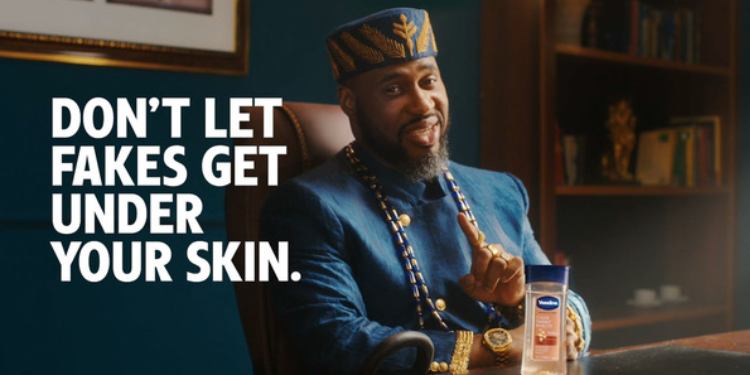
The campaign’s defining creative leap lies in casting Prince Chris Okagbue—a real Nigerian royal—to challenge one of the internet’s most persistent scam narratives. For years, the phrase “Nigerian Prince” has been synonymous with fraud, particularly through email scams. Instead of avoiding this association, the campaign confronts it head-on.
In the film, Okagbue acknowledges the stereotype before reframing it, positioning himself as a symbol of authenticity in a marketplace flooded with fakes. This inversion transforms a long-standing cultural joke into a strategic storytelling device. The result is a campaign that feels self-aware, locally relevant, and globally resonant. By reclaiming a damaged narrative, the brand not only captures attention but also rebuilds credibility in an unexpected way.
Utility as the Core Idea, Not an Add-on
Beyond the creative hook, the campaign is anchored in a practical solution—the Vaseline Authenticator. Built on WhatsApp, the tool allows consumers to verify the authenticity of Vaseline Body Oils in seconds by simply uploading product images via chat.
This is where the campaign moves from awareness to real-world impact. Instead of merely highlighting the dangers of counterfeit products, it gives consumers the means to actively protect themselves. The choice of WhatsApp is particularly strategic, given its widespread usage in Nigeria as a primary communication platform. By embedding the solution within an existing behaviour, Unilever ensures that the barrier to adoption remains minimal.
The innovation here is not just technological but behavioural. It aligns seamlessly with how consumers already interact, making verification intuitive rather than effortful.
From Awareness to Action in a High-Risk Market
The campaign’s effectiveness is further strengthened by its integrated rollout across outdoor, retail, and digital touchpoints. QR codes placed in high-traffic urban areas and retail environments ensure that the authenticator is accessible at the exact moment of purchase consideration.
This reflects a deeper understanding of the counterfeit challenge in markets like Nigeria, where enforcement alone cannot keep pace with the spread of fake goods. By shifting part of the responsibility to consumers and equipping them with a real-time verification tool, the campaign creates a more immediate and scalable response to the problem.
At a broader level, the initiative signals a shift in brand thinking—from reactive messaging to proactive enablement. It positions Vaseline not just as a product, but as a partner in consumer safety, while demonstrating how creativity and utility can work together to solve business-critical issues.
This campaign succeeds because it integrates cultural insight with functional innovation. By transforming a globally recognised stereotype into a symbol of trust and pairing it with a practical verification tool, Vaseline and Leo Singapore have created a campaign that goes beyond communication. It actively reshapes consumer behaviour, proving that in today’s landscape, trust is not just built through messaging—it is delivered through meaningful, accessible experiences.
View this post on Instagram