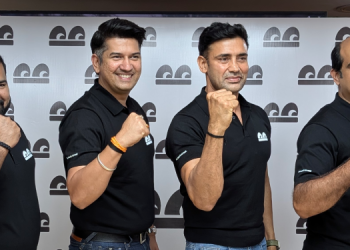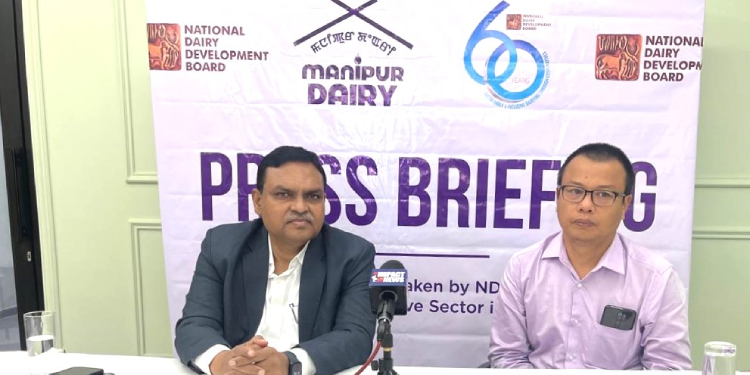
Mumbai: Ajay Kumar Bhalla, Hon’ble Governor of Manipur, unveiled the new brand name and logo of Manipur Milk Producers’ Co-operative Union Ltd – ‘Manipur Dairy’ at Raj Bhavan, Imphal on September 17, 2025. The launch marks a fresh identity for the cooperative, reflecting its renewed commitment to serving farmers and consumers under the professional management of the National Dairy Development Board (NDDB). Senior officials from the Government of Manipur, NDDB, Manipur Dairy, and women dairy farmers of cooperative societies were present.
Alongside the rebranding, new milk variants including Cow Special Milk (500 ml) and Health Plus Double Toned Milk (150 ml) were launched, as well as value-added products such as Probiotic Curd (400 gm & 100 gm), Special Lassi (200 ml), and Cow Ghee (250 gm & 500 gm). These products aim to meet evolving consumer preferences while providing higher returns for milk producers.
The Governor also inaugurated NDDB’s Automated Milk Collection System (AMCS) and Dairy ERP platform, which will enhance transparency, quality-based procurement, and direct digital payments to farmers. A 2 KL Bulk Milk Chilling Centre at Kakching was launched to preserve milk quality and expand rural procurement. Five new all-women Dairy Cooperative Societies under White Revolution 2.0, equipped with automated milk collection units and digital banking, were also announced to empower rural women and foster entrepreneurship.
NDDB has implemented a series of reforms since taking over management of the Union in April 2025, including financial and technical assistance, clearing pending farmer dues, upgrading processing facilities, and providing working capital. Plans are underway to establish ‘Milk & More’ retail outlets across Imphal and other towns, strengthening visibility and consumer access.
By October 2025, Manipur Dairy will begin supplying milk to the Assam Rifles, linking dairy development with national service and opening stable markets for farmers. The rebranding and digitisation initiatives aim to enhance consumer trust, ensure quality nutrition, and support sustainable livelihoods, moving the state closer to self-reliance in milk production.